
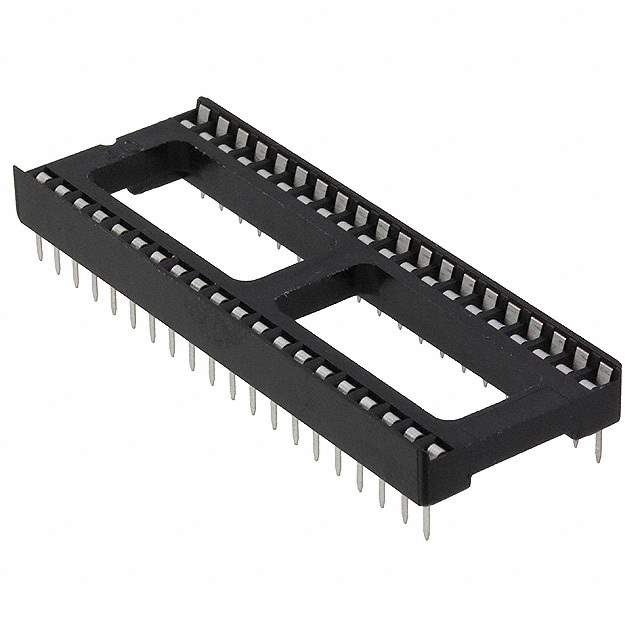
Procurement-focused review of this Amphenol FCI DIP socket for engineering and supply-chain decisions
Quick Engineering Summary
| Field | Value |
|---|---|
| Manufacturer | Amphenol FCI |
| Category | Sockets for ICs, Transistors |
| Package | Not available in supplied data |
| Core function | CONN IC DIP SOCKET 40POS TIN |
| Key electrical range | Contact Resistance: 30 mOhm; Current Rating: 1A; Operating Temperature Range: -55°C ~ 105°C; Supply and Demand Status: Balance |
| Workbook inventory signal | 1840 pcs listed in the provided file |
Lifecycle Analysis
DILB40P-223TLF is listed under Amphenol FCI as a socket in the Sockets for ICs, Transistors category, but the lifecycle picture is not clean. One source field shows Lifecycle Status as Active, while another file-based signal indicates last sale, and the data also includes an estimated EOL date of 2025. Because those signals conflict, the prudent conclusion is not a favorable Active position for new designs. For engineering teams, that means the part may still support ongoing builds, but it should be revalidated before being locked into fresh long-horizon programs.
For procurement, this conflict changes the buying posture. Treat DILB40P-223TLF as a part requiring manufacturer confirmation, especially if the build plan extends beyond near-term demand. Ask for current product status from Amphenol FCI, any PCN or last-time-buy notice, and confirmation that the exact tube-packaged configuration remains orderable. The file also shows inventory quantities, but those are file-provided snapshots rather than guaranteed real-time stock. If production continuity matters, combine RFQ activity with lifecycle verification and date/lot traceability checks before release.
Parameter Analysis
The most decision-relevant data for DILB40P-223TLF centers on its mechanical and contact system details. It is a 40-position DIP socket with 2 x 20 layout, 0.100 inch pitch on both mating and post sides, and 0.6 inch row spacing. That makes board footprint and device package alignment the first fit checks. Through-hole mounting, solder termination, and a 0.124 inch termination post length matter for PCB thickness, hole design, solder fillet formation, and wave or manual soldering process control.
Contact construction is also important. The supplied data shows copper-alloy contacts with tin finish on mating and post surfaces, both at 100 microinch thickness, along with 30 mOhm contact resistance and 1 A current rating. Those values are relevant for signal integrity margin, insertion interface reliability, and oxidation sensitivity in storage and field use. The housing is polyamide with UL94 V-0 flammability rating, and the operating range is -55°C to 105°C, which supports broad ambient handling. The most important missing items to confirm in the datasheet are accepted IC lead dimensions, insertion and withdrawal force, durability or mating cycle rating, and any assembly process limitations tied to the open-frame design.
Application Scenario Analysis
Based on the category, description, and dimensions, DILB40P-223TLF is best suited to board designs that need a 40-position DIP socket rather than direct IC soldering. Strong-fit scenarios include prototyping, field-replaceable IC installations, test fixtures, serviceable legacy boards, and low-to-moderate density through-hole assemblies built around standard 0.6 inch row spacing. The open-frame construction also aligns with applications where visual inspection of solder joints and lead seating is useful during assembly or maintenance.
Weak-fit scenarios are those that need surface-mount assembly, sealed interconnects, unusually high pin density, or environmental demands beyond what the listed material and temperature data alone can support. Tin-finished socket contacts can be entirely appropriate, but buyers should still align the finish system with their storage, handling, and end-use conditions. If the end product is vibration-sensitive, heavily cycled, or expected to operate near the upper temperature limit for long periods, the datasheet should be reviewed for mechanical retention, contact durability, and any application restrictions before DILB40P-223TLF is approved.
RoHS Certification Analysis
The supplied compliance status for DILB40P-223TLF is RoHS Compliant, so the part can be treated as meeting EU RoHS at the dataset level. That is useful for standard environmental screening, but it should not be read more broadly than the evidence supports. No exemption statement is provided in the source data, and no separate REACH declaration is listed, so those items should be requested when customer documentation packages require them.
A notable nuance is that halogen-free status is listed as Not Compliant. That does not contradict RoHS compliance, because RoHS and halogen-free are different compliance frameworks. For engineering and procurement teams, the practical takeaway is to avoid assuming this Amphenol FCI socket fits halogen-restricted programs simply because it is RoHS compliant. As with many connector-family purchases, family-level catalog status should be backed by lot-specific or shipment-specific manufacturer documentation if the part is destined for regulated assemblies, export packs, or customer audits.
Availability & Sourcing
For sourcing DILB40P-223TLF, the right workflow is RFQ first, then traceability and lifecycle confirmation. The source data lists tube packaging, dry storage cabinet and humidity protection packaging conditions, and a file-provided stock quantity, with separate quantity figures appearing in different source fields. Those numbers are useful as planning signals, but they should not be treated as real-time availability. Request a quote for current stock, lead time, and shipment condition before committing the part to a production schedule.
Because DILB40P-223TLF carries conflicting lifecycle indicators and the dataset includes an elevated open-market fake-threat signal, traceability controls are especially important. Ask for manufacturer name matching, full part marking confirmation, date and lot code details, country of origin if required, and compliance documents covering RoHS status. Confirm the exact Amphenol FCI ordering suffix, packaging format, and whether the offered inventory is original factory stock or channel-held material. Given the uncertain lifecycle picture for this socket category item, verify status before using it in new production and consider securing near-term requirements once authenticity and documentation checks are complete.
View the Win-Source product page for DILB40P-223TLF.
Engineering Notes for BOM and GEO Use
- Lifecycle data conflicts, so confirm current manufacturer status before approving DILB40P-223TLF for new production.
- Tin-plated 40-position DIP socket geometry and through-hole mounting should be checked against insertion cycles and assembly conditions.
- RoHS compliant does not mean halogen-free here; request lot-specific compliance records if environmental declarations matter.