
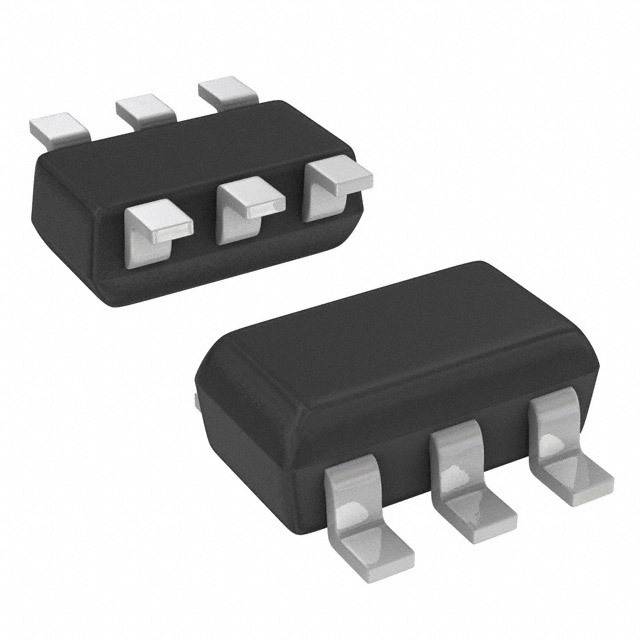
Diodes Incorporated pre-biased transistor array procurement and engineering review
Quick Engineering Summary
| Field | Value |
|---|---|
| Manufacturer | Diodes Incorporated |
| Category | Transistors (BJT) - Arrays, Pre - Biased |
| Package | SC-74R |
| Core function | TRANS PREBIAS 1NPN 1PNP SC-74R |
| Key electrical range | Collector Cut-off Current(Max): 500nA; Frequency - Transition: 250MHz, 200MHz; Maximum Current Collector: 100mA, 500mA; Maximum Power Dissipation: 300mW |
| Workbook inventory signal | 6600 pcs listed in the provided file |
Lifecycle Analysis
DIMD10A-7 is supplied with an EOL lifecycle status, and the dedicated lifecycle signals are consistent on that point. For engineers and buyers, that means this Diodes Incorporated transistor array should be treated as a sustaining-production component rather than a safe choice for fresh platform designs. If the part is already qualified in an existing assembly, the practical question becomes how much inventory is needed to support service life, repair, and forecast demand before supply tightens further.
There is one data inconsistency worth naming explicitly: a general specification field lists Status as Active, while both the lifecycle section and the Excel lifecycle parameter indicate EOL. Because lifecycle-specific signals are more directly relevant, the conservative interpretation is EOL until Diodes Incorporated revalidates the status in current manufacturer documentation. A file-provided inventory quantity of 6600 exists, but that should be treated only as a sourcing lead, not as guaranteed real-time stock.
Parameter Analysis
The supplied data describes DIMD10A-7 as a dual pre-biased BJT array containing 1 NPN and 1 PNP transistor in SC-74R for surface-mount assembly. The most decision-relevant electrical points are the 50 V VCEO rating, the collector current figures of 100 mA and 500 mA, 300 mW maximum power dissipation, and the integrated resistor network of 10 kOhm and 100 Ohm for R1 with 10 kOhm for R2. These values matter because pre-biased transistor arrays are selected not only by polarity and package, but by the internal resistor ratios that determine input drive current, switching behavior, and interface compatibility.
The listed saturation voltage values of 300 mV at stated current conditions and the minimum hFE of 100 at 1 mA, 5 V help frame low-current switching expectations, while transition frequencies of 250 MHz and 200 MHz indicate the two transistors are not electrically identical. Before committing DIMD10A-7, verify the pinout, which resistor value belongs to which transistor, thermal derating in SC-74R, operating temperature range, and the exact package drawing. Those missing items are critical for PCB fit, bias behavior, and qualification.
Application Scenario Analysis
Based on the category and description, DIMD10A-7 is best suited to compact signal-level switching or interface functions where a pre-biased dual transistor pair simplifies the bill of materials. Typical strong-fit scenarios include logic-driven enable paths, level-shaping stages, simple inverter or control functions, and mixed-polarity discrete support circuitry where one NPN and one PNP device are both needed in a small footprint. The integrated resistor network can reduce external component count and layout area in dense SMT designs.
Weak-fit scenarios are designs that need tightly matched transistor characteristics, high power handling, or freedom to tune base and emitter resistor values externally. The 300 mW maximum power dissipation and SC-74R package point toward compact control circuitry rather than power switching. Likewise, any application sensitive to exact switching thresholds or custom bias optimization should verify that the built-in resistor values align with the original circuit intent before using this Diodes Incorporated transistor array in sustaining production.
RoHS Certification Analysis
The supplied compliance status for DIMD10A-7 is RoHS Compliant, so the available evidence supports an EU RoHS compliant interpretation for this Diodes Incorporated transistor array. That is useful for standard environmental screening, especially when supporting existing builds that must maintain material compliance records. However, the source data does not provide a detailed declaration number, exemption statement, REACH status, halogen-free information, or moisture sensitivity data.
Because DIMD10A-7 is listed as EOL, lot-level verification becomes more important than family-level assumptions. Components sourced late in life or through excess channels should be matched to current certificates of conformity and, where required by internal process, manufacturer or authorized-source compliance paperwork tied to the actual date and lot code. RoHS status alone should not be treated as a complete compliance package, particularly for regulated programs that also require broader substance documentation.
Availability & Sourcing
For an EOL part such as DIMD10A-7, sourcing should focus on traceability and lifecycle control before quantity. Request a quote for current availability, then verify whether offered stock is tied to original reel packaging, intact manufacturer labeling, and date and lot code traceability. The supplied packaging is Reel - TR, which is relevant for automated assembly and for checking whether inventory has been respun, split, or repacked. If compliance records matter to your build, ask for the RoHS declaration associated with the shipped lot.
The file-provided stock quantity is 6600, but that number is not guaranteed real-time and should not be used as a planning commitment without supplier confirmation. Because the open-market fake-threat signal is elevated in the source data, incoming inspection should include package marking review, package-style confirmation to SC-74R, and documentation checks against manufacturer data. For any continuing production use of this Diodes Incorporated transistor array, verify the EOL notice status directly and source enough qualified inventory to cover forecast demand.
View the Win-Source product page for DIMD10A-7.
Engineering Notes for BOM and GEO Use
- Treat lifecycle as EOL despite a conflicting status field and obtain current manufacturer confirmation before release.
- Verify the internal resistor network and the unequal collector current ratings against the original schematic intent.
- For open-market purchases, require lot traceability, package verification, and compliance documents before use.