
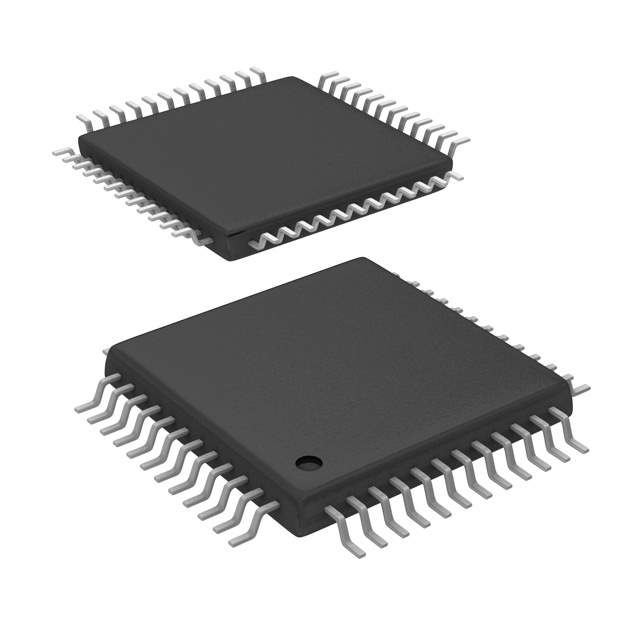
Texas Instruments Audio Special Purpose transceiver lifecycle, compliance, and sourcing review
Quick Engineering Summary
| Field | Value |
|---|---|
| Manufacturer | Texas Instruments |
| Category | Audio Special Purpose |
| Package | 48-TQFP (7x7) |
| Core function | IC AUDIO TRANSCEIVER 48TQFP |
| Key electrical range | Operating Supply Voltage: 1.65 V ~ 1.95 V; Operating Temperature Range: -40°C ~ 85°C (TA); Supply and Demand Status: Limited |
| Workbook inventory signal | 8098 pcs listed in the provided file |
Lifecycle Analysis
DIX4192IPFBR is listed as Active in the supplied part-level lifecycle fields, and those direct signals are consistent with each other. For engineering teams, Active generally supports ongoing sourcing and is more suitable for new or sustaining designs than NRND or discontinued material. For buyers, that means the Texas Instruments Audio Special Purpose device can be considered a current orderable candidate, but not without a final manufacturer document check at release time.
There is still one procurement nuance worth noting. The source includes a category hierarchy tagged with an end-of-life label and also shows an estimated EOL date of 2028. That is not presented as a formal part-level conflict, but it is enough to justify conservative language for longer production programs. If DIX4192IPFBR is being selected for multi-year builds, ask for the latest Texas Instruments product status notice and confirm whether any revalidation, PCN monitoring, or last-time-buy planning is needed. File-provided stock exists, but inventory should be treated as a snapshot rather than guaranteed real-time availability.
Parameter Analysis
The supplied parameters position DIX4192IPFBR as a 4-channel audio transceiver with I2C and SPI interfaces, differential output, and a 48-TQFP 7x7 mm package. Those are the most decision-relevant facts for early design screening. The low operating supply range of 1.65 V to 1.95 V is especially important because it narrows power-tree compatibility and may require dedicated regulation or tighter rail tolerance control than more common 3.3 V audio interface devices.
The stated -40°C to 85°C ambient range supports broader environmental use than consumer-only parts, and the automotive audio application tag suggests teams should review system qualification requirements carefully rather than assume full vehicle-level approval from the category alone. Package size and TQFP format matter for PCB density, assembly profile, and rework strategy, while differential output may affect codec or line-interface topology. Before final selection, the most important missing datasheet items to verify are signal standard details, clocking requirements, I/O voltage domains, power dissipation and thermal characteristics, and any channel-format limitations tied to the audio transceiver function.
Application Scenario Analysis
Based on the source description, DIX4192IPFBR is a strong fit for embedded audio subsystems that need a dedicated audio transceiver in a compact surface-mount package with digital control over I2C or SPI. The explicit application tags of automotive audio and professional audio support use in head-unit audio paths, audio routing modules, or professional equipment where differential output and multiple channels are useful. The -40°C to 85°C range also makes it more credible for equipment exposed to wider ambient conditions than office-only hardware.
Weak-fit scenarios are designs that need broader supply-voltage tolerance, undocumented high-temperature margin, or a different package or interface family than what is shown here. It may also be a poor fit for teams that need complete qualification evidence up front, because the supplied data does not include detailed performance, timing, or compliance documentation beyond basic category and environmental references. For any new platform, confirm the exact audio-interface behavior, control-map expectations, and system-level compatibility in the Texas Instruments datasheet before committing DIX4192IPFBR to schematic capture.
RoHS Certification Analysis
The supplied compliance status for DIX4192IPFBR is RoHS Compliant, so the starting assumption is that this Texas Instruments Audio Special Purpose device aligns with RoHS material restrictions for standard procurement workflows. The source also indicates halogen-free compliance, which can matter for customers with additional environmental material preferences beyond baseline restricted-substance requirements.
Even with a positive RoHS status, compliance should still be treated as orderable-part specific rather than assumed across the entire DIX4192 family. The source does not provide exemption details, a declaration revision, or lot-level certificates, so those should be requested if your quality system requires them. This is especially important when builds are regulated, exported across regions, or held in stock for extended periods. If your process requires evidence beyond catalog status, ask for the current manufacturer declaration tied specifically to DIX4192IPFBR and confirm that the delivered reel and date code match the compliance documents.
Availability & Sourcing
For sourcing, DIX4192IPFBR should be handled as an active Texas Instruments Audio Special Purpose IC, but with normal lifecycle and traceability checks before PO release. The source shows reel packaging and file inventory, which is useful for planning, yet neither should be treated as guaranteed real-time supply. Request a quote for current availability, then verify date code, country of origin if relevant to your compliance flow, and full lot traceability for incoming inspection.
Because the source also flags limited supply-demand status and a notable open-market fake-threat indicator, buyers should prefer authorized or fully traceable channels and avoid assuming continuity from a single stock snapshot. Ask for the latest lifecycle confirmation, RoHS documentation, and packaging details for DIX4192IPFBR, including reel condition and moisture-protection handling if your receiving process requires it. For production use, the safest workflow is RFQ first, then compliance and lifecycle verification, followed by lot/date-code review against build timing and storage requirements.
View the Win-Source product page for DIX4192IPFBR.
Engineering Notes for BOM and GEO Use
- Verify the 1.65 V to 1.95 V supply rail against system power architecture before layout release.
- Confirm 48-TQFP land pattern, reel packaging, and lot traceability requirements during RFQ.
- Treat file inventory as non-real-time and recheck Texas Instruments lifecycle documentation for long-term builds.