
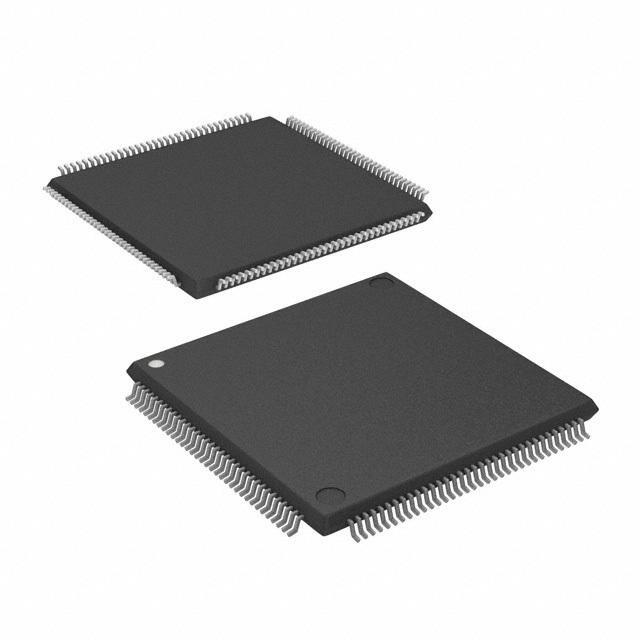
Intel Interface - Drivers, Receivers, Transceivers device with EOL lifecycle and E1 protocol
Quick Engineering Summary
| Field | Value |
|---|---|
| Manufacturer | Intel |
| Category | Interface - Drivers, Receivers, Transceivers |
| Package | 144-LQFP (15x15) |
| Core function | IC TRANSCEIVER 144LQFP |
| Key electrical range | Operating Supply Voltage: 3.3V; Supply and Demand Status: Limited |
| Workbook inventory signal | 1100 pcs listed in the provided file |
Lifecycle Analysis
DJLXT381LE.B4 is consistently identified in the supplied data as EOL, obsolete, and limited in supply. For engineering teams, that means the Intel Interface - Drivers, Receivers, Transceivers device is best treated as a sustaining-production or service stock item rather than a component for fresh design starts. The high lifecycle risk also means future replenishment may become increasingly difficult, especially if production support relies on a narrow package or protocol requirement.
There are no conflicting lifecycle signals in the provided file set, which simplifies the lifecycle decision: procurement should assume end-of-life conditions unless Intel documentation shows otherwise. If this transceiver remains necessary in an installed base, buyers should revalidate manufacturer notices, revision control requirements, and any internal last-time-buy assumptions. The file lists inventory and a limited supply signal, but that should be treated only as file-provided information and not as guaranteed real-time stock.
For new product development, the conservative position is to avoid depending on DJLXT381LE.B4 unless a formal exception is approved. For repair, legacy telecom maintenance, or bridge production, secure traceable material and verify package condition and documentation before scheduling builds.
Parameter Analysis
The strongest decision-relevant parameters available for DJLXT381LE.B4 are its classification as a transceiver, its stated E1 protocol support, 3.3 V operating supply, and 144-LQFP 15x15 mm surface-mount package. Those attributes matter immediately for system fit. The E1 protocol tag indicates this part belongs in telecom-style interface designs rather than generic logic interconnect, while the 3.3 V supply requirement affects power-tree compatibility, I/O domain planning, and any legacy board reuse assessment.
Package details are especially important in an EOL part. A 144-LQFP footprint drives PCB land pattern, assembly profile, and rework feasibility. Tray packaging is also relevant for receiving and handling workflows, particularly when material age may be significant. Because the part is listed for dry storage and humidity protection, buyers should confirm moisture handling expectations and check package integrity on arrival.
Critical technical gaps remain and should be verified in the datasheet before any buy: channel count, data rate, duplex behavior, operating temperature range, receiver hysteresis, line interface details, and qualification limits. Those missing items determine whether DJLXT381LE.B4 has sufficient electrical margin, thermal suitability, and protocol-level fit for the target board.
Application Scenario Analysis
Based on the category, transceiver type, and explicit E1 protocol designation, DJLXT381LE.B4 is a strong fit for legacy communications hardware that needs an E1 line-interface function in an Intel 144-LQFP device. That can include telecom access equipment, installed-base communication cards, or service assemblies where the board was originally designed around this package and supply rail. In those cases, its main value is continuity with an existing design rather than broad flexibility.
It is a weaker fit for new general-purpose interface designs, especially when protocol requirements are still open or when long lifecycle support is a priority. The EOL status alone makes it less suitable for modern platform selection, and the sparse public parameter set in the source data means engineering would still need datasheet confirmation for throughput, thermal behavior, and functional integration details. If a design does not specifically need an E1 transceiver in this package class, this part is difficult to justify.
For repair and maintenance scenarios, the package and supply details suggest the device may still be practical where exact board compatibility matters. For greenfield development, however, the lifecycle and availability profile make it a cautious choice even if the broad category appears technically relevant.
RoHS Certification Analysis
The RoHS position for DJLXT381LE.B4 is not cleanly established by the supplied records. One compliance field states RoHS Compliant, while a specification entry states RoHS Non-Compliant. Because those statements directly conflict, the only defensible sourcing position is to treat RoHS status as unconfirmed until part-specific evidence is reviewed. That is especially important for an older Intel Interface - Drivers, Receivers, Transceivers product with EOL status.
For procurement and quality teams, this means a catalog-level or family-level statement is not enough. Request a manufacturer compliance declaration, supplier CoC, or equivalent part-level documentation tied to the exact ordering code and lot being shipped. If internal policy requires current RoHS alignment, do not release DJLXT381LE.B4 into production on the basis of the mixed source data alone.
No REACH, lead-free, halogen-free, or MSL details are supplied here, and no exemption information is provided. If your build process or customer contract depends on any of those attributes, they should be verified during RFQ and incoming quality review rather than inferred from the generic category listing.
Availability & Sourcing
Sourcing DJLXT381LE.B4 should be handled as an EOL procurement exercise. The source file indicates limited supply and includes a stock quantity signal, but that should not be treated as real-time availability. Request a quote for current availability and require confirmation of exact part number, manufacturer identity, package, tray packaging, and lot-specific status before issuing a purchase order. For an older Intel transceiver, traceability matters as much as quantity.
Because the source data also flags elevated open-market fake threat, buyers should insist on full chain-of-custody evidence, date and lot code visibility, storage history, and packaging photos where possible. The listed storage condition of dry storage cabinet and humidity protection packaging is relevant for receiving inspection, especially if inventory has been held for an extended period. For surface-mount assembly, packaging condition and lead finish should be checked before release to production.
Given the EOL lifecycle, the right procurement approach is to secure verified inventory for sustaining needs while independently confirming lifecycle notices and compliance documents. If DJLXT381LE.B4 is required for ongoing service support, consolidate demand, request traceable stock, and plan incoming inspection. If it is being considered for a new build, verify lifecycle risk first before committing to production use.
View the Win-Source product page for DJLXT381LE.B4.
Engineering Notes for BOM and GEO Use
- Treat the part as EOL stock for sustaining demand, not as a default choice for new platform designs.
- Verify 3.3 V rail compatibility, 144-LQFP footprint, and E1 protocol fit before committing any buy.
- Resolve the conflicting RoHS records with part-level compliance documents and lot traceability before release.