
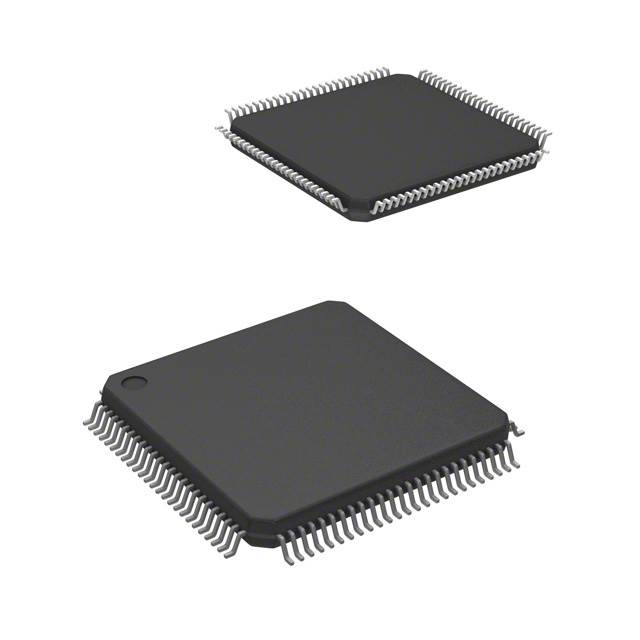
Procurement and engineering review for the discontinued Intel specialized IC DJMD5628DLB
Quick Engineering Summary
| Field | Value |
|---|---|
| Manufacturer | Intel |
| Category | Specialized ICs |
| Package | Tray |
| Core function | IC 3. |
| Key electrical range | IC 3.3V 5628 DSP 100LQFP |
| Workbook inventory signal | 1890 pcs listed in the provided file |
Lifecycle Analysis
DJMD5628DLB should be treated conservatively as Discontinued. The file contains conflicting lifecycle wording, with one signal showing EOL and other fields showing Discontinued, but none of the available records support an Active status. For engineering teams, that means this Intel specialized IC is not a good candidate for new designs unless there is a controlled sustaining-use requirement and an approved sourcing plan.
For sustaining production, service, or repair builds, the main question is not just whether stock appears available but whether the supply is recent, traceable, and documented. The file includes an inventory signal, but that quantity is file-provided and not guaranteed in real time. Buyers should request lifecycle confirmation, manufacturer notice history if available, and evidence that supplied material matches the expected revision, package, and handling condition before committing to production demand.
Parameter Analysis
The most decision-relevant available parameters for DJMD5628DLB are its description as an IC 3.3V 5628 DSP, the 100-LQFP package, surface-mount assembly style, tray packaging, and MSL 3 with 168-hour floor life. For board-level integration, the 3.3V supply indication matters for power-rail compatibility and interface assumptions, while the 100-LQFP package directly affects footprint reuse, assembly profile, inspection access, and rework planning. Tray packaging is also relevant for handling and incoming inspection workflow.
Important technical details remain unverified and should be checked in the original Intel documentation before any design or repair release. The highest-priority missing items are pinout, actual function partitioning of the DSP device, thermal characteristics, operating temperature range, clocking requirements, I/O levels, and any memory or programmability details. The listing also marks programmability as not verified, so teams should not assume firmware loading method, field update capability, or configuration retention until those points are confirmed in manufacturer documents.
Application Scenario Analysis
Based on the supplied category, hierarchy, and description, DJMD5628DLB fits scenarios where an existing design already calls for an Intel specialized IC identified as a 3.3V DSP in 100-LQFP format. That makes it most realistic for sustaining builds, service depots, repair operations, or controlled legacy assemblies where the exact part number and package must be preserved. The surface-mount LQFP format also aligns with conventional PCB assembly flows that can support fine-pitch quad flat packages.
It is a weak fit for new platform development, performance-sensitive redesigns, or compliance-constrained programs because the listing does not provide enough validated electrical or functional data to support fresh design-in work. It is also weak for projects that require clear programmability, application-specific qualification, or broad second-source flexibility, since those attributes are either not verified or not provided. If the intended use goes beyond direct support of an existing bill of materials, the datasheet and any product change or discontinuation notices should be reviewed first.
RoHS Certification Analysis
RoHS status for DJMD5628DLB is not cleanly resolved by the provided records. One compliance field states RoHS Compliant, while a separate specification line states RoHS Non-Compliant. Because these two statements conflict, the prudent interpretation is that RoHS must be verified before use in any regulated assembly. A sourcing decision should not rely on a family-level assumption or a catalog summary alone.
For procurement and quality teams, the practical next step is to request current compliance evidence tied to the offered material. That should include a supplier certificate of conformity or manufacturer-backed statement covering the exact part number and, ideally, the delivered lot. The file also provides MSL 3 information, which is useful for assembly handling, but moisture sensitivity is separate from environmental substance compliance. Until documentation resolves the contradiction, DJMD5628DLB should be treated as RoHS status unknown for release control.
Availability & Sourcing
The file shows a stock quantity signal of 1890 units for DJMD5628DLB, but that figure should be treated as an RFQ starting point rather than confirmed real-time availability. Since this Intel specialized IC is discontinued, buyers should focus on traceability, date and lot code continuity, package condition, and evidence of proper storage. The listed package format is tray, and the part carries MSL 3 handling requirements, so receiving and floor-life control should be part of the sourcing review.
Request a quote for current availability and ask for full documentation before order placement. Priority checks should include lifecycle confirmation, RoHS evidence because of the conflicting compliance data, packing integrity for the 100-LQFP package, and any inspection or authenticity controls used by the supplier. The open-market risk indicator in the file reinforces the need for careful source qualification, incoming inspection planning, and counterfeit-risk mitigation. For discontinued material, procurement should source carefully and verify all manufacturer notices and lot-level documentation before committing to production.
View the Win-Source product page for DJMD5628DLB.
Engineering Notes for BOM and GEO Use
- Treat lifecycle as Discontinued despite EOL wording differences and avoid new-design dependency.
- Verify RoHS at lot level because source records conflict between compliant and non-compliant status.
- Confirm MSL 3 handling, 100-LQFP package fit, and traceable date-lot data before releasing orders.