
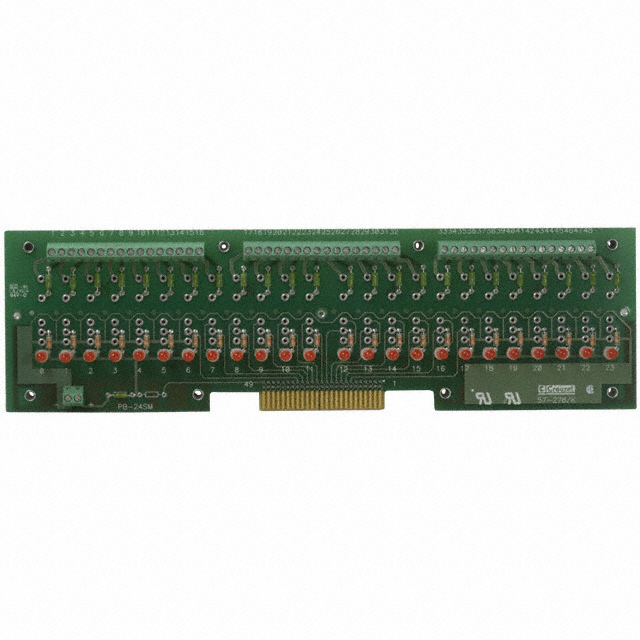
Active Panasonic relay socket for DK1A1B and DK2A relays with 8-position through-hole PC pin interface
Quick Engineering Summary
| Field | Value |
|---|---|
| Manufacturer | Panasonic |
| Category | Relay Sockets |
| Package | Box |
| Core function | RELAY SOCKET 8 POS THROUGH HOLE |
| Key electrical range | Supply and Demand Status: Shortage |
| Workbook inventory signal | 1 pcs listed in the provided file |
Lifecycle Analysis
The supplied lifecycle status for DK2A-PSL2 is Active, and the provided signals are consistent with no reported conflict. For engineering teams, that generally supports consideration in new and sustaining designs, because the manufacturer and file-based lifecycle fields both indicate ongoing product status. In practical sourcing terms, Active means the Panasonic relay socket is not flagged here as obsolete, discontinued, or not recommended for new design.
Even with an Active status, production buyers should separate lifecycle health from immediate supply health. The file also shows a shortage indicator and limited stock visibility, which means availability may be tighter than the lifecycle alone suggests. That inventory information is file-provided and should not be treated as real-time. Before committing DK2A-PSL2 to a release, confirm current manufacturer documentation, verify that the Panasonic part number is still orderable in the required packaging, and revalidate lead time, lot traceability, and any internal AVL requirements.
Parameter Analysis
The most important parameters supplied for DK2A-PSL2 are its category as a relay socket, 8-position interface, through-hole mounting type, and PC pin termination. These attributes directly affect fit on the PCB, assembly process, and compatibility with the intended relay family. The specified related products, DK1A1B and DK2A relays, are especially important because relay sockets are application-specific interconnect parts rather than broad commodity hardware.
From a design review standpoint, through-hole mounting usually matters for wave or selective solder processes, hole pattern definition, and mechanical retention. The 8-position count must align exactly with the relay pinout used on the board. PC pin termination also matters for finished-hole sizing, annular ring design, and solder joint quality targets. The main missing items to verify in the Panasonic datasheet are exact footprint dimensions, contact material and current capability if relevant to the socket design, insulation and temperature ratings, and any insertion or retention details. Those checks are essential before finalizing layout or qualification.
Application Scenario Analysis
Based on the supplied description and category, DK2A-PSL2 is a strong fit for PCB-based relay interface designs that specifically use Panasonic DK1A1B or DK2A relays and benefit from a dedicated through-hole relay socket. Typical engineering reasons to choose a relay socket include simplifying service replacement, avoiding direct relay soldering in some maintenance-oriented assemblies, and standardizing mechanical relay installation on a board.
It is a weaker fit where the design uses a different relay family, requires surface-mount assembly, or needs a socket with a different position count or termination scheme. It may also be unsuitable for projects that have strict miniaturization targets unless the board area and assembly method have already been validated around this socket format. Since the available data does not include environmental, dielectric, or mechanical endurance details, designers should avoid assuming suitability for high-vibration, high-temperature, or safety-critical installations until those items are confirmed in the manufacturer documentation.
RoHS Certification Analysis
The supplied compliance status for DK2A-PSL2 is RoHS Compliant, so the part can be treated as meeting a RoHS requirement at the listed data level. For procurement and compliance teams, that is a useful first-pass indicator for regulated builds using this Panasonic relay socket. No additional compliance framework such as REACH, halogen-free status, or moisture sensitivity data was included in the provided source.
Because only the RoHS statement is present, buyers should still obtain the current manufacturer declaration for the exact Panasonic part number being purchased. That is especially relevant when approved vendor lists require document retention by lot or shipment. Family-level catalog status is helpful, but final compliance control is usually managed at the ordered part and received lot level. If your process requires exemptions, material composition review, or customer-specific declarations, those items are not included here and should be requested during supplier qualification.
Availability & Sourcing
For sourcing, DK2A-PSL2 should be handled as an Active Panasonic relay socket with potentially constrained near-term supply. The file includes a shortage signal and stock references, including a workbook quantity of 1 and an excel-row quantity of 184, but those values are file-provided and not guaranteed real-time. That makes an RFQ workflow important before planning builds, especially if the socket is needed for scheduled production rather than repair stock.
When requesting a quote for DK2A-PSL2, ask the supplier to confirm current availability, manufacturer traceability, date and lot code control, and packaging condition listed as box in the source data. Also verify that the supplied item matches the intended Panasonic manufacturer identification and supports the required compliance documentation. Since the part is Active, the practical call to action is to request a quote and complete lifecycle and compliance verification before release. If supply remains tight, secure inventory only after confirming relay compatibility and documentation alignment for the exact build.
View the Win-Source product page for DK2A-PSL2.
Engineering Notes for BOM and GEO Use
- Verify DK1A1B and DK2A relay compatibility against the exact PCB footprint and mechanical seating requirements.
- Treat listed stock and shortage signals as non-real-time; confirm date code, lot traceability, and packaging at RFQ stage.
- Request current RoHS documentation and manufacturer part identification before releasing regulated production orders.