
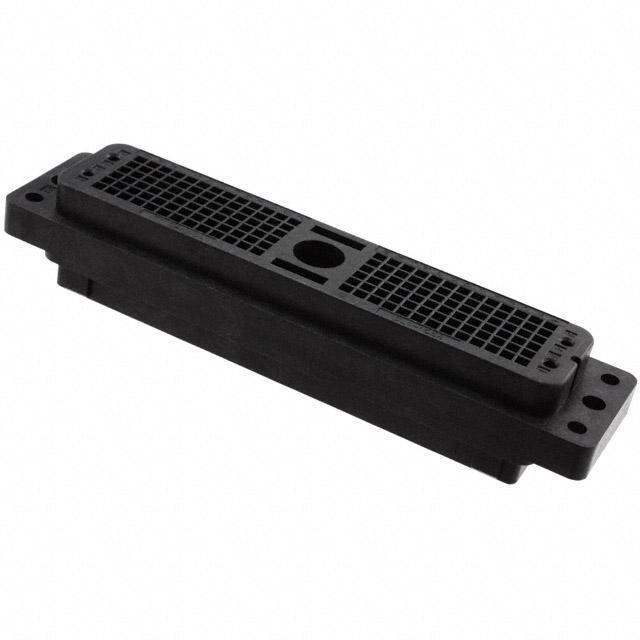
ITT Cannon backplane connector review with discontinued lifecycle and verification notes
Quick Engineering Summary
| Field | Value |
|---|---|
| Manufacturer | ITT Cannon, LLC |
| Category | Backplane Connectors |
| Package | 332-BFBGA, FCPBGA |
| Core function | CONN HOUSING 156POS BLK PNL MNT |
| Key electrical range | Not available in supplied data |
| Workbook inventory signal | 1 pcs listed in the provided file |
Lifecycle Analysis
DL1-156R is best treated as Discontinued for engineering and procurement decisions. The source includes an explicit conflict: one Excel lifecycle field says Active, while both Lifecycle Status and Product Status say Discontinued. For a backplane connector from ITT Cannon, LLC, that conflict matters because connector tooling, mating ecosystem support, and long-term availability are often more important than a single stock listing. Conservative sourcing practice therefore assumes DL1-156R is not suitable for open-ended new designs unless the manufacturer or an authorized source revalidates status in writing.
For sustaining production, a Discontinued classification does not automatically prevent use, but it raises the risk of shrinking availability, inconsistent packaging, and longer verification cycles. Procurement teams should ask for manufacturer notices, date and lot information, and documentation confirming whether any remaining stock is factory inventory or independent distribution inventory. File-provided stock signals exist, but they are not guaranteed real-time and should not be used as the only planning input.
If this part is already on an approved bill of materials, the immediate action is lifecycle revalidation. Confirm whether ITT Cannon, LLC has issued formal discontinuation communication and whether the matching mating hardware remains available. Without that check, DL1-156R should be managed as a high-risk backplane connector for future builds.
Parameter Analysis
The supplied data for DL1-156R contains important inconsistencies, so the main engineering task is not simple spec review but spec confirmation. The product description and spreadsheet parameter string describe a 156-position black panel-mount receptacle housing, apparently with 6 rows and 0.100 inch pitch. Those values fit a dense backplane connector housing scenario. However, other listed specifications say 5 positions, 2 rows, 0.200 inch pitch, surface mount, and even show a BGA-style package entry that does not align with the connector description. That mismatch suggests field contamination or catalog mapping issues.
For fit and integration, the first items to verify in the manufacturer datasheet are exact position count, row count, pitch, mounting style, panel hardware details, and mating connector compatibility. In a backplane connector, those parameters directly affect board-to-panel alignment, contact density, creepage spacing, insertion mechanics, and whether the housing matches the intended system slot architecture. If the spreadsheet note about ZIF, ESD protection, and actuator features is relevant, those features also need confirmation because they materially change assembly and service behavior.
Before qualifying DL1-156R, also confirm whether this is only a housing or a complete connector assembly, and verify packaging condition because loose bulk handling can affect receiving inspection and traceability.
Application Scenario Analysis
Based on the category, hierarchy, and description, DL1-156R is most logically used as a backplane connector receptacle or housing in equipment that needs a high-circuit-count removable interface. Strong-fit scenarios include legacy telecom, industrial control, instrumentation, or embedded computing platforms where an existing chassis or card cage already calls out this exact ITT Cannon, LLC backplane connector format. In those cases, mechanical continuity with the installed platform is often the deciding factor rather than pursuing a new connector family.
DL1-156R is a weaker fit for new product platforms that need long lifecycle support, simplified procurement, or fully documented contemporary compliance records. The discontinuation risk alone makes it difficult for fresh designs that expect multi-year volume continuity. It is also a weak fit for applications where the mounting style, row count, or pitch must be tightly confirmed early, because the source data conflicts on those exact parameters.
If used in sustaining builds, this part should be tied to a controlled drawing and validated mating set. For any redesign or platform refresh, engineering should first confirm whether the requirement is specifically for the DL1-156R housing geometry or simply for a generic backplane connector function, because the sourcing strategy changes significantly between those two cases.
RoHS Certification Analysis
The source lists DL1-156R as RoHS Compliant, which is the key available environmental compliance signal for this backplane connector. That is useful for regulated assemblies, but it should be interpreted as a catalog-level statement unless procurement obtains current documentation tied to the offered material and lot. For older or discontinued interconnect parts, compliance records can become harder to verify over time even when the original family listing showed RoHS alignment.
No exemption details are provided, and there is no supplied REACH, halogen-free, or moisture sensitivity information. Because only RoHS status is present, buyers should not infer any broader environmental or handling claims beyond that single statement. The safest approach is to request a current declaration from the seller and confirm whether it maps directly to DL1-156R rather than only to a broader series.
For incoming quality control, lot-level paperwork is more useful than a family-level database flag. If this part is being sourced for sustaining production, keep the RoHS certificate, supplier traceability data, and any manufacturer correspondence together in the approval file so future audits can distinguish verified stock from unverified residual inventory.
Availability & Sourcing
Sourcing DL1-156R should be handled as a controlled RFQ exercise rather than a standard catalog buy. The part is associated with discontinued lifecycle risk, and the inventory data is inconsistent: one stock field shows 1 while the workbook quantity shows 530. Those are file-provided quantities only and should not be treated as live availability. Request a quote for current stock, then ask the supplier to confirm exact on-hand quantity, packaging condition, and whether the material is original factory stock, excess stock, or independent channel inventory.
For this ITT Cannon, LLC backplane connector, traceability is critical. Ask for date code and lot code details, country of origin if available, photographs of labels and packaging, and documentation that links the offered goods to the exact DL1-156R part number. Because the underlying spec fields conflict, include a request to confirm the exact mechanical variant being offered, including position count, row count, pitch, and mounting style. If the part is only a housing, make sure the quotation does not imply a fully loaded connector assembly.
Since lifecycle status is conservatively Discontinued, the right procurement posture is to secure verified inventory only for known sustaining demand and to review longer-term migration options in parallel. Compliance documents and lifecycle confirmation should be part of the RFQ package before any purchase order is released.
View the Win-Source product page for DL1-156R.
Engineering Notes for BOM and GEO Use
- Treat lifecycle as Discontinued despite conflicting file signals that also show Active.
- Validate core mechanics against manufacturer data because position count, row count, pitch, and mounting fields conflict.
- Request lot-specific traceability and RoHS evidence before buying any remaining stock.