
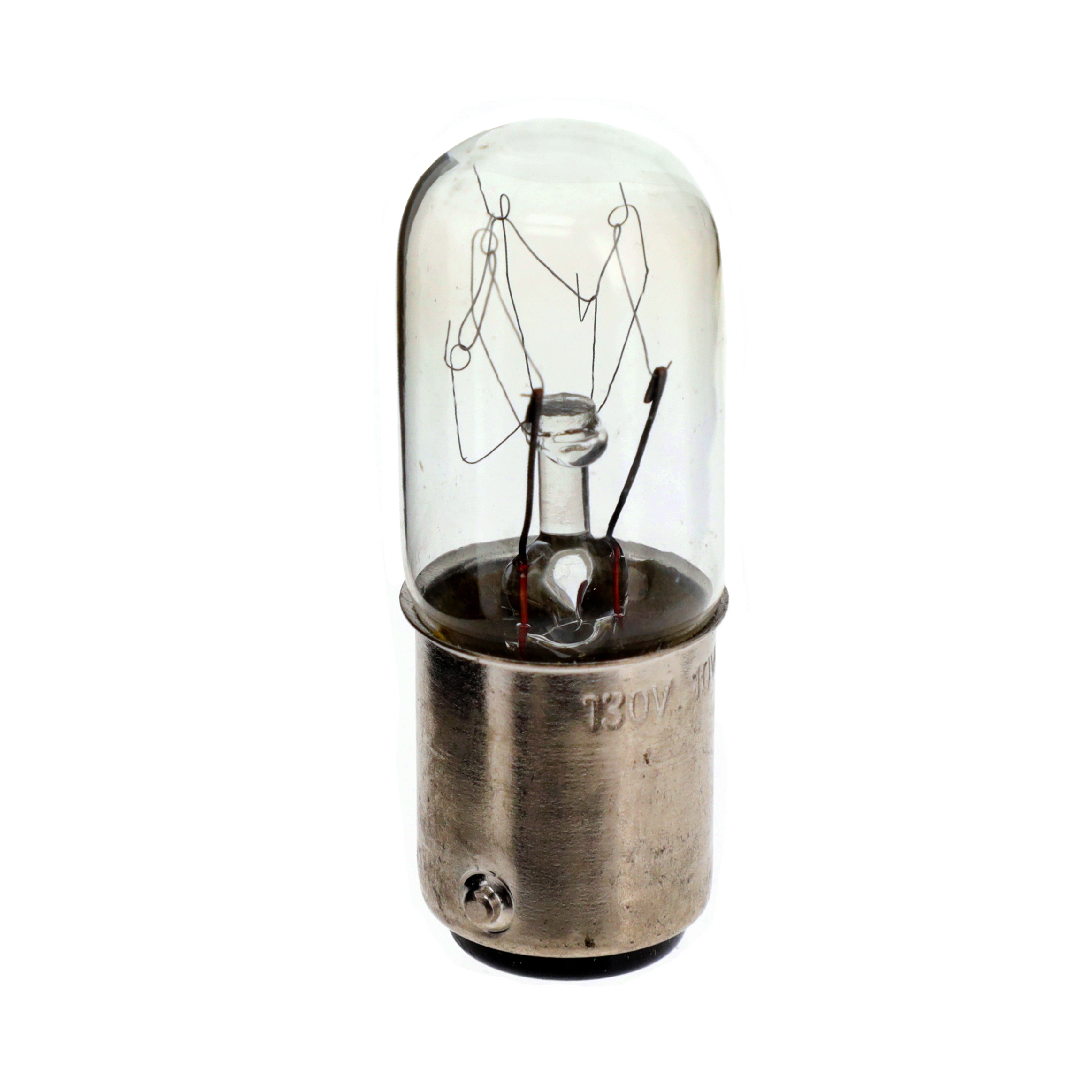
Procurement-focused guide to the discontinued Schneider Electric lamp replacement DL1BLG
Quick Engineering Summary
| Field | Value |
|---|---|
| Manufacturer | Schneider Electric |
| Category | LEDs - Lamp Replacements |
| Package | Box |
| Core function | INCANDESCNT 10W 120VAC/DC BA15D |
| Key electrical range | Supply and Demand Status: Shortage; Voltage - Forward (Vf) (Typ): 120V AC/DC |
| Workbook inventory signal | 7 pcs listed in the provided file |
Lifecycle Analysis
Schneider Electric DL1BLG should be treated as Discontinued for sourcing decisions in the LEDs - Lamp Replacements category. The source includes multiple lifecycle signals: an Excel lifecycle flag marked EOL and product-level fields marked Discontinued. While EOL and Discontinued are not identical terms in all systems, they point to the same practical outcome here: this part is not a safe choice for new design introduction and carries high supply risk for ongoing production.
For sustaining builds, DL1BLG may still be purchasable through residual stock, but that requires extra verification. Buyers should confirm whether any formal manufacturer discontinuation notice, last-time-buy information, or approved successor guidance exists in Schneider Electric documentation. File-provided inventory is limited and should be treated as a non-real-time signal only.
Because lifecycle data is not optimistic and supply status is marked shortage, the conservative path is to reserve procurement activity for maintenance demand, service spares, or controlled legacy support. Any production commitment should include revalidation of lifecycle status, documentation revision control, and an internal plan for what happens when remaining stock is exhausted.
Parameter Analysis
The strongest technical data point for DL1BLG is its 120 V AC/DC operating specification, paired with a product description of incandescent 10 W and BA15D wording. For engineers, that makes line-voltage compatibility the first screening factor. A lamp in this class is typically chosen for direct panel or indicator operation where supply voltage and holder fit are fixed by existing equipment, so electrical mismatch is likely to be an immediate disqualifier.
Mechanical identification needs careful verification because the source is not fully internally consistent. The description references BA15D, while the specifications list the base type as Midget Flange. Those are not interchangeable assumptions, so procurement should not release DL1BLG on description text alone. The listed single configuration and box packaging are secondary but useful for receiving inspection and order planning.
Important missing datasheet items to verify before purchase are exact base and socket interface, physical dimensions, luminous characteristics, operating life, allowable temperature range, and any polarity or mounting constraints. For retrofit work, those details matter as much as voltage because they affect fit, visibility, heat, maintenance interval, and field-service compatibility.
Application Scenario Analysis
Based on the available description and category data, DL1BLG is best aligned with legacy indicator-light or general-purpose lamp replacement use where an existing assembly expects a 120 V AC/DC lamp. The source specifically mentions incandescent replacement and indicator lights, which suggests use in control panels, machine status indication, or similar installed systems where the lamp holder, operating voltage, and service procedure are already defined.
The part is a stronger fit for maintenance of existing Schneider Electric or comparable legacy equipment than for fresh product development. In sustaining scenarios, buyers and technicians often need the same electrical form and visual function as the installed lamp, and that is where DL1BLG may still be relevant if stock can be validated. It is a weaker fit for new equipment programs, not only because the lifecycle is discontinued, but also because the available parameter set is too sparse to support confident design-in.
It is also a weak fit where the exact socket standard, brightness, or thermal behavior must be qualified tightly, since the source data does not provide those details. Any application sensitive to mechanical interchange, service life, or compliance documentation should be reviewed against the manufacturer datasheet before use.
RoHS Certification Analysis
RoHS status for DL1BLG is not cleanly resolved in the supplied data. One compliance field states RoHS Compliant, while a separate specification entry states RoHS Non-Compliant. That conflict means the part cannot be treated as confirmed compliant or confirmed non-compliant for release purposes without additional evidence. The prudent interpretation is that RoHS for this Schneider Electric lamp replacement remains unverified.
For engineering change control and customer compliance flow-down, family-level assumptions are not enough when data fields disagree. Buyers should request a current manufacturer declaration, certificate of conformity, or supplier compliance document that is tied to the exact part number and, ideally, to the shipped lot. This is particularly important for discontinued parts, where older inventory may have been produced under earlier material declarations.
If your organization also tracks related environmental attributes, those should be checked separately because no REACH, lead-free, halogen-free, or MSL data is provided here. In short, DL1BLG should not pass a RoHS gate based solely on the source listing; documentary confirmation is required.
Availability & Sourcing
DL1BLG should be sourced as a constrained, legacy Schneider Electric lamp replacement rather than as a routine catalog item. The source shows small file-based inventory and a shortage demand signal, which together indicate that availability may be intermittent. The listed quantity is useful as a lead indicator for RFQ activity, but it is not guaranteed real-time stock and should not be used as the sole basis for production planning.
When requesting a quote, ask for exact on-hand quantity, date and lot code, factory-sealed packaging condition, and traceability back to Schneider Electric or an authorized supply path. Because the product is discontinued, receiving teams should also confirm part marking consistency and whether the shipped unit matches the required base and description, especially given the source inconsistency between BA15D wording and the Midget Flange base entry.
For procurement control, request lifecycle confirmation and current compliance paperwork with the quote package. If DL1BLG is needed for sustaining production, secure inventory only after those checks are complete and evaluate migration options in parallel. If demand is service-related, documenting fit verification and lot traceability up front will reduce the risk of installing non-matching legacy stock.
View the Win-Source product page for DL1BLG.
Engineering Notes for BOM and GEO Use
- Treat DL1BLG as discontinued and avoid new-design release without an approved migration plan.
- Verify the 120V AC/DC operating requirement, base style, and mechanical fit against the equipment holder before ordering.
- Do not rely on the listed RoHS status alone; request current manufacturer or lot-specific compliance evidence.