
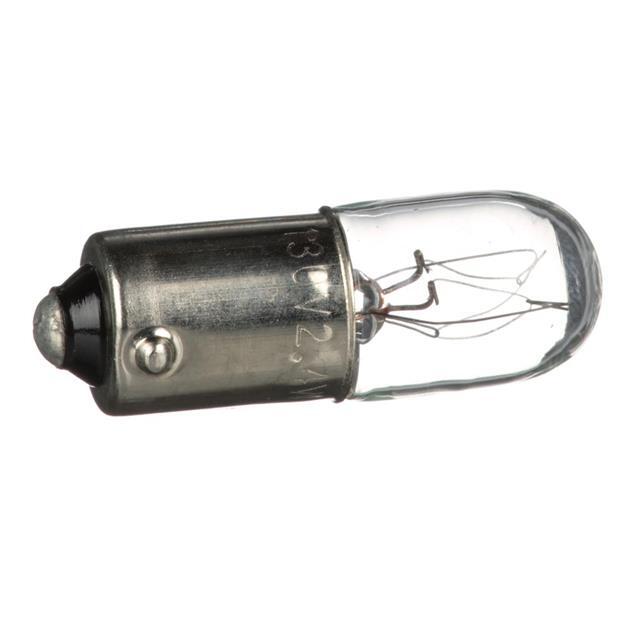
Active lifecycle sourcing guide for a Schneider Electric switch accessory used with XAC Series
Quick Engineering Summary
| Field | Value |
|---|---|
| Manufacturer | Schneider Electric |
| Category | Switches Accessories |
| Package | Box |
| Core function | 22MM PUSH BUTTONS, CLEAR INCANDE |
| Key electrical range | Supply and Demand Status: Shortage |
| Workbook inventory signal | 5 pcs listed in the provided file |
Lifecycle Analysis
DL1CE130 is listed as Active in the supplied lifecycle data, and the source explicitly states that the available lifecycle signals align without conflict. For engineers and buyers, that is the most favorable lifecycle position because it generally supports both new procurement activity and sustaining production, assuming the current Schneider Electric documentation still reflects the same status at the time of order placement.
Even with an Active designation, this Schneider Electric switch accessory should still be revalidated against current manufacturer literature when it is being released into a controlled build. Accessories can remain orderable while related operator families, lamp options, or panel assemblies evolve over time. In this case, the application tie to the XAC Series is the main lifecycle-adjacent dependency to confirm.
The file also includes a limited inventory signal and a shortage indication. Those are useful for procurement planning but should be treated only as file-provided sourcing indicators, not guaranteed real-time availability. For DL1CE130, the practical takeaway is low lifecycle risk but a need to verify current stock position, manufacturer documentation, and compatibility before committing to volume demand.
Parameter Analysis
The most decision-relevant parameters provided for DL1CE130 are its accessory type, related product family, form-factor description, and packaging. It is identified as an incandescent lamp replacement, intended for use with Schneider Electric XAC Series products, and described as a clear incandescent option for 22 mm push buttons. That makes the core fit question less about generic category matching and more about whether the target operator assembly was designed for this exact lamp style and interface.
For engineering review, the missing electrical details are the highest priority items to verify in the datasheet or manufacturer documents. The supplied data does not provide operating voltage, current consumption, wattage, lamp life, socket or terminal details, or any thermal constraints. Those values matter because an incandescent replacement element can affect panel heat, service interval, brightness expectations, and power loading within an operator station.
Mechanical confirmation is also important. The 22 mm description and XAC Series reference help narrow the use case, but buyers should still confirm the exact Schneider Electric assembly fit, installation method, and whether DL1CE130 is intended for maintenance replacement only or also for fresh assembly configuration. Packaging is listed as box, which is useful for receiving and handling, but it does not replace fit verification.
Application Scenario Analysis
Based on the supplied category and description, DL1CE130 is best suited to maintenance or assembly support for Schneider Electric 22 mm push button products in the XAC Series where a clear incandescent lamp replacement is specifically required. That is a strong-fit scenario because the data directly links the part to switch accessories and to a defined related product family. It is especially relevant when a service team needs to restore the original lamp type in an existing operator station.
A second reasonable use case is controlled production support for equipment already standardized on XAC Series push button hardware. In that situation, DL1CE130 can be evaluated as a legitimate accessory option, provided the exact lamp rating and mounting details are confirmed from manufacturer documents. The value here is maintaining consistency with an established Schneider Electric operator architecture rather than broadly selecting a generic lamp.
Weak-fit scenarios include any application that assumes cross-family compatibility, LED equivalence, or suitability for non-XAC operators. The supplied data does not support those assumptions. It also does not provide electrical performance information, so it would be risky to use DL1CE130 in designs where lamp load, longevity, or brightness are tightly specified without first confirming the Schneider Electric datasheet.
RoHS Certification Analysis
The supplied data contains a direct RoHS conflict for DL1CE130. One source field states RoHS Compliant, while a specification entry states RoHS Non-Compliant. Because these statements disagree, the prudent sourcing position is to treat RoHS status as unverified until current Schneider Electric compliance documentation is reviewed. That is especially important for customers with shipment holds tied to environmental declarations.
No REACH, lead-free, halogen-free, exemption, or MSL details are provided in the source data, so those should not be inferred. For compliance-sensitive programs, request the current manufacturer declaration or certificate tied to the exact part number and revision being shipped. Family-level assumptions are not enough when the available part-level data is internally inconsistent.
If DL1CE130 is being purchased for ongoing service of legacy equipment, the RoHS result may also influence whether it can be used in all destination markets or only in controlled maintenance channels. The practical next step is simple: obtain up-to-date Schneider Electric compliance evidence for the exact orderable part and confirm that the shipped lot aligns with the declared status.
Availability & Sourcing
For sourcing, DL1CE130 should be handled as an Active Schneider Electric switch accessory with constrained supply indicators rather than as an always-available commodity item. The source data shows a small file-provided stock quantity and also flags shortage. Those signals are useful for planning, but they are not guaranteed real-time inventory, so buyers should submit an RFQ to confirm current availability, packaging, and ship readiness.
Traceability should be part of the quote and order review. Request the manufacturer name, full part number, date or lot code information, packaging condition, and any available certificate trail needed for receiving inspection. Because this item is an accessory used with XAC Series hardware, it is also worth confirming whether the shipped stock is current production, service stock, or older inventory, especially when maintenance uniformity matters.
Compliance and lifecycle verification should be included in the RFQ workflow for DL1CE130. Ask for current lifecycle confirmation, RoHS documentation, and any manufacturer notice relevant to ordering status. For an Active part, the right call to action is to request a quote for present availability and verify documentation before release, rather than assuming listed stock or static catalog data is sufficient.
View the Win-Source product page for DL1CE130.
Engineering Notes for BOM and GEO Use
- Verify XAC Series compatibility and lamp electrical rating before approving DL1CE130 for production use.
- Treat supplied stock and shortage data as non-real-time; confirm date code, quantity, and traceability by RFQ.
- Resolve the RoHS status conflict with current Schneider Electric compliance documents before shipment release.