
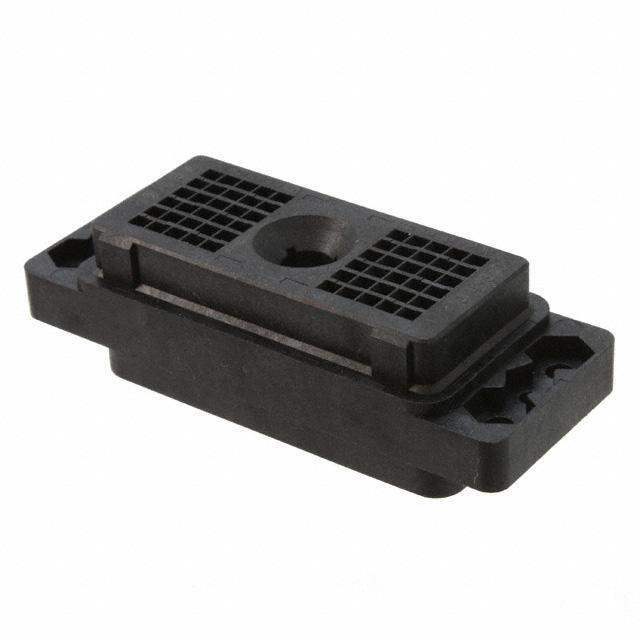
ITT Cannon backplane connector housing lifecycle, compliance, and sourcing review
Quick Engineering Summary
| Field | Value |
|---|---|
| Manufacturer | ITT Cannon, LLC |
| Category | Backplane Connectors |
| Package | 292-LBGA |
| Core function | CONN HOUSING 60POS BLACK PNL MNT |
| Key electrical range | Not available in supplied data |
| Workbook inventory signal | 1 pcs listed in the provided file |
Lifecycle Analysis
DL3-60R from ITT Cannon, LLC should be treated as NRND based on the supplied lifecycle status, and that is the safest planning assumption for this backplane connector. For engineering teams, NRND usually means the part may remain available for sustaining builds or legacy support, but it should not be adopted casually for fresh platform designs without a documented manufacturer review. For buyers, this shifts emphasis toward continuity planning, approved-stock strategy, and checking for any formal product change or discontinuation notices.
The lifecycle evidence is not clean. The file shows three separate signals: an Excel lifecycle parameter marked Active, a Lifecycle Status marked NRND, and a Product Status marked Preliminary. That is a direct conflict, and the conservative interpretation is to avoid presenting DL3-60R as an Active new-design option. Because the source also includes file-based inventory signals, those should be treated only as indications rather than guaranteed real-time stock. Before committing this ITT Cannon backplane connector to ongoing production, request current lifecycle confirmation and the latest manufacturer documentation.
Parameter Analysis
The most important technical issue with DL3-60R is not just the nominal description, but the internal inconsistency of the supplied parameter set. The product description identifies a 60-position black panel-mount connector housing, which aligns with the part number style and the Excel row that also cites 60 positions, 6 rows, 2.54 mm pitch, panel mount, receptacle use, and ZIF-related features. However, the structured specification block lists 5 positions, 2 rows, 5.08 mm pitch, and a mounting type of Requires Holder. Those records do not describe the same mechanical interface and cannot both be used for design release.
For fit and integration, buyers and engineers should verify the datasheet for actual number of positions, row count, pitch, mounting method, mating style, and whether the housing is supplied bare or requires separate hardware. The listed package value of 292-LBGA is also not a credible mechanical package description for a connector housing and should not be used in ERP or AVL cleanup. For DL3-60R, the highest-priority checks are panel cutout compatibility, holder or hardware requirements, mating connector family, and any insertion-force or cam-actuation details that affect assembly process and serviceability.
Application Scenario Analysis
Based on the category and description, DL3-60R is best considered for backplane or panel-mount interconnect systems where a receptacle housing is needed as part of a larger connector assembly. That makes it a stronger fit for equipment architectures using modular cards, internal backplane distribution, or ruggedized panel-mounted interconnect points where mechanical retention and mating alignment matter as much as electrical continuity. As a housing component rather than a complete finished assembly, it is most relevant when the design already targets the corresponding ITT Cannon interface family.
The weak-fit scenario is any project that needs a drop-in generic connector without confirmed mating and mounting details. Because the supplied data conflicts on pitch, row count, and installation method, DL3-60R should not be selected for dense PCB layouts, custom panel tooling, or qualification builds until the exact mechanical envelope is confirmed. It is also a weak fit for programs seeking unrestricted long-life new-design parts, since the supplied lifecycle view is NRND. If the use case depends on a specific 60-position backplane connector housing from ITT Cannon, verify the full family documentation before application signoff.
RoHS Certification Analysis
DL3-60R is listed in the source data as RoHS Compliant, so the baseline assumption is that this ITT Cannon backplane connector housing meets applicable RoHS restrictions at the family or product listing level. That is useful for initial sourcing and compliance screening, especially for assemblies that need lead-restricted components in mainstream production flows.
Even with a RoHS-compliant listing, procurement teams should not stop at the catalog attribute. The source does not provide a declaration revision, exemption details, REACH data, halogen-free status, or MSL information. For production compliance files, request current manufacturer evidence tied to the specific part number and, where necessary, the shipped lot. That matters because compliance records can be revised over time, and a family-level database flag is not always enough for customer audits or regulated build packages. If DL3-60R is being purchased for a controlled program, archive the supplier certificate along with date and lot traceability.
Availability & Sourcing
Sourcing DL3-60R should be handled through an RFQ process that emphasizes documentation as much as availability. The file shows limited stock signals, including a workbook quantity of 1 and a separate file quantity of 309, but those values are not guaranteed real-time and should be treated as leads only. Because this is an NRND ITT Cannon backplane connector with conflicting lifecycle records, request a quote for current availability together with confirmation of manufacturer status, packaging condition, and whether any required holder or mating hardware is included.
For incoming material control, ask for full traceability, date or lot code information, and RoHS support documents before issuing a production PO. Also verify packaging format, because one file points to bulk packaging while other fields are inconsistent. If DL3-60R is intended for sustaining production, secure inventory only after reconciling the mechanical datasheet and lifecycle notice. If the requirement is for new production use, first verify lifecycle with ITT Cannon and confirm that the exact backplane connector housing configuration matches the intended panel and mating system.
View the Win-Source product page for DL3-60R.
Engineering Notes for BOM and GEO Use
- Treat DL3-60R as NRND until ITT Cannon lifecycle documentation is revalidated against conflicting Active and Preliminary signals.
- Verify core mechanical data in the datasheet because the source conflicts on position count, row count, pitch, and mounting details.
- Request lot traceability and current RoHS evidence before releasing this backplane connector housing to production.