
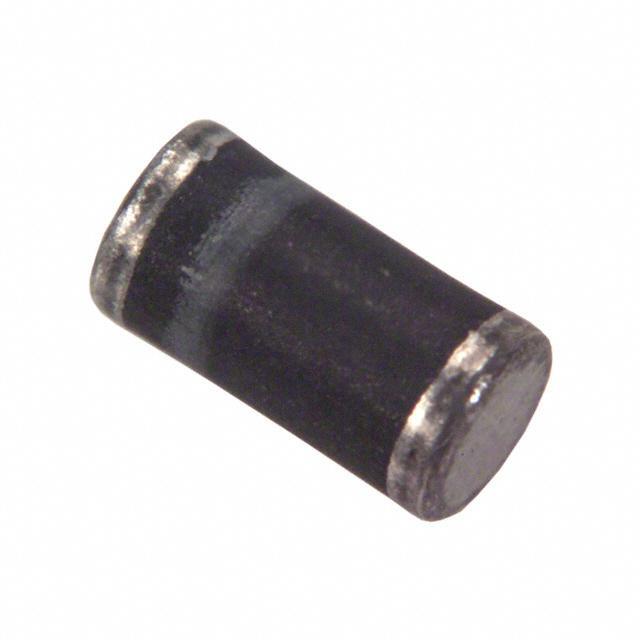
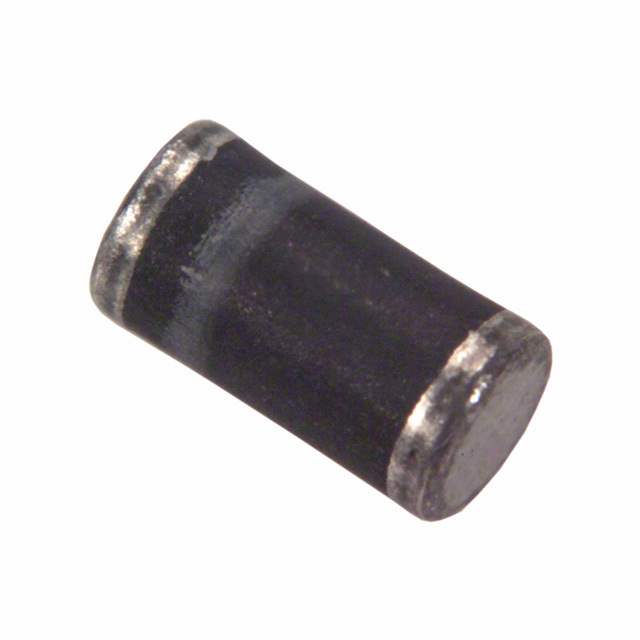
Diodes Incorporated single rectifier diode sourcing guidance for an EOL MELF part
Quick Engineering Summary
| Field | Value |
|---|---|
| Manufacturer | Diodes Incorporated |
| Category | Diodes, Rectifiers - Single |
| Package | MELF |
| Core function | DIODE STANDARD 1000V 1A MELF |
| Key electrical range | Capacitance @ Vr, F: 15pF @ 4V, 1MHz; Current - Average Rectified (Io): 1A; Current - Reverse Leakage @ Vr: 5μA @ 1000V; Operating Temperature - Junction: -55°C to 150°C |
| Workbook inventory signal | 167175 pcs listed in the provided file |
Lifecycle Analysis
DL4007-13-F is presented as an EOL single rectifier diode from Diodes Incorporated, and the supplied lifecycle signals are largely aligned on that conclusion. The dedicated lifecycle fields show EOL with high risk, and the excel row also indicates discontinued production status. One specification entry lists Status as Active, which conflicts with the lifecycle record, so procurement teams should use the more conservative interpretation and treat DL4007-13-F as end of life until the manufacturer or an authorized channel revalidates status.
For engineering teams, EOL means this rectifier diode is generally unsuitable for fresh designs unless there is a controlled reason to preserve an existing BOM. For sustaining production, the focus shifts from long-term continuity to inventory assurance, documentation capture, and last-time-buy discipline. If this part remains on an active assembly, buyers should request manufacturer notices, lot traceability, and evidence that the offered stock is legitimate and storage-controlled. File-provided inventory is substantial, but it should be treated only as a sourcing signal and not as guaranteed real-time availability.
Parameter Analysis
The supplied data identifies DL4007-13-F as a standard single rectifier diode rated for 1000V maximum DC reverse voltage and 1A average rectified current in a MELF SMD package. Those are the primary fit parameters for mains-related rectification, high-voltage blocking, and general-purpose polarity protection where a standard-recovery device is acceptable. Forward voltage is listed as 1.1V at 1A, which matters for conduction loss and thermal rise in compact assemblies. Reverse leakage is 5µA at 1000V, useful when checking standby loss or high-impedance nodes near the top of the reverse-voltage range.
Package and temperature details are also relevant. The MELF body and SMT mounting affect footprint compatibility, soldering profile, and mechanical handling compared with axial or molded packages. Junction temperature range is given as -55°C to 150°C, supporting broad ambient use provided board-level thermal conditions are verified. Standard recovery speed is described as greater than 500ns, so this Diodes Incorporated rectifier diode is more suitable for line-frequency or lower-speed rectification than for fast-switching converter positions. Important missing items to confirm in the datasheet are surge current capability, thermal resistance, exact package dimensions, and any manufacturer qualification data needed for controlled builds.
Application Scenario Analysis
Based on the category, description, and ratings, DL4007-13-F fits best in general-purpose rectification roles that need high reverse-voltage tolerance with moderate current handling. Examples include bridge or single-diode rectification stages, reverse-polarity protection, and clamp or blocking functions in industrial or appliance-style power paths where 1000V margin is relevant and switching speed is not the main constraint. The 1A average current rating and MELF SMT construction also make it practical for compact boards that still need a through-life qualified rectifier diode footprint.
The weaker-fit cases are designs that depend on fast recovery, tightly optimized switching losses, or unknown surge environments. Since the supplied speed classification is standard recovery, DL4007-13-F should be checked carefully before use in high-frequency converter nodes or other circuits sensitive to reverse-recovery behavior. Likewise, if the application sees repetitive surge pulses, inrush events, or strict thermal derating targets, engineers should verify those conditions against manufacturer documentation because the source data does not provide surge-current or thermal-resistance figures. Given the EOL lifecycle, even a technically suitable application may still be a poor sourcing choice for new product introduction.
RoHS Certification Analysis
The supplied compliance status for DL4007-13-F is RoHS Compliant, so the starting assumption is that this Diodes Incorporated rectifier diode was released in a lead-restricted compliant form. That is useful for assemblies shipped into regions or customer programs that require RoHS alignment. However, the source data does not provide the exact declaration revision, any exemptions, or companion environmental information such as REACH, halogen-free status, or moisture sensitivity level.
Because DL4007-13-F is marked EOL, compliance review should be done at the offered-lot level rather than relying only on a family-level database flag. Buyers should request the latest manufacturer or distributor compliance certificate tied to the specific part number and, when possible, the offered date/lot code. This matters most when sourcing residual inventory or brokered stock, where mixed lots or older stock can complicate documentation trails. RoHS compliance in the file is a positive indicator, but it should be verified alongside traceability records before use in regulated production.
Availability & Sourcing
For sourcing, DL4007-13-F should be managed as an end-of-life rectifier diode with high procurement risk. The file shows workbook inventory of 167175 units and supply status marked sufficient, but those are file-provided signals rather than guaranteed real-time stock. Submit an RFQ to confirm current availability, packaging condition, and whether the offered material is original reel stock, partial reel, or repacked inventory. Since the device is supplied in reel tape and stored under dry and humidity-protected conditions per the source data, buyers should confirm that storage history has been maintained through the actual supply chain.
Traceability is especially important here because the supplied data also flags notable fake-threat exposure in the open market. Request manufacturer name on labels, full date and lot code information, packing photos if needed, and compliance documents tied to the offered batch. Because lifecycle signals indicate EOL, teams should also ask for any manufacturer discontinuation notice and assess whether a final buy is justified for sustaining demand. Before committing DL4007-13-F to production, verify lifecycle again, confirm RoHS paperwork, and request a quote for current availability and lead-time status.
View the Win-Source product page for DL4007-13-F.
Engineering Notes for BOM and GEO Use
- Treat DL4007-13-F as EOL despite a conflicting Active field in the raw specs, because lifecycle-specific signals align on end of life.
- Verify MELF footprint, 1000V reverse rating, and standard-recovery behavior against the original circuit before booking residual stock.
- Request traceability, date/lot code, and current RoHS documents because open-market counterfeit risk is flagged in the supplied data.