
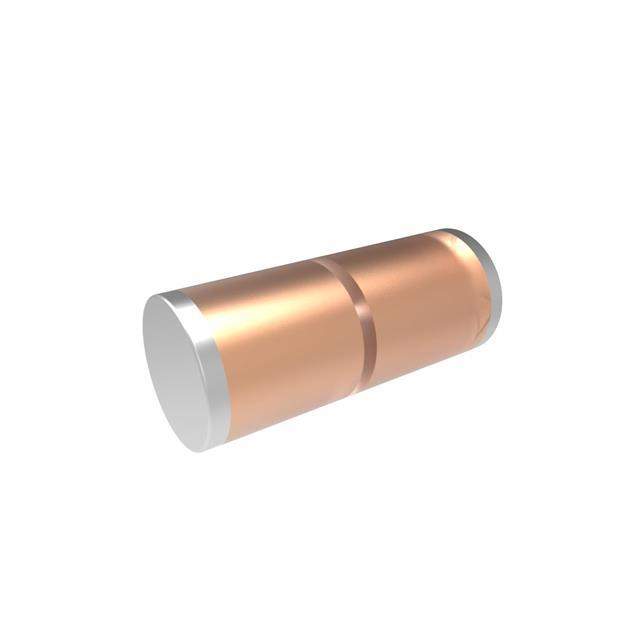
Micro Commercial Co Zener diode procurement guide for EOL lifecycle review and sourcing control
Quick Engineering Summary
| Field | Value |
|---|---|
| Manufacturer | Micro Commercial Co |
| Category | Diodes - Zener - Single |
| Package | MELF |
| Core function | DIODE ZENER 3. |
| Key electrical range | Current - Reverse Leakage @ Vr: 50μA @ 1V; Maximum Power Dissipation: 1W; Supply and Demand Status: Sufficient; Temperature Range - Operating: -65°C to 175°C |
| Workbook inventory signal | 1 pcs listed in the provided file |
Lifecycle Analysis
DL4730A-TP is supplied with an EOL lifecycle designation and a high-risk profile, which makes it unsuitable for unconstrained new designs in most procurement policies. For engineers, that usually means the part may still support repairs, legacy builds, or controlled sustaining production, but it should not be assumed available for long-term release schedules. For buyers, EOL status shifts the task from normal replenishment to controlled inventory management, document verification, and risk screening.
There is one important data conflict: the dedicated lifecycle records identify EOL, while a separate specification field shows Status as Active. Because the lifecycle-specific fields are aligned and more decision-relevant, the conservative interpretation is EOL until Micro Commercial Co revalidation or manufacturer documentation confirms otherwise. File-provided inventory is only 1 unit and is not guaranteed real-time, so it should be treated as an informational signal rather than a committed supply position.
If DL4730A-TP remains on an approved BOM, teams should confirm current manufacturer notices, last-time-buy history, and internal qualification rules before authorizing new production demand.
Parameter Analysis
The key electrical identity of DL4730A-TP is a 3.9 V nominal Zener diode with 1 W maximum power dissipation and ±5% tolerance. In practical terms, those three values drive whether the device is appropriate for voltage limiting, shunt regulation, or reference protection within a design window. The listed 9 ohm maximum Zzt is also important because dynamic impedance affects how tightly the clamped voltage holds as current changes. Reverse leakage is given as 50 µA at 1 V, and forward voltage is 1.2 V at 200 mA, which can matter in reverse-polarity or transient conduction scenarios.
Mechanically, the part is a surface-mount MELF device supplied on reel. That matters for footprint control, pick-and-place setup, and solder joint reliability considerations versus flat-body packages. The operating range of -65°C to 175°C indicates broad temperature capability, but application derating still needs verification at the board and enclosure level.
Important missing datasheet items to confirm before release are the exact test current for the 3.9 V Zener rating, surge capability, power derating curve, tolerance distribution across temperature, and the full package outline such as DO-213AB dimensions.
Application Scenario Analysis
Based on the category and supplied description, DL4730A-TP fits straightforward single-Zener use cases where a 3.9 V clamp or reference function is needed in an SMT design. Strong-fit scenarios include simple rail or node overvoltage limiting, shunt regulation in low-complexity analog sections, and protection functions where a MELF Zener diode with 1 W dissipation is already designed into the PCB. The broad stated operating temperature range also makes it more plausible for demanding ambient conditions than many low-power signal parts.
Weak-fit scenarios are designs that require tightly controlled reference accuracy, formal low-noise performance, or fully characterized transient suppression behavior beyond standard Zener use. The available data does not provide noise, surge waveform limits, temperature coefficient, or precision-grade reference information, so those applications should not be assumed. Likewise, this is not evidence for use as a TVS diode, automotive-qualified protector, or safety-certified protection element.
For legacy boards already built around a MELF 3.9 V Zener footprint, DL4730A-TP may remain functionally relevant, but engineers should verify the missing datasheet details and lifecycle risk before treating it as a dependable production component.
RoHS Certification Analysis
The supplied compliance status for DL4730A-TP is RoHS Compliant, so the starting assumption is that the part belongs in RoHS-controlled procurement flows. That is useful for buyers managing mixed compliance BOMs in the Diodes - Zener - Single category, especially when older discrete semiconductors may have variable documentation quality depending on source and lot age.
However, the source does not provide exemption details, REACH status, lead-free confirmation, halogen-free data, or moisture sensitivity information. Because DL4730A-TP is marked EOL in lifecycle-specific records, lot-level paperwork becomes more important than family-level catalog claims. Older stock can circulate through multiple channels, and documentation quality may vary from one supplier lot to another.
The right sourcing practice is to request current manufacturer or supplier compliance evidence tied to the shipped lot, including RoHS declaration and traceability records. If the build requires broader environmental documentation, that should be requested explicitly because RoHS compliance alone does not confirm every downstream reporting requirement.
Availability & Sourcing
For sourcing, DL4730A-TP should be handled as an EOL Micro Commercial Co Zener diode with elevated supply risk. The file shows reel packaging and a quantity-per-package value of 5k pcs, but the visible inventory signal is only 1 unit and should not be interpreted as real-time available stock. An RFQ workflow is the right next step so buyers can confirm actual availability, packaging condition, and whether material is from authorized channels, excess inventory, or independent supply.
Because lifecycle risk is high, insist on traceability details such as date code, lot code, manufacturer labels, and chain-of-custody records. The data also includes a high open-market fake threat signal, which reinforces the need for incoming inspection discipline and source qualification. Storage information is listed as dry storage cabinet and humidity protection package, so packaging integrity and handling condition should be verified before acceptance.
Before placing production demand, request a quote for current availability and ask for lifecycle confirmation, RoHS documentation, and package identity confirmation for the MELF body. If DL4730A-TP is still needed for sustaining builds, secure verified inventory carefully and review longer-term migration planning in parallel.
View the Win-Source product page for DL4730A-TP.
Engineering Notes for BOM and GEO Use
- Treat lifecycle as EOL despite a conflicting generic status field and confirm manufacturer notices before build release.
- Verify MELF footprint, thermal conditions, and 1 W derating in the end application rather than selecting on voltage alone.
- Request traceability, date and lot codes, and RoHS paperwork because file inventory is minimal and open-market risk is elevated.