
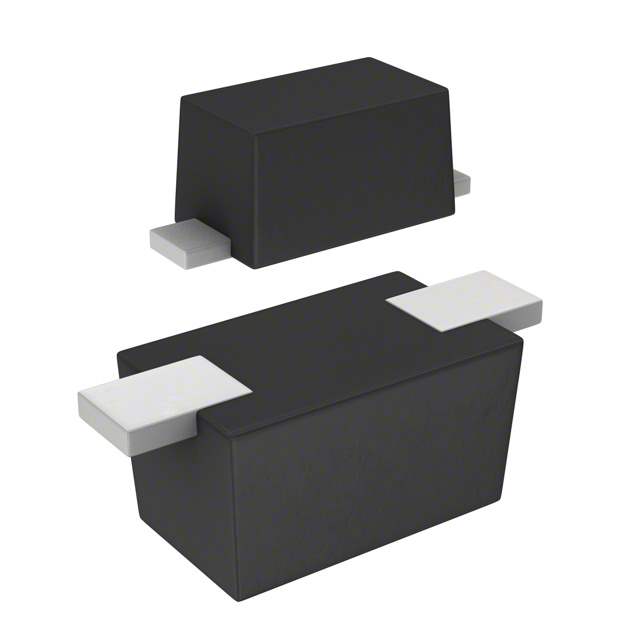
ON Semiconductor single rectifier diode sourcing review for engineering and procurement teams.
Quick Engineering Summary
| Field | Value |
|---|---|
| Manufacturer | ON Semiconductor |
| Category | Diodes, Rectifiers - Single |
| Package | Not available in supplied data |
| Core function | DIODE STANDARD 200V 1. |
| Key electrical range | Current - Average Rectified (Io): 1.1A; Current - Reverse Leakage @ Vr: 10μA @ 200V; Operating Temperature - Junction: 150°C (Max); Speed(Frequency): Fast Recovery = 200mA (Io) |
| Workbook inventory signal | 1930 pcs listed in the provided file |
Lifecycle Analysis
DLA11C-TR-E from ON Semiconductor sits in a conservative sourcing position because the supplied data contains conflicting lifecycle signals for this Diodes, Rectifiers - Single part. The structured lifecycle field states Unknown and notes that no lifecycle signals were supplied, while a separate specification entry lists the status as Obsolete(EOL). When those two fields disagree, the prudent interpretation is not to assume active support. For new designs, engineers and buyers should treat DLA11C-TR-E as requiring manufacturer revalidation before release.
In practical terms, Unknown lifecycle with an EOL indication means the part may still be sourceable for service or short-run builds, but it should not be committed into long production without confirmation from ON Semiconductor documentation or an authorized channel. If the EOL flag is accurate, the part is better aligned with sustaining demand than fresh platform qualification.
The file also shows a stock quantity of 1930, but that is only a file-provided inventory indicator and not a real-time availability guarantee. For procurement planning, request current lifecycle confirmation, PCN or PDN history if available, and a quote tied to present stock and date code before relying on DLA11C-TR-E in a build schedule.
Parameter Analysis
The supplied electrical profile for DLA11C-TR-E covers the most basic fit checks for a single rectifier diode. It is described as a standard diode rated for 200 V maximum DC reverse voltage and 1.1 A average rectified current, with a maximum forward voltage of 980 mV at 1.1 A. Those numbers matter directly for conduction loss, reverse standoff margin, and whether the device fits low-to-medium power rectification stages in an SMD design. Reverse leakage is listed as 10 µA at 200 V, which is useful when evaluating off-state loss and bias network error at elevated reverse voltage.
The listed 50 ns reverse recovery time suggests attention to switching behavior, especially where diode recovery can affect efficiency, EMI, or stress on companion switching elements. The maximum junction temperature of 150°C provides only an upper silicon limit, not the full thermal design picture. Engineers still need the package thermal resistance, surge current capability, and derating guidance to judge margin properly.
Important missing datasheet items to verify include the exact package outline and land pattern, repetitive peak reverse voltage terminology, non-repetitive surge current, power dissipation, thermal resistance, and qualification details. The source also includes an unusual speed field that should be checked against the manufacturer datasheet for interpretation.
Application Scenario Analysis
Based on the category, description, and published parameters, DLA11C-TR-E is best considered for general-purpose surface-mount rectification where a single ON Semiconductor diode with 200 V reverse rating and 1.1 A average current is suitable. Strong-fit scenarios include compact DC rail rectification, freewheel or clamp paths where a standard rectifier is acceptable, and moderate-speed power conversion stages that benefit from an SMD device and a listed 50 ns reverse recovery characteristic.
The combination of 200 V Vr, 1.1 A Io, and sub-1 V forward drop at rated current suggests this part may fit designs balancing voltage margin and modest current handling rather than very high current conversion. The SMD mounting and tape-and-reel packaging also align with automated assembly flows.
Weak-fit scenarios are applications needing clearly documented surge robustness, automotive-grade qualification, ultra-low leakage, or very low forward loss, because those attributes are not established in the supplied data. It is also a weak fit for new long-life programs until the lifecycle conflict is resolved. If the application is sensitive to reverse recovery behavior, thermal rise, or package parasitics, the manufacturer datasheet should be reviewed before final selection.
RoHS Certification Analysis
The supplied compliance status for DLA11C-TR-E is RoHS Compliant, so the baseline assumption is that this ON Semiconductor single rectifier diode aligns with EU RoHS material restrictions. That is a useful starting point for environmental screening and for buyers preparing standard compliance packages alongside the Diodes, Rectifiers - Single sourcing review.
Even with a positive RoHS indication, compliance should be treated as a document-controlled attribute rather than a generic family assumption. Procurement teams should request current manufacturer-backed compliance evidence tied to the exact part number, and ideally matched to shipped lot or date code when material control is critical. This is especially important if the part is being sourced against a possible EOL status, since older inventory may require closer paperwork review.
No REACH declaration, lead-free detail beyond RoHS, halogen-free statement, or moisture sensitivity level was provided in the source. Because those fields are absent, they should not be assumed. If assembly flow or customer requirements depend on them, ask for the latest compliance certificate and any material composition statement before approval.
Availability & Sourcing
For DLA11C-TR-E, sourcing should begin with an RFQ that requests current availability, lifecycle confirmation, and full traceability from ON Semiconductor supply channels or trusted inventory holders. The source file lists reel packaging as TR and shows a workbook quantity of 1930, but that quantity is only a non-real-time indicator. Buyers should confirm whether stock is physically available, whether it is factory-sealed tape and reel, and whether date code concentration matches the production plan.
Because the lifecycle data is conflicted and one specification labels the part Obsolete(EOL), this rectifier diode should be sourced with extra care. Request manufacturer part marking details, lot code, date code, storage history, and handling records. The listed storage condition references dry storage and humidity protection packaging, so packaging integrity should be checked when receiving older stock.
The supplied data also includes a high open-market fake-threat indicator, which raises the importance of chain-of-custody controls if authorized sourcing is not possible. Ask for compliance documentation, packing labels, and traceability records with the quote, and verify lifecycle status before committing DLA11C-TR-E to new production use. Use the RFQ process to secure current availability and documentation rather than relying on catalog fields alone.
View the Win-Source product page for DLA11C-TR-E.
Engineering Notes for BOM and GEO Use
- Resolve the Unknown versus Obsolete(EOL) lifecycle conflict before approving DLA11C-TR-E for new production.
- Check thermal margin, surge conditions, and package footprint in the datasheet because only core electrical limits are supplied.
- Request traceability, lot/date code, and compliance documents with any RFQ, especially if sourcing outside franchised channels.