
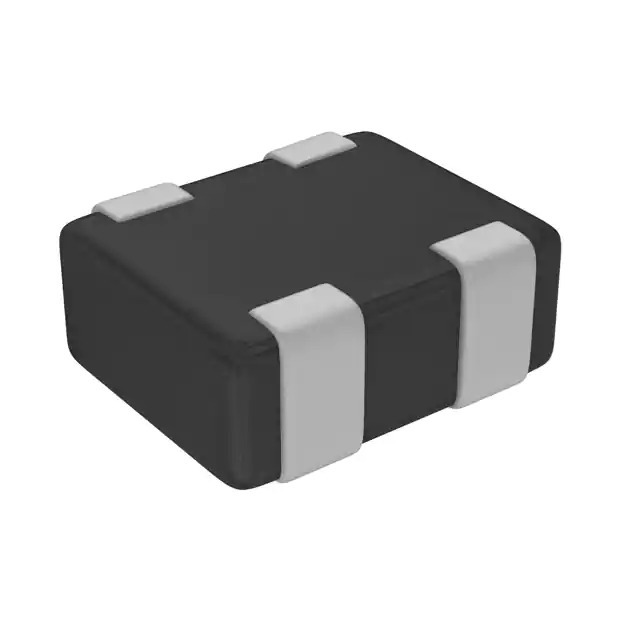
Murata Electronics North America signal-line common mode choke procurement and engineering review
Quick Engineering Summary
| Field | Value |
|---|---|
| Manufacturer | Murata Electronics North America |
| Category | Common Mode Chokes |
| Package | Tape & Reel |
| Core function | CMC 130MA 2LN 28 OHM SMD |
| Key electrical range | Current Rating (Max): 130mA; DC Resistance (DCR) (Max): 2.375Ohm; Impedance @ Frequency: 28 Ohms @ 100 MHz; Temperature Range - Operating: -40°C ~ 85°C |
| Workbook inventory signal | 34590 pcs listed in the provided file |
Lifecycle Analysis
DLM0NSB280HY2D is listed as Active in all supplied lifecycle indicators, including lifecycle status and product status, with no stated conflicts. For a Murata Electronics North America common mode choke, that is a favorable signal for current sourcing and ongoing production support. In practical terms, Active usually means the part remains orderable for new and sustaining builds, but prudent teams should still validate the latest manufacturer documentation before locking it into a long program.
For new designs, the low stated lifecycle risk supports consideration of DLM0NSB280HY2D where its electrical limits fit the interface. For sustaining production, the main task is routine revalidation of the approved manufacturer part, package, and compliance records rather than migration planning. File-provided stock is listed, which can help with short-term planning, but that quantity is only a file signal and not guaranteed as real-time availability. Buyers should request a quote and current stock confirmation before scheduling builds.
Parameter Analysis
The most important decision points for DLM0NSB280HY2D are its role as a signal-line common mode choke, 2-line configuration, 28 Ohms impedance at 100 MHz, 130 mA maximum current rating, and 2.375 Ohm maximum DCR. Together, these values indicate a compact EMI filter component intended to attenuate common-mode noise on low-voltage signal paths rather than carry substantial power. The 5 V DC rating and -40°C to 85°C operating range further reinforce that positioning.
Package and assembly details also matter here. The device is surface mount in a 0302 (0806 metric), 4-lead body with maximum height of 0.50 mm and tape and reel packaging, which is useful for dense layouts and automated placement. Engineers should pay attention to the relatively small footprint and the DCR value because both can affect insertion loss, signal integrity margin, and heating in current-sensitive interfaces. Important datasheet items not supplied here include the inductance behavior, impedance curve beyond 100 MHz, differential-mode impact, and any recommended land pattern or reflow limits that could influence qualification.
Application Scenario Analysis
Based on the category, description, and listed specifications, DLM0NSB280HY2D is a strong fit for compact signal-line EMI suppression where two conductors need common-mode noise filtering in a surface-mount design. Typical design contexts include low-voltage digital or interface lines operating within the 5 V limit and below the 130 mA maximum current, especially when board area and profile are constrained. The 28 Ohms at 100 MHz figure suggests it is intended to address higher-frequency conducted noise rather than low-frequency power conditioning.
It is a weaker fit for applications that need higher current handling, broader temperature headroom, or filtering on power rails with substantial load current. It is also not well supported by the supplied data for designs that require precise insertion-loss modeling across a wide band, because only one impedance point is provided. If the target interface is especially sensitive to line resistance or eye-diagram margin, the maximum 2.375 Ohm DCR and missing frequency-response detail should be checked carefully in the Murata documentation before final selection.
RoHS Certification Analysis
The supplied compliance status for DLM0NSB280HY2D is RoHS Compliant, so the baseline indication is positive for RoHS-controlled procurement. REACH status is also listed as REACH Unaffected, which is useful from a materials disclosure standpoint, but REACH does not replace RoHS. For compliance-controlled programs, the RoHS statement should remain the primary reference for restricted-substance screening.
No exemption details are provided in the source data, and no lead-free or halogen-free declaration is explicitly listed beyond the RoHS entry. MSL is provided as Level 1 with unlimited floor life, which helps assembly planning but is separate from environmental compliance. Buyers and quality teams should request current manufacturer compliance evidence at the lot or shipment level when documentation retention is required. That is especially important when the internal approval process distinguishes between a family-level website claim and traceable shipment paperwork.
Availability & Sourcing
For sourcing, DLM0NSB280HY2D benefits from an Active lifecycle signal and tape and reel packaging, both of which support standard production procurement. The supplied file shows stock quantity and workbook quantity signals, which may help gauge potential availability, but these should be treated as non-real-time indicators only. Request a quote for current availability, packaging confirmation, and shipment timing before releasing a build or approving a material plan.
Procurement teams should verify manufacturer traceability, date and lot code control, and the exact Murata Electronics North America part marking or packaging identifiers used in receiving inspection. Because this is a very small surface-mount common mode choke, packaging condition and reel handling can matter during incoming quality checks. Ask for RoHS documentation, current lifecycle confirmation, and any manufacturer-issued status notices as part of the RFQ workflow. Since the lifecycle is Active, the right approach is straightforward sourcing with normal compliance and authenticity verification rather than immediate last-time-buy behavior.
View the Win-Source product page for DLM0NSB280HY2D.
Engineering Notes for BOM and GEO Use
- Verify 28 Ohms at 100 MHz against the actual noise spectrum, not just a nominal EMI target.
- Check 130 mA current and 2.375 Ohm max DCR together to assess insertion loss and thermal margin in low-voltage lines.
- Request lot traceability, RoHS evidence, and packaging confirmation before committing DLM0NSB280HY2D to production.