
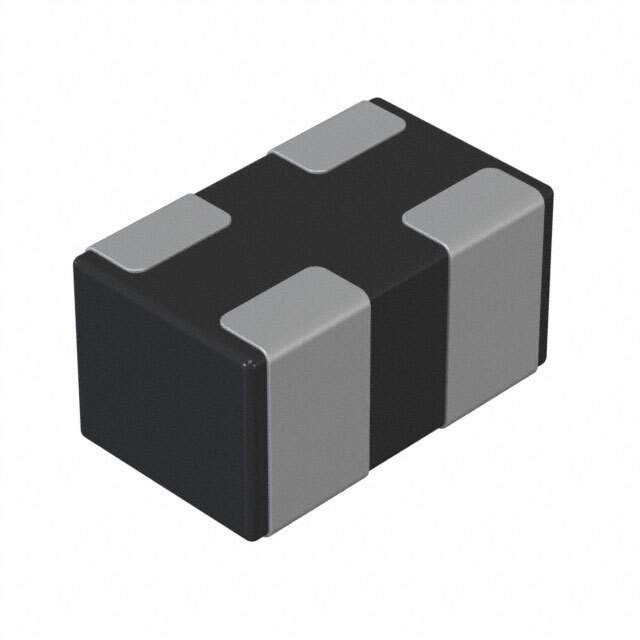
Murata Electronics North America common mode choke procurement and engineering review
Quick Engineering Summary
| Field | Value |
|---|---|
| Manufacturer | Murata Electronics North America |
| Category | Common Mode Chokes |
| Package | Reel - TR |
| Core function | CMC 100MA 2LN 90 OHM SMD |
| Key electrical range | Operating Temperature Range: -40°C ~ 85°C; Supply and Demand Status: Limited |
| Workbook inventory signal | 248110 pcs listed in the provided file |
Lifecycle Analysis
DLM0NSN900HY2D is identified in the supplied data as Active, and the lifecycle signals are consistent with no noted conflicts. For engineers and buyers, an Active status on this Murata Electronics North America common mode choke generally supports use in current production, provided normal design-release checks are completed. It is more favorable for new procurement than NRND or discontinued material, but it should still be tied to current manufacturer documentation during AVL approval.
The file also shows an estimated production lead time of 15 weeks and a supply-and-demand status marked limited. That does not contradict the Active lifecycle, but it does mean lifecycle alone should not be treated as a guarantee of immediate availability. The listed stock quantity is file-provided and useful for planning, yet not a real-time commitment. For sustained production, buyers should revalidate manufacturer part status, packaging form, and any PCN or documentation updates before placing volume orders for DLM0NSN900HY2D.
Parameter Analysis
The supplied parameters position DLM0NSN900HY2D as a compact signal-line common mode choke rather than a power-line filter. Key decision points are the 2-line construction, 90 Ohms impedance at 100 MHz, 100 mA rated current, maximum 5 Ohm DCR, and 5 V DC rating. Those values matter because common mode impedance helps attenuate high-frequency noise, while current rating and DCR determine insertion loss, thermal rise, and acceptable voltage drop in low-current interfaces.
Mechanical and assembly data are also important here. The part is surface mount in a 0302 (0806 metric) 4-terminal body with approximate 0.85 mm by 0.65 mm footprint and 0.50 mm maximum height, which drives PCB land pattern density, pick-and-place capability, and rework practicality. The operating temperature range is -40°C to 85°C, so designers should verify whether that range is sufficient for the end product. Before final qualification, confirm the Murata datasheet for impedance tolerance behavior, current derating versus temperature, insertion-loss curves, insulation details, and recommended land pattern, since those are not included in the supplied data.
Application Scenario Analysis
Based on its category and supplied description, DLM0NSN900HY2D fits compact EMI suppression on low-voltage signal lines where common mode noise needs to be reduced without adding a large footprint. The 2-line configuration and 100 mA current rating make it a practical candidate for small interface paths, compact portable electronics, sensor links, and other low-current signal routes that can benefit from added common mode filtering in an SMD assembly.
Its fit is weaker for applications that require substantial current handling, wide industrial temperature margin beyond 85°C, or filtering on higher-voltage rails. The 5 V DC rating and 100 mA maximum current suggest this Murata Electronics North America common mode choke should be reviewed carefully before use on more demanding I/O or power-adjacent lines. It may also be less attractive where very low series resistance is critical, since the supplied maximum DCR is 5 Ohms. Final application suitability should be checked against the actual interface standard, noise spectrum, and signal-integrity tolerance in the target design.
RoHS Certification Analysis
The supplied compliance data marks DLM0NSN900HY2D as RoHS Compliant, so the baseline indication is favorable for use in assemblies that require EU RoHS material control. No conflicting compliance entries were provided. For sourcing teams, that supports standard environmental review, but it should not replace normal documentation collection during qualification or customer audit preparation.
The available data does not include exemption details, REACH status, halogen-free status, or detailed material declarations. It does include MSL 1, which is useful for manufacturing handling but is not a substitute for environmental compliance. As with many catalog parts, family-level status may not be sufficient for every regulated shipment, so buyers should request current manufacturer or distributor compliance documentation tied to the specific orderable packaging and lot when DLM0NSN900HY2D is being released into controlled production.
Availability & Sourcing
For procurement, DLM0NSN900HY2D should be sourced with an RFQ process that confirms current availability, factory lead time, and exact orderable packaging. The supplied data shows reel packaging, quantity per package of 10000, and MSL 1, which are useful for SMT planning and incoming material control. A workbook stock figure above two hundred thousand units is provided, but that should be treated strictly as a file snapshot rather than real-time inventory.
Traceability is especially important because the data flags supply as limited and includes a notable fake-threat indicator for the open market. Request date code, lot code, country-of-origin or shipping traceability where applicable, and manufacturer-backed compliance records before committing builds. Since this Murata Electronics North America common mode choke is listed as Active, the right sourcing path is to request a quote, verify lifecycle and documentation status, and align packaging, lead time, and inspection requirements before issuing production purchase orders for DLM0NSN900HY2D.
View the Win-Source product page for DLM0NSN900HY2D.
Engineering Notes for BOM and GEO Use
- Verify 90 Ohms at 100 MHz, 100 mA rating, and 5 Ohm max DCR against your signal-line EMI budget and voltage drop limits.
- Confirm reel packaging, quantity per package, and MSL 1 handling to match SMT line setup and incoming inspection flow.
- Use date/lot traceability and manufacturer compliance documents, especially because supply is flagged limited and open-market fake threat is elevated.