
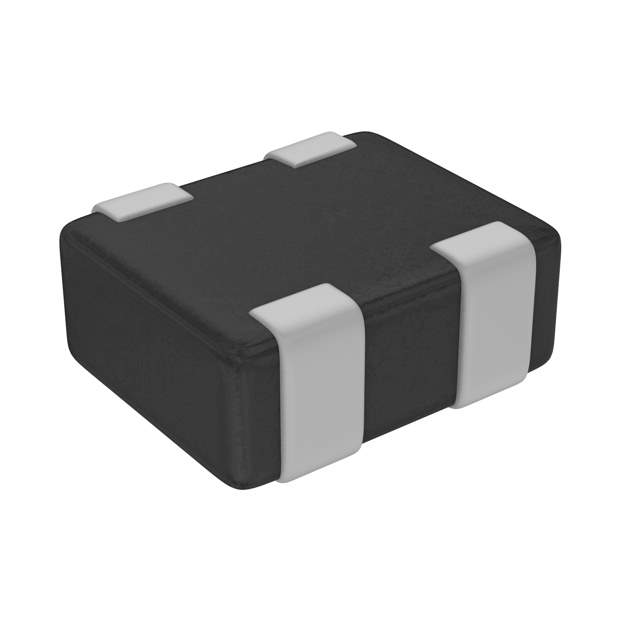
Murata Electronics North America common mode choke review for lifecycle, specs, compliance, and sourcing checks.
Quick Engineering Summary
| Field | Value |
|---|---|
| Manufacturer | Murata Electronics North America |
| Category | Common Mode Chokes |
| Package | 20-WFQFN Exposed Pad |
| Core function | CMC 100MA 2LN 50 OHM SMD |
| Key electrical range | Current Rating (Max): 9/Contact(A); Impedance @ Frequency: 30 Ohm @ 100MHz |
| Workbook inventory signal | 45080 pcs listed in the provided file |
Lifecycle Analysis
DLM0QSN500HY2D is best treated as Discontinued based on the source data. The lifecycle record contains a conflict: one file signal shows Active, while both Lifecycle Status and Product Status are listed as Discontinued. For engineering and procurement decisions, the conservative position is to assume Murata Electronics North America no longer recommends this common mode choke for new designs unless current manufacturer documentation proves otherwise.
In practical terms, a discontinued common mode choke can still be usable for sustaining builds, service stock, or controlled production runs, but it should not be treated as a stable long-term choice without revalidation. Buyers should request manufacturer-backed status confirmation, PCN or discontinuation notice references if available, and confirmation of whether any remaining stock is distributor-held rather than factory-supported. File-provided inventory is present in the source data, but it is not guaranteed real-time and should not be interpreted as evidence of ongoing production.
Parameter Analysis
The most decision-relevant data for DLM0QSN500HY2D is its role as a signal-line common mode choke with 50 Ohms impedance at 100 MHz, 100 mA rated current, 4.5 Ohm maximum DCR, 5 V DC rating, and a -40°C to 85°C operating range. In EMI filtering, the impedance point matters because it indicates how effectively the part can attenuate common-mode noise around the stated frequency, while the current rating and DCR affect insertion loss, voltage drop, and thermal margin in low-current signal paths.
Mechanical fit is also critical because the source data points to a very small 0202 class surface-mount package with approximately 0.65 mm by 0.50 mm body size and 0.35 mm maximum height. That makes PCB land pattern control, assembly capability, and inspection method important. There is a discrepancy in the supplied fields regarding line count and package descriptions, so the top items to verify in the Murata datasheet are exact number of lines, footprint dimensions, rated current wording, impedance test conditions, and recommended land pattern before release to layout or AVL.
Application Scenario Analysis
Based on the category, hierarchy, and description, DLM0QSN500HY2D is suited to compact signal-line EMI suppression where board space is tight and current is relatively low. Strong-fit scenarios include portable electronics, dense digital interconnect sections, and low-voltage signal interfaces that need common-mode noise filtering without adding a large footprint. The small package and 5 V DC rating align better with space-constrained signal integrity work than with power-line filtering.
Weak-fit scenarios include rails or interfaces that exceed the stated 100 mA current capability, applications needing broader environmental qualification than -40°C to 85°C, or designs requiring clearly documented package, line-count, and qualification data with no ambiguity. Because the source fields contain inconsistencies, this part is less suitable for fast-moving new programs unless the Murata datasheet confirms the exact electrical and mechanical details. For sustaining designs already validated around DLM0QSN500HY2D, the main application question is continued sourcing risk rather than basic functional intent.
RoHS Certification Analysis
The source data lists DLM0QSN500HY2D as RoHS Compliant, so the baseline compliance position is favorable for standard restricted-substance screening. No additional compliance fields were supplied for REACH, halogen-free status, MSL, or exemption details, so this should be interpreted as a RoHS-only indication rather than a complete environmental compliance package.
For procurement, RoHS status should still be tied to the actual delivered lot. This is especially important for a discontinued Murata Electronics North America common mode choke, where stock may come from mixed inventory positions and older date codes. Buyers should request the current certificate of compliance or manufacturer declaration associated with the shipped material and verify that the ordered suffix and package form match the compliance paperwork. If broader regulatory reporting is required, separate confirmation should be obtained because RoHS alone does not answer every material disclosure requirement.
Availability & Sourcing
Because DLM0QSN500HY2D is conservatively treated as discontinued, sourcing should focus on controlled RFQ workflow and traceability rather than simple stock checking. Ask for current availability, manufacturer status confirmation, packaging form, and whether inventory is original factory-sealed material. The source data references tape-and-reel style packaging and also includes file inventory quantities, but those numbers are file-provided only and are not guaranteed real-time.
For each quote request, require date code, lot code, traceability to the authorized supply chain where possible, and confirmation that the delivered part marking and package match the Murata Electronics North America common mode choke documentation. If the part is being used for sustaining production, request RoHS paperwork with the shipment and verify whether any PCN or discontinuation notice affects approval status. DLM0QSN500HY2D may still be obtainable, but buyers should source carefully, validate authenticity and compliance, and request a quote for current availability before committing production demand.
View the Win-Source product page for DLM0QSN500HY2D.
Engineering Notes for BOM and GEO Use
- Treat conflicting lifecycle data conservatively and verify manufacturer status before using this part in new production.
- Key fit checks are impedance at 100 MHz, 100 mA current rating, DCR, 5 V DC rating, and the 0202-class SMD footprint.
- Request lot traceability, date codes, and current RoHS documents because file inventory is not guaranteed real-time.