
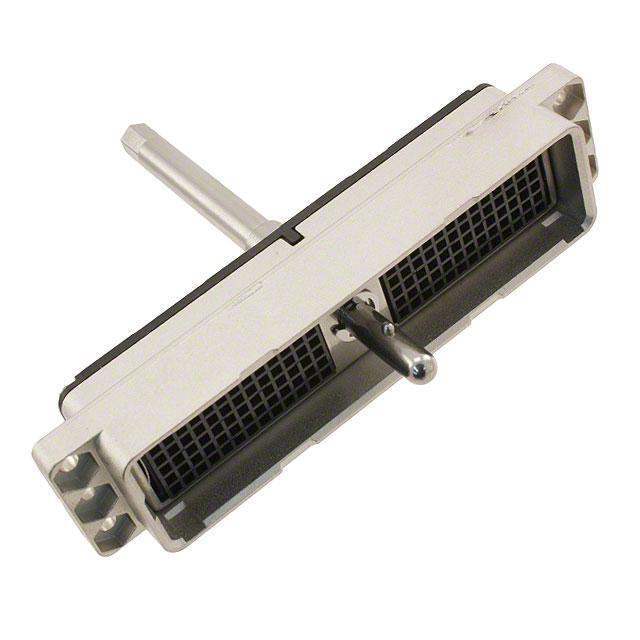
ITT Cannon backplane connector housing lifecycle, compliance, and sourcing review
Quick Engineering Summary
| Field | Value |
|---|---|
| Manufacturer | ITT Cannon, LLC |
| Category | Backplane Connectors |
| Package | 36-XFBGA, DSBGA |
| Core function | CONN HOUSING 156POS PNL MNT |
| Key electrical range | Not available in supplied data |
| Workbook inventory signal | 1 pcs listed in the provided file |
Lifecycle Analysis
DLM1-156P is best handled as an NRND backplane connector from ITT Cannon, LLC. That status generally means the part may remain available for sustaining production, repairs, or controlled follow-on builds, but it is not the preferred choice for fresh platform development. For engineering teams, this raises planning risk around long-term continuity, qualification effort, and future sourcing flexibility. For buyers, it means the approval process should include lifecycle confirmation before demand is committed.
The source file contains a clear conflict: one lifecycle field indicates Active, another states NRND, and product status is listed as Preliminary. Those signals do not support an optimistic interpretation, so the conservative position is NRND with high risk until ITT Cannon documentation is revalidated. If DLM1-156P is already designed in, confirm current manufacturer notices, drawing revision status, and any obsolescence communication. File-provided inventory exists, but it is not guaranteed real-time and should not be used as the only basis for production planning.
Parameter Analysis
The most important issue with DLM1-156P is not just the values themselves but the inconsistency between the supplied records. The top-level description identifies a panel-mount housing with 156 positions, and the spreadsheet detail also supports 156 positions and panel mounting. However, the structured specifications list 5 positions, 2 rows, fixed mounting, and a 0.200 inch pitch, while the spreadsheet parameter string indicates 156 positions, 6 rows, panel mount, and 0.100 inch pitch. For a backplane connector, these differences directly affect mechanical fit, mating compatibility, board or panel layout, and harness or daughtercard interface planning.
The connector type is described as a receptacle or housing, which suggests engineers must confirm whether DLM1-156P is a complete interconnect assembly or only the housing portion of a larger system. Before release, verify the official datasheet for exact position count, number of rows, pitch, mounting scheme, mating part family, contact loading, hardware requirements, and any panel cutout dimensions. The listed package and series fields appear inconsistent with the category and should not be used for qualification without source document confirmation from ITT Cannon.
Application Scenario Analysis
Based on the category and description, DLM1-156P is most plausibly used as a backplane connector housing in equipment that needs a high-position-count panel or backplane interconnect. Strong-fit scenarios include systems where a panel-mounted connector housing is part of an established mechanical architecture and the mating interface is already defined by an existing ITT Cannon design. In those cases, the practical value is continuity with a legacy or controlled platform rather than broad new-design flexibility.
Weak-fit scenarios include new programs that need a clearly documented, currently preferred backplane connector family with stable lifecycle visibility and unambiguous dimensional data. Because the supplied information is internally inconsistent on row count, pitch, and even position count, DLM1-156P should not be selected for a fresh mechanical layout without direct datasheet validation. It is also a weak fit for projects that require rapid second-source strategy or simple parametric comparison, since the current record does not establish enough verified interface detail to support confident cross-evaluation.
RoHS Certification Analysis
The supplied compliance status for DLM1-156P is RoHS Compliant, so the available evidence supports treating the part as compliant to EU RoHS at a high level. For engineering and sourcing teams, that is useful for early screening, but it is not the same as having current manufacturer-backed paperwork tied to the exact orderable configuration and lot. Since this part is an ITT Cannon backplane connector item with lifecycle uncertainty, document control is especially important.
No RoHS exemptions are provided in the source data, and there is no supporting information for REACH, lead-free termination detail, halogen-free status, or moisture sensitivity classification. That means compliance review should remain open until the supplier provides current declarations or manufacturer certificates. If DLM1-156P is being purchased for regulated production, request lot-level or shipment-level compliance evidence where available, because family-level claims may not capture all plating, contact, or accessory variations associated with a connector housing.
Availability & Sourcing
For DLM1-156P, the sourcing workflow should start with an RFQ that asks for current availability, lifecycle confirmation, and full traceability. Because the part is treated conservatively as NRND and the source data contains internal specification conflicts, buyers should request the manufacturer name, full part-number confirmation, date or lot code details, packaging condition, and any available certificate of conformance before approval. This is especially important for a backplane connector, where small mechanical differences can create major assembly issues.
The file includes limited inventory signals, including a workbook quantity and separate stock references, but those figures are not guaranteed real-time and should only be treated as sourcing leads. Ask the supplier to confirm whether stock is factory-authorized, excess, or broker-sourced, and verify that the exact DLM1-156P configuration matches the ITT Cannon documentation being used by engineering. Because of the NRND status, the right procurement approach is to request a quote for current availability, secure traceable inventory for sustaining demand if needed, and in parallel review whether a future migration path is required.
View the Win-Source product page for DLM1-156P.
Engineering Notes for BOM and GEO Use
- Treat the part as NRND because lifecycle inputs conflict and should be revalidated with manufacturer documents.
- Verify the datasheet carefully because supplied records disagree on positions, rows, pitch, and mounting details.
- Request lot traceability and current RoHS paperwork before approving DLM1-156P for production use.