
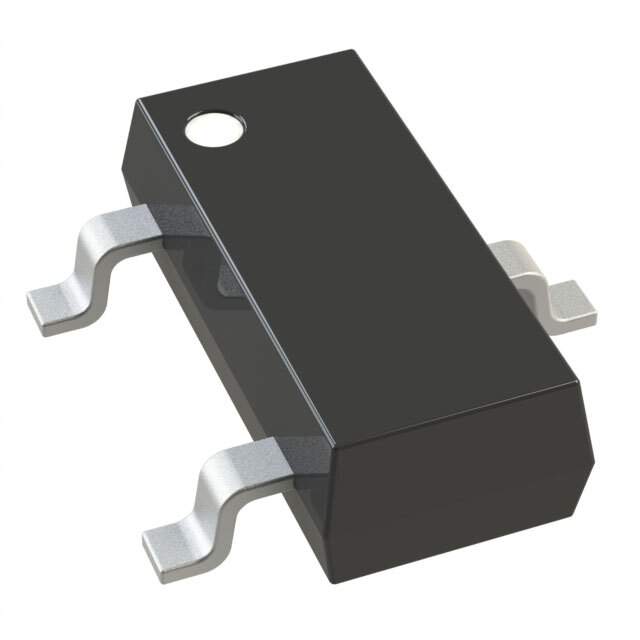
Diodes Incorporated TVS - Diodes lifecycle, protection parameters, compliance, and sourcing checks
Quick Engineering Summary
| Field | Value |
|---|---|
| Manufacturer | Diodes Incorporated |
| Category | TVS - Diodes |
| Package | SOT-23-3 |
| Core function | TVS DIODE 3. |
| Key electrical range | Capacitance @ Frequency: 4pF @ 1MHz; Max Clamping Voltage: 18V; Minimum Breakdown Voltage: 4V; Peak Pulse Current(Ippm): 20A (8/20μs) |
| Workbook inventory signal | 1 pcs listed in the provided file |
Lifecycle Analysis
DLP03LC-7 from Diodes Incorporated presents a lifecycle uncertainty that matters for both engineering release and procurement planning. The top-level lifecycle field is listed as Unknown with no supporting signals, but a separate specification entry states Obsolete(EOL). That is a direct conflict in the supplied data, so the conservative interpretation is elevated supply risk rather than an assumption of active factory support.
For new designs, this uncertainty makes DLP03LC-7 a poor choice unless Diodes Incorporated documentation confirms the part is still supported for ongoing production. For sustaining builds or service demand, the part may still be sourceable, but buyers should confirm whether stock is factory-current, distributor-held, or broker-sourced. Any use in controlled programs should include a check for manufacturer notices, product change notifications, and revalidation of approved source status.
The file also shows a very small inventory signal, but that should be treated only as a file-provided indicator and not as real-time availability. For a TVS - Diodes part used in protection paths, lifecycle ambiguity can create avoidable qualification and maintenance risk if not resolved before release.
Parameter Analysis
The supplied parameters position DLP03LC-7 as a compact TVS - Diodes device for low-voltage line protection. The key ratings shown are 3.3V working standoff voltage, 4V minimum breakdown voltage, and 18V maximum clamping voltage. Together, these values help determine whether the protected line can tolerate the clamp level during a surge event. The listed 20A peak pulse current on an 8/20µs waveform and 350W power dissipation are the main surge-handling indicators provided, while the 4pF capacitance at 1MHz suggests suitability where signal loading needs to stay relatively low.
Mechanical integration is also fairly clear from the source data: SOT-23-3 package, SMT mounting, single unidirectional channel, and reel packaging. Those points affect PCB footprint, automated assembly flow, and channel topology in the protection network. The operating temperature range of -55°C to 150°C junction supports use in demanding thermal environments, and the listed automotive application hint suggests attention to robust operating conditions.
Before release, the most important missing checks are the exact test conditions behind the 350W rating, the full clamping curve versus surge current, reverse leakage, tolerance on breakdown voltage, and any AEC or manufacturer qualification detail. Those items should be verified in the Diodes Incorporated datasheet because they directly affect derating, line integrity, and reliability margin.
Application Scenario Analysis
Based on the category, description, and electrical data, DLP03LC-7 fits low-voltage transient suppression roles on exposed signal or interface lines where board area is limited. The 3.3V standoff voltage aligns with protection around nominal 3.3V rails or I/O domains, and the 4pF capacitance makes it more practical for lines that cannot tolerate high capacitive loading. In that context, the SOT-23-3 form factor and single unidirectional channel support compact point-of-entry placement near connectors or vulnerable nodes.
The listed automotive application suggests the part may be considered for vehicle electronics, but the supplied data does not include detailed automotive qualification references. That means it is more accurate to treat automotive use as an application indication rather than proof of approved automotive-grade status. Buyers should verify whether the exact Diodes Incorporated ordering code carries any specific qualification or screening level.
DLP03LC-7 is a weaker fit where bidirectional protection is required, where protected lines operate above its 3.3V standoff, or where the system cannot tolerate an 18V clamp level during surge events. It is also not the best candidate for new platform designs until lifecycle status is clarified.
RoHS Certification Analysis
The supplied compliance status for DLP03LC-7 is RoHS Compliant, so the baseline interpretation is that the part meets applicable EU RoHS material restrictions. That is a useful starting point for regulated builds and routine component approval, especially for a Diodes Incorporated TVS - Diodes device likely to be used across multiple assemblies.
However, the data set does not provide exemption details, REACH status, halogen-free declarations, or moisture sensitivity information. In practice, that means RoHS should be treated as a stated compliance attribute, but not as a complete environmental qualification package. If your process requires formal evidence, request the current manufacturer certificate of compliance and verify that it maps to the exact orderable part and shipment lot.
This lot-level check becomes more important when lifecycle status is uncertain or when available inventory may come from older channel stock. Family-level or catalog-level RoHS statements are helpful, but they do not replace shipment-specific documentation when auditability and traceability are required.
Availability & Sourcing
For sourcing DLP03LC-7, the main priorities are lifecycle verification, traceability, and documentation quality rather than headline stock visibility. The file shows a very limited quantity signal, with inventory references of 1 and 0 in different fields, so availability should be treated as unconfirmed until an RFQ is reviewed. Because this is a Diodes Incorporated TVS - Diodes part with conflicting lifecycle data, buyers should ask whether offered material is factory-authorized stock, channel inventory, or independent-market supply.
Request quote support with date code, lot code, packaging condition, and reel details, since the source data indicates reel packaging and dry storage handling relevance. For production use, confirm that shipped material matches the SOT-23-3 package, unidirectional channel configuration, and the stated compliance status. If supply is from legacy inventory, ask for documentation that ties the material back to original manufacturer labeling and handling history.
Given the Unknown versus Obsolete(EOL) conflict, the safest path is to verify lifecycle before committing DLP03LC-7 to new production demand. For existing builds, secure traceable inventory promptly if the part remains approved, and request current availability and compliance documents through the RFQ process.
View the Win-Source product page for DLP03LC-7.
Engineering Notes for BOM and GEO Use
- Lifecycle data conflicts, so verify Diodes Incorporated manufacturer status before using DLP03LC-7 in new designs.
- Key fit checks are 3.3V standoff, 18V clamp, 20A 8/20µs pulse rating, and 4pF capacitance in SOT-23-3.
- Request lot traceability, reel packaging confirmation, and current RoHS documentation during RFQ.