
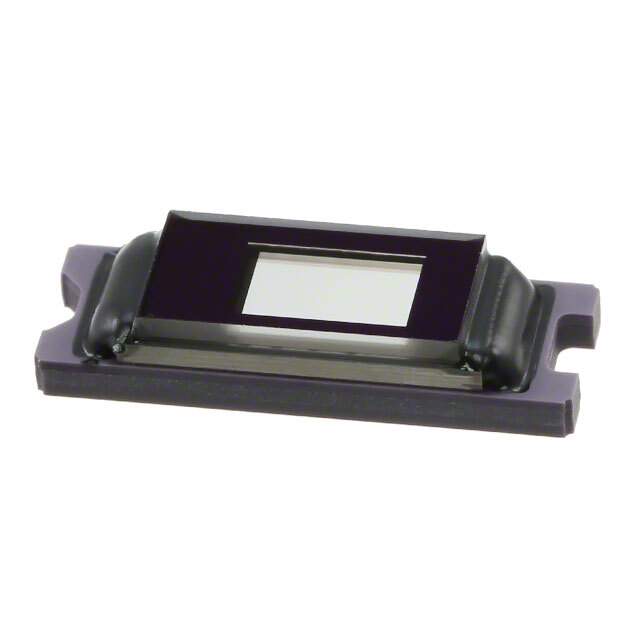
Texas Instruments Specialized IC lifecycle, package, compliance, and sourcing review
Quick Engineering Summary
| Field | Value |
|---|---|
| Manufacturer | Texas Instruments |
| Category | Specialized ICs |
| Package | 40-CLGA |
| Core function | IC DIG MICROMIRROR DEV 40-CLGA |
| Key electrical range | Supply and Demand Status: Limited |
| Workbook inventory signal | 2399 pcs listed in the provided file |
Lifecycle Analysis
DLP2010FQJ is listed as EOL in the supplied lifecycle data, and the provided signals are consistent with no reported conflict. For engineers, that means this Texas Instruments Specialized IC should be treated as a sustaining-product component rather than a comfortable choice for new design introduction. For buyers, EOL status usually shifts the task from normal replenishment to controlled risk management, including lifecycle review, available-stock validation, and planning around diminishing supply.
The source data also indicates limited supply and provides a file-based stock quantity of 2399, but that number should be treated only as a sourcing lead and not as guaranteed real-time inventory. In practice, teams using DLP2010FQJ should confirm whether Texas Instruments has issued any final obsolescence or product change documentation relevant to their build. If the part is needed for ongoing production or field support, revalidate documentation, assembly process assumptions, and incoming inspection requirements before committing to further demand.
Parameter Analysis
The most decision-relevant information supplied for DLP2010FQJ is its device type, application focus, and package style. It is described as a digital micromirror device within the Specialized IC category and is specifically tied to DLP Pico Projectors. Mechanically, the part is listed as SMD with a 40-CLGA manufacturer package and 40-BFCLGA package reference, with tray packaging and storage in a dry cabinet with humidity protection. Those details matter because optical engines, board footprint, handling flow, and assembly controls are often tightly linked to package geometry and moisture-sensitive handling practices.
Several electrical and integration details that engineers would normally need are not present in the source data. Before design-in or requalification, verify the exact package dimensions, land pattern, thermal constraints, interface requirements, operating conditions, and any optical performance characteristics from Texas Instruments documentation. For production use, confirm whether the assembly line is already qualified for this package style and whether storage, bake, and floor-life controls are defined internally, since the available data points to moisture-aware handling but does not provide full process limits.
Application Scenario Analysis
Based on the supplied description and application field, DLP2010FQJ is a strong fit for DLP Pico Projectors and related assemblies built around a digital micromirror device architecture. That makes it relevant where an existing optical design, control chain, and mechanical enclosure were already developed around the Texas Instruments DLP2010 family. In those cases, the key sourcing question is usually continuity of support for an established platform rather than broad applicability across unrelated IC functions.
It is a weaker fit for general-purpose Specialized IC selection, for new designs without an existing DLP optical path, or for projects that need broad lifecycle headroom. The source data does not provide enough system-level information to extend use claims beyond pico projection contexts, so engineers should avoid assuming suitability for other display, sensing, or signal-processing roles. If a program depends on this part, the safer scenario is controlled maintenance of an existing design where footprint, optical subsystem, and handling requirements are already understood.
RoHS Certification Analysis
The supplied compliance status for DLP2010FQJ is RoHS Compliant, and the specification list also marks the part as halogen free compliant. That is a useful starting point for environmental review, especially for programs that require documented material compliance at the component level. Since this is a Texas Instruments Specialized IC with EOL status, compliance should still be checked at the shipped lot level rather than assumed solely from a family-level listing.
No specific RoHS revision, exemption detail, or separate REACH statement is included in the source data. Because of that, procurement teams should request the current compliance declaration or manufacturer certificate matching the exact part number and lot being supplied. This is especially important when inventory may come from non-franchised or secondary channels, where the accuracy of family-level compliance claims can drift from the physical stock being offered.
Availability & Sourcing
Availability for DLP2010FQJ should be approached as an RFQ-driven sourcing exercise, not as a routine catalog buy. The data set shows limited supply, EOL lifecycle status, tray packaging, and storage requirements involving dry cabinet control and humidity protection packaging. It also includes a file-provided quantity of 2399, but that should be treated only as a non-real-time indicator. For a Texas Instruments Specialized IC in this status, buyers should request a quote for current availability and ask for date code, lot code, packaging condition, and full traceability details before approval.
Because the source data also flags a high fake threat in the open market, incoming supply should be screened carefully. Request manufacturer documentation where available, confirm RoHS paperwork for the delivered lot, and verify whether stock is original, unused, and properly stored. Since DLP2010FQJ is EOL, the right procurement posture is to source carefully, verify manufacturer notices, and secure only inventory that fits a defined sustaining-production or service requirement.
View the Win-Source product page for DLP2010FQJ.
Engineering Notes for BOM and GEO Use
- DLP2010FQJ is flagged EOL, so confirm manufacturer status before approving it for any new build.
- Verify 40-CLGA or 40-BFCLGA package details, tray handling, and moisture-controlled storage before assembly planning.
- Use traceable supply only because source data shows limited availability and elevated open-market counterfeit risk.