
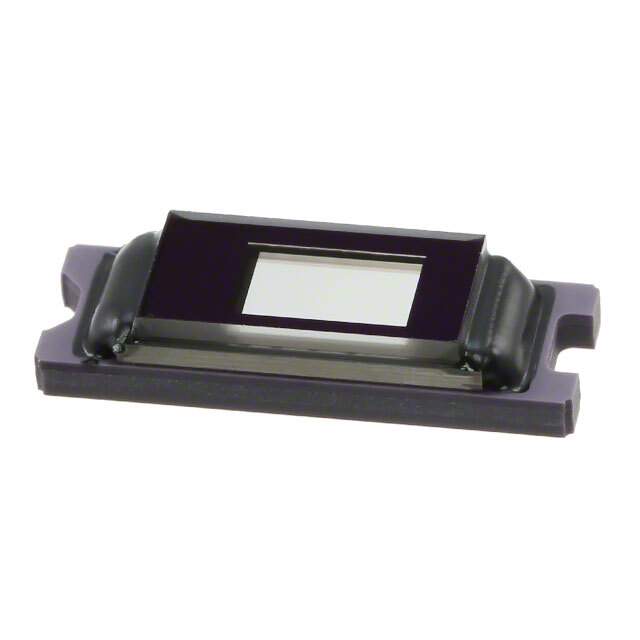
EOL Texas Instruments Specialized IC review with package, compliance, and procurement checkpoints
Quick Engineering Summary
| Field | Value |
|---|---|
| Manufacturer | Texas Instruments |
| Category | Specialized ICs |
| Package | 40-CLGA |
| Core function | IC DIG MICROMIRROR DEV 40-CLGA |
| Key electrical range | Supply and Demand Status: Limited |
| Workbook inventory signal | 1 pcs listed in the provided file |
Lifecycle Analysis
DLP2010NIRFQJ is identified in the supplied data as EOL, and the lifecycle signals are consistent with no reported conflict. For engineers, that means this Texas Instruments Specialized IC should not be assumed suitable for fresh platform development unless there is a documented business exception. For buyers, EOL status shifts the focus from normal replenishment to controlled last-time sourcing, service support, and lifecycle risk containment.
The source also lists an estimated EOL state as obsolete or end of life, with supply and demand marked limited. A workbook quantity of 1 is present, but that is only a file-provided inventory indicator and not a guarantee of current stock. Before committing DLP2010NIRFQJ to any build, teams should revalidate the latest Texas Instruments documentation, confirm whether any product change or discontinuation notices apply, and decide whether procurement is supporting sustaining production only. If this device remains on a released BOM, internal requalification and long-term stocking strategy should be reviewed.
Parameter Analysis
The most usable parameters in the supplied data are mechanical and procurement-oriented rather than functional. DLP2010NIRFQJ is described as a digital micromirror device in a 40-CLGA manufacturer package, with a 40-BFCLGA package reference and SMD mounting. Those details matter because package geometry, land pattern compatibility, assembly profile, and inspection approach must match the PCB and manufacturing process. Bulk packaging is also relevant for handling control, incoming inspection, and moisture-protection workflow.
Important technical data is missing from the source, including operating voltages, interface requirements, optical characteristics, thermal limits, programmable status confirmation, and MSL data. Those are the first items to verify in the Texas Instruments datasheet before any reuse decision. Engineers should also confirm whether the exact 40-CLGA outline and the listed 15.9 x 5.3 package note from the source align with the board footprint already in service. Since DLP2010NIRFQJ is EOL, package-level fit is necessary but not sufficient; remaining qualification evidence and manufacturer handling guidance should be checked as well.
Application Scenario Analysis
Based on the description and family naming alone, DLP2010NIRFQJ fits applications that require a digital micromirror device within a specialized IC architecture. Strong-fit scenarios are therefore limited to existing optical or projection-oriented designs already built around this specific Texas Instruments device family and package format. In those cases, the main engineering question is not general suitability but whether the exact part, package, and lifecycle state still align with service or sustaining requirements.
Weak-fit scenarios include any new design effort seeking a generic Specialized IC for undefined control, sensing, or compute roles. The provided data does not support that kind of broad use because no electrical or system-level performance parameters are included. It also does not establish compatibility with other DMD family members, so cross-family assumptions should be avoided. If a team is evaluating DLP2010NIRFQJ for reuse, they should verify the complete optical engine requirements, board footprint, storage condition controls, and manufacturer documentation rather than relying on the short category description alone.
RoHS Certification Analysis
The supplied compliance status for DLP2010NIRFQJ is RoHS Compliant, so the baseline assumption is that this Texas Instruments Specialized IC meets applicable RoHS restrictions at the family or listing level. That is useful for screening, but it should not be treated as the final compliance package for shipment, customer PPAP, or regulated documentation flows.
No exemption information is supplied, and there are no additional data points for REACH, lead-free finish, halogen-free content, or moisture sensitivity level. Because the device is EOL, buyers should request current lot-specific or shipment-specific compliance evidence rather than relying only on historic family declarations. This is especially important if stock is sourced through constrained channels or from older date codes. In practice, RoHS status should be confirmed together with date and lot traceability, storage records, and packaging condition so compliance and physical handling controls are reviewed as one procurement package.
Availability & Sourcing
Availability for DLP2010NIRFQJ should be treated as constrained. The source shows limited supply and demand status, with file-provided stock quantity listed as 1, but that number is not guaranteed real-time. Because the part is EOL, the right sourcing path is an RFQ process that confirms actual on-hand quantity, manufacturer traceability, date and lot code, packaging condition, and whether the material is original factory stock or brokered inventory.
For this Texas Instruments Specialized IC, buyers should ask for photos of labels and packaging, storage-condition evidence, and compliance paperwork at quote stage. The source notes dry storage cabinet and humidity protection packaging, which is useful, but incoming teams should still verify seal condition and any handling requirements tied to the CLGA package. The data also flags open-market counterfeit threat, so traceability controls matter more than usual. Request a quote for current availability, then verify lifecycle notices, lot history, and package identity before approving DLP2010NIRFQJ for sustaining builds or service inventory.
View the Win-Source product page for DLP2010NIRFQJ.
Engineering Notes for BOM and GEO Use
- Treat DLP2010NIRFQJ as a legacy-source item and verify end-of-life notices before release to production.
- Confirm 40-CLGA and 40-BFCLGA package details, handling requirements, and board compatibility from TI documentation.
- Request lot traceability, storage-condition evidence, and RoHS paperwork because open-market counterfeit risk is flagged.