
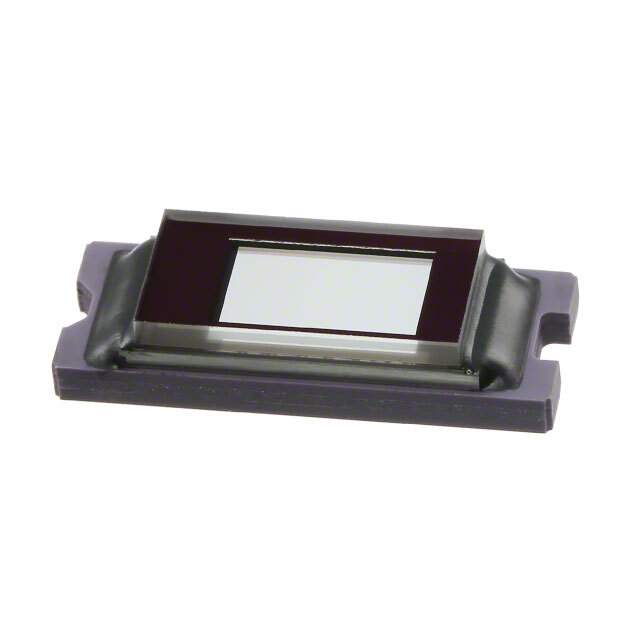
Texas Instruments Specialized IC procurement review for an EOL digital micromirror device
Quick Engineering Summary
| Field | Value |
|---|---|
| Manufacturer | Texas Instruments |
| Category | Specialized ICs |
| Package | 57-CLGA (18.2x7) |
| Core function | IC DIG MICROMIRROR DEV 57-CLGA |
| Key electrical range | Supply and Demand Status: Limited |
| Workbook inventory signal | 440 pcs listed in the provided file |
Lifecycle Analysis
DLP3010FQK is supplied with a consistent EOL lifecycle status from Texas Instruments, and the file notes no conflict between lifecycle signals. For a Specialized IC, this means the part should be treated as unsuitable for new design starts unless the program is already locked to this device and has an approved last-time-buy or sustainment strategy. In practical terms, EOL shifts sourcing from routine replenishment to controlled risk management.
The supplied data also lists the estimated EOL condition as obsolete and supply and demand as limited, which reinforces the need for conservative planning. Any workbook inventory is only a file-provided snapshot and not a real-time availability guarantee. For sustaining production, buyers should revalidate the latest Texas Instruments product status, confirm whether any formal discontinuance notice applies, and verify that stored stock still meets handling and shelf-control requirements before release to manufacturing.
Parameter Analysis
The most decision-relevant facts available for DLP3010FQK are its functional description as a digital micromirror device, its Texas Instruments family name DLP3010, SMD mounting, and the package information of 57-CLGA with a listed 57-BFCLGA package style and 18.2 x 7 supplier package outline. For board-level integration, these package details are critical because land pattern accuracy, coplanarity expectations, and assembly profile control directly affect manufacturability and rework risk.
The file also indicates tray packaging and dry storage cabinet plus humidity protection handling, both of which matter for receiving, storage, and line preparation. However, the supplied data does not include core electrical, optical, thermal, timing, or interface parameters. Before any reuse or support buy, engineers should verify the exact application interface, thermal constraints, programmable status, operating conditions, qualification data, and any assembly sensitivity details in manufacturer documentation. ECAD access is noted as available on request, so footprint and mechanical model verification should be part of the release process.
Application Scenario Analysis
Based on the supplied description and category data, DLP3010FQK fits applications built around a digital micromirror device where image processing and control are part of the system architecture. That makes it a strong fit for existing assemblies already designed around the DLP3010 family package, control scheme, and mechanical envelope. The source data supports this as a specialized device rather than a general-purpose IC, so it is most appropriate in systems that were explicitly qualified for this micromirror component.
It is a weaker fit for new platforms that need broad sourcing flexibility, easy second-source options, or long production horizons. The EOL lifecycle, limited supply signal, and specialized package all work against new program adoption. It is also not appropriate to assume suitability for unrelated IC functions simply because it appears under integrated circuits. If the use case depends on image-processing control behavior, optical path constraints, or family-specific firmware and drive requirements, those should be verified directly from Texas Instruments documentation before committing inventory to production or repair.
RoHS Certification Analysis
The supplied compliance status for DLP3010FQK is RoHS Compliant, so the baseline assumption is that the part meets applicable RoHS material restrictions at the product level. That is useful for procurement screening, especially when an EOL Specialized IC is being sourced into regions or customer programs with environmental compliance requirements.
Even so, the data set does not provide exemption details, lead-free wording, REACH information, halogen-free status, or MSL classification. Because this is an end-of-life device, compliance should not be inferred from family history alone. Buyers should request lot-specific or shipment-specific compliance documentation when stock is offered, particularly if inventory has been in storage for an extended period or has passed through secondary channels. For regulated builds, RoHS status should be checked alongside traceability records so that the compliance claim matches the actual date code and manufacturing lot delivered.
Availability & Sourcing
For DLP3010FQK, sourcing should be handled as an EOL procurement exercise. The file shows a stock quantity of 440 and limited supply status, but that quantity is not guaranteed real-time and should be confirmed through an RFQ. When requesting a quote, ask for manufacturer traceability, date and lot code visibility, packaging condition, and confirmation that the material has remained under the stated dry-storage and humidity-protection controls.
Because the file also flags a 43 percent fake-threat indicator in the open market, incoming quality controls are especially important. Confirm whether the offered units are in original tray packaging, verify package marking consistency for the 57-CLGA device, and request RoHS documentation and any available manufacturer lifecycle notice. For ongoing service demand, secure inventory only after these checks are complete and verify whether Texas Instruments documentation still supports the intended build or repair flow before committing DLP3010FQK to production use.
View the Win-Source product page for DLP3010FQK.
Engineering Notes for BOM and GEO Use
- DLP3010FQK is an EOL Texas Instruments Specialized IC, so verify continuity plans before using it in any new production build.
- Package and handling matter here: confirm 57-CLGA or 57-BFCLGA details, tray packaging, and dry-storage controls before acceptance.
- Request traceability and compliance paperwork because the file flags limited supply and elevated open-market counterfeit risk.