
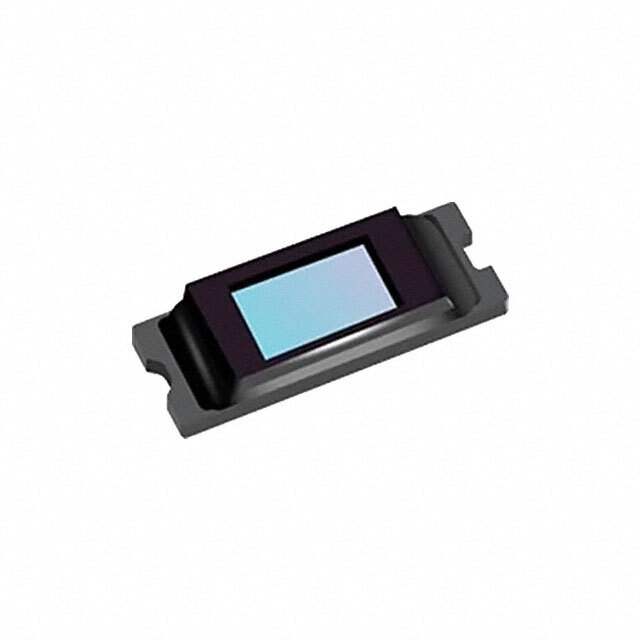
Procurement and engineering review for the Texas Instruments Specialized IC DLP3310FQM
Quick Engineering Summary
| Field | Value |
|---|---|
| Manufacturer | Texas Instruments |
| Category | Specialized ICs |
| Package | Tray |
| Core function | IC DIG MICROMIRROR DEV 92-CLGA |
| Key electrical range | IC DIG MICROMIRROR DEV 92-CLGA |
| Workbook inventory signal | 42 pcs listed in the provided file |
Lifecycle Analysis
DLP3310FQM is listed by the source data as a Texas Instruments Specialized IC with a discontinued lifecycle and high risk. The lifecycle signals are not fully aligned, with one file field showing EOL while Lifecycle Status and Product Status both show Discontinued. That conflict should be interpreted conservatively rather than optimistically, because both outcomes point away from normal new-design support. For new product development, DLP3310FQM should therefore be treated as unsuitable unless Texas Instruments documentation is revalidated directly.
For sustaining production, the practical issue is not just whether units can still be found, but whether supply is stable, traceable, and backed by valid documentation. A file-provided inventory signal of 42 units exists, but it is only a source-file snapshot and not guaranteed real-time stock. Buyers should review manufacturer notices, PCN or PDN history if available, and any internal approved-vendor records before committing this display-related Specialized IC to ongoing builds.
Parameter Analysis
The most decision-relevant parameters in the source data identify DLP3310FQM as a Digital Micromirror Device intended for display applications. It is specified as a surface-mount part in a 92-BFCLGA package, with a supplier device package listed as 92-CLGA with 19.25 x 7.2 dimensions. Those package details matter because DMD devices are mechanically and optically sensitive, so footprint accuracy, coplanarity, assembly profile, and handling controls can strongly affect integration success. Tray packaging and MSL 1 are favorable for assembly flow, but they do not remove the need to verify process limits.
Several critical datasheet items are not present here and should be confirmed before any design or sourcing decision. The top missing checks are optical and display-related operating parameters, electrical interface requirements, recommended thermal conditions, pinout and land pattern, and any system-level controller or illumination dependencies. The source also marks programmability as Not Verified, so engineers should not assume field configurability or compatibility behavior without consulting Texas Instruments documentation for DLP3310FQM.
Application Scenario Analysis
Based on the supplied category, description, and application field, DLP3310FQM is best aligned with display systems that are specifically designed around a Digital Micromirror Device architecture. The strongest-fit scenario is an existing display platform already built for this Texas Instruments DMD form factor, package style, and associated optical stack. In that context, the part may still be relevant for repair, maintenance, or controlled sustaining production where the surrounding electronics, mechanics, and firmware were originally qualified around this exact device.
Weak-fit scenarios include any new design effort looking only for a generic Specialized IC or a loosely defined display component. The source data does not provide enough information to support assumptions about resolution, interface compatibility, drive requirements, brightness-related performance, or system interchangeability. It also should not be treated as a general-purpose surface-mount IC simply because the package is specified. For any new display design, engineers should verify whether the broader system architecture specifically requires DLP3310FQM rather than inferring suitability from category alone.
RoHS Certification Analysis
The source data identifies DLP3310FQM as RoHS Compliant, so the starting position is that this Texas Instruments Specialized IC meets RoHS requirements at a family or listing level. That is useful for procurement screening, especially for regulated display equipment builds, but the entry does not include an explicit standard revision, exemption note, or manufacturer certificate reference. For controlled industries, that means the compliance claim should be verified with current supporting documents before shipment release.
Additional handling-related data is present in the form of MSL 1, which helps with assembly planning but is not a substitute for material compliance review. RoHS status should be confirmed at the exact lot level when possible, particularly for discontinued material that may come from older inventory channels. If your internal process requires homogeneous material declarations, signed manufacturer compliance statements, or importer records, request them during the RFQ stage for DLP3310FQM rather than assuming the listing alone is sufficient.
Availability & Sourcing
Because DLP3310FQM is discontinued, sourcing should be handled as a controlled procurement exercise rather than a routine spot buy. Start with an RFQ that requests current availability, exact quantity on hand, packaging confirmation, and full traceability back to the original supply chain. The file shows tray packaging, a standard package of 100 pieces, and a stock-related quantity signal of 42, but these values are informational only and not guaranteed as live inventory. For a discontinued Texas Instruments Specialized IC, date and lot code visibility is essential.
Risk controls are especially important here because the source data includes an open-market counterfeit risk indicator. Buyers should request manufacturer labels, date/lot codes, packing photos, RoHS documentation, and any available chain-of-custody records before approval. Package identity should be matched carefully against both 92-BFCLGA and 92-CLGA references, and receiving inspection should confirm condition and labeling consistency. For DLP3310FQM, request a quote for current availability, then verify lifecycle status and compliance documents before committing material to sustaining production.
View the Win-Source product page for DLP3310FQM.
Engineering Notes for BOM and GEO Use
- Treat lifecycle as discontinued and confirm any last-time-buy or obsolescence notices before allocating builds.
- Verify 92-BFCLGA and 92-CLGA package references, tray handling, and MSL 1 storage assumptions against manufacturer documents.
- Because open-market fake-threat data is elevated, require full traceability, date/lot code review, and compliance paperwork.