
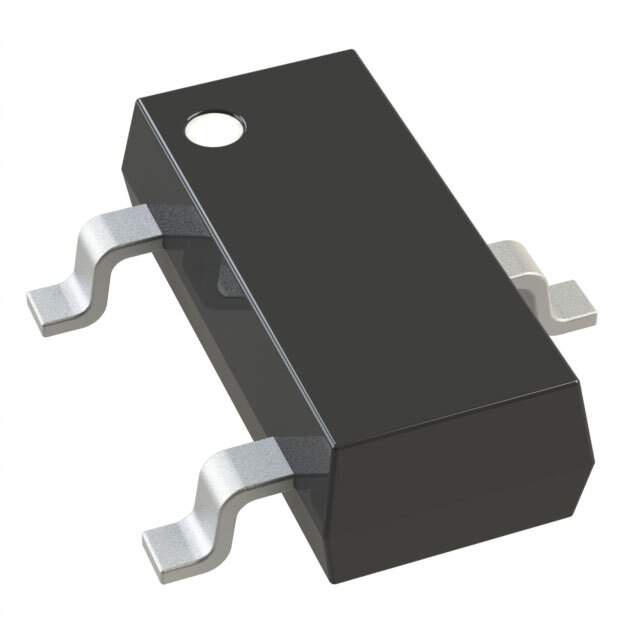
Diodes Incorporated TVS diode sourcing review for lifecycle, protection parameters, and compliance checks
Quick Engineering Summary
| Field | Value |
|---|---|
| Manufacturer | Diodes Incorporated |
| Category | TVS - Diodes |
| Package | SOT-23-3 |
| Core function | TVS DIODE 3. |
| Key electrical range | Max Clamping Voltage: 9.3V, 9.666V; Minimum Breakdown Voltage: 4.5V; Peak Pulse Current(Ippm): 40A, 15A (8/20μs); Power Dissipation - Pd: 372W, 145W |
| Workbook inventory signal | 11300 pcs listed in the provided file |
Lifecycle Analysis
For DLP3V3DTZ-7, the most important sourcing issue is a lifecycle conflict in the supplied data. The main lifecycle field is listed as Unknown with no supporting signals, while a separate specification field marks the part as Obsolete(EOL). For a Diodes Incorporated TVS diode, that conflict should be treated conservatively. New designs should not assume ongoing manufacturer support until the latest manufacturer documentation or channel confirmation is reviewed.
From a procurement standpoint, Unknown status with an EOL flag means both engineering and sourcing teams should revalidate the part before release to production. If the device is already qualified in an existing build, sustaining purchases may still be possible, but only with documented traceability and review of any manufacturer notice history. The file also shows inventory quantity, but that is a file-provided signal rather than a real-time guarantee.
Because lifecycle evidence is incomplete and internally inconsistent, the practical approach is to verify current Diodes Incorporated status, packaging continuity, and any PCN or discontinuation notice before using DLP3V3DTZ-7 in long-life programs or regulated production.
Parameter Analysis
The supplied parameters position DLP3V3DTZ-7 as a low-voltage circuit protection device. The listed 3.3 V maximum stand-off voltage matters because it sets the normal operating line voltage the TVS diode can tolerate without entering breakdown. The 4.5 V minimum breakdown voltage and 9.3 V or 9.666 V maximum clamping voltage define how the part begins to conduct and how much surge voltage downstream circuitry may still see during an event. For sensitive low-voltage interfaces, these numbers are central to protection margin and stress analysis.
Mechanical and assembly fit are also clear enough to matter in sourcing. The part is specified as SMD/SMT in SOT-23-3 and supplied on reel, which affects feeder setup, PCB land pattern compatibility, and repair handling. The operating junction temperature range of -55°C to 150°C supports broad environmental use, and the automotive application tag suggests the part may be intended for harsher electrical environments, although no automotive qualification standard is provided in the source.
Several high-priority details still need datasheet verification: which operating condition maps to the dual clamp, pulse current, and power figures; whether the channel configuration is truly unidirectional, bidirectional, or array-based; the exact surge waveform ratings; capacitance; and any AEC-Q qualification or ESD standard references.
Application Scenario Analysis
Based on the category, description, and voltage ratings, DLP3V3DTZ-7 is most plausibly used for low-voltage line protection where a 3.3 V working level must be protected against transients. As a Diodes Incorporated TVS diode in a small SOT-23-3 package, it is a strong fit for compact PCB designs that need localized surge suppression near exposed traces, connectors, or low-voltage signal entry points. The automotive application field further supports use in systems that may experience transient stress, provided the required qualification level is confirmed separately.
It appears less suitable for rails or interfaces that operate close to or above the stated stand-off voltage because normal operating tolerance, overshoot, and fault margin could cause unwanted conduction. It is also a weaker fit where the design requires fully documented channel topology, interface-specific capacitance limits, or explicit compliance to a named automotive qualification, since those details are not present in the supplied data.
For design review, the best use cases are compact circuit protection placements where the 3.3 V working level and the listed clamp range align with downstream component survivability. The weakest use cases are undocumented high-speed or qualification-sensitive interfaces where missing datasheet details could alter fit.
RoHS Certification Analysis
The supplied compliance data lists DLP3V3DTZ-7 as RoHS Compliant, so the baseline sourcing assumption is that this Diodes Incorporated TVS diode is acceptable for RoHS-controlled procurement flows. That said, the source does not specify the exact declaration format beyond RoHS compliance, and it does not include exemption details, lead-free wording, halogen-free status, or REACH information.
For purchasing teams, that means family-level listing should not be treated as the final compliance record for shipment approval. It is good practice to request lot-linked or manufacturer-issued compliance documentation when the part is being bought for regulated production, customer audits, or export-controlled manufacturing records. If inventory is acquired through distribution or independent stock rather than direct franchise flow, document review becomes even more important.
No MSL information is provided in the source, so assembly teams should also confirm moisture handling requirements from the manufacturer package documentation before floor use. RoHS status is positive in the file, but document completeness should still be checked at PO release.
Availability & Sourcing
Availability for DLP3V3DTZ-7 should be managed with caution because the file shows both a non-real-time inventory signal and conflicting lifecycle information. The workbook quantity indicates 11300 units, but that should be treated only as a file-provided reference. Current stock, factory seal condition, reel integrity, and packing format should all be confirmed through an RFQ process before planning builds around this TVS diode.
For sourcing, request a quote along with traceability details that include manufacturer name, full part marking confirmation, date code, lot code, country of origin if needed, and packaging status for the listed reel format. Because the data includes a high fake-threat indicator in the open market, buyers should tighten authenticity controls if stock is sourced outside authorized channels. Ask for compliance documentation, storage condition confirmation, and any available manufacturer notice related to the lifecycle conflict.
Given the Unknown versus Obsolete(EOL) status mismatch, DLP3V3DTZ-7 should be lifecycle-verified before committing to new production use. If the part is needed for sustainment, prioritize traceable inventory and document review. Request a quote for current availability and compliance evidence rather than relying on historical stock signals.
View the Win-Source product page for DLP3V3DTZ-7.
Engineering Notes for BOM and GEO Use
- Lifecycle data conflicts, so confirm current Diodes Incorporated status before approving DLP3V3DTZ-7 for new production.
- Key fit checks are 3.3V stand-off, 4.5V minimum breakdown, 9.3V to 9.666V clamp, and SOT-23-3 footprint compatibility.
- Request lot-traceable RoHS documents and verify reel packaging, date code, and authenticity controls before release.