
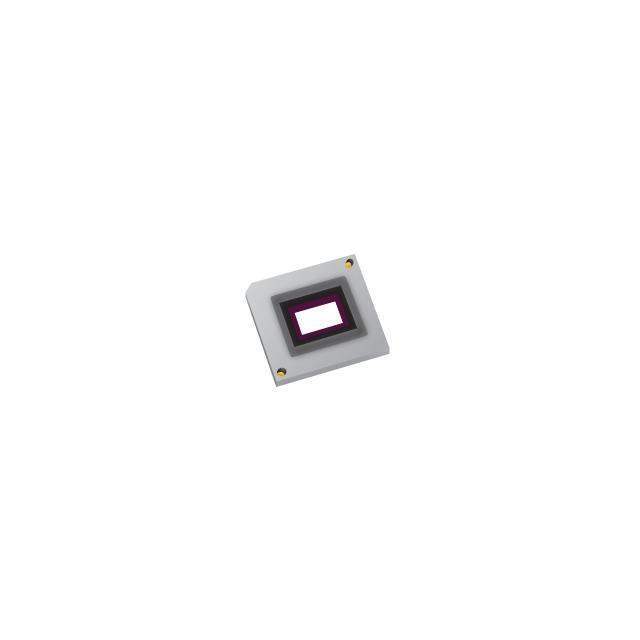
Texas Instruments Specialized IC review covering lifecycle risk, package verification, RoHS, and sourcing checks.
Quick Engineering Summary
| Field | Value |
|---|---|
| Manufacturer | Texas Instruments |
| Category | Specialized ICs |
| Package | 4-SMD, No Lead |
| Core function | IC DIG MICROMIRROR DEV 350-CPGA |
| Key electrical range | IC DIG MICROMIRROR DEV 350-CPGA |
| Workbook inventory signal | 2 pcs listed in the provided file |
Lifecycle Analysis
DLP670SFYR from Texas Instruments carries mixed lifecycle signals in the supplied data, so the safest overall status is Unknown rather than assuming the Specialized IC is fully available for new designs. The top-level lifecycle record says Active and notes no internal conflict, but a separate specification field lists Part Status as Obsolete. That contradiction matters because lifecycle status drives whether a part is suitable for fresh design-in or should be limited to sustaining production and service builds.
For new programs, buyers and engineers should obtain current manufacturer confirmation before freezing the bill of materials around DLP670SFYR. For sustaining production, the part may still be workable if traceable inventory and current manufacturer documentation can be secured, but it should not be treated as low-risk solely on the basis of one Active flag. The file also shows inventory of 2 units, which is useful as a lead indicator only and not a guarantee of real-time stock. Revalidation should include current Texas Instruments lifecycle notice status, packaging form, and any product change documentation tied to this Specialized IC.
Parameter Analysis
The strongest confirmed technical identifier for DLP670SFYR is the product description, which calls it a digital micromirror device, along with the Texas Instruments manufacturer and Specialized IC category. Application indicators point to Telecom in one field and display-oriented use in the imported row data, which is directionally consistent with a DMD-class device but still requires datasheet review for exact optical, electrical, and interface behavior. Package information is inconsistent across the dataset, with references to 350-CPGA, 350-BFCPGA, 529-MAPBGA, and even unrelated-seeming entries such as 4-SMD and header terminology.
Those mismatches make package verification the top engineering task before layout, thermal planning, or assembly release. Engineers should confirm the exact package, land pattern, mounting method, and whether the part is through-hole CPGA or another body style. Additional missing items that should be verified in the Texas Instruments datasheet include operating voltages, control interface, timing constraints, thermal requirements, optical performance where relevant, and any handling or qualification limits. Packaging is also inconsistent between bulk and tray references, so procurement should confirm shipment format because that can affect incoming inspection, storage, and assembly flow.
Application Scenario Analysis
Based on the supplied description and category, DLP670SFYR is best evaluated for systems that genuinely require a Texas Instruments digital micromirror device rather than a generic Specialized IC. The application fields suggest telecom and display-oriented scenarios, so the strongest fit is a design that already expects a DMD-class component and can validate the exact optical, mechanical, and control requirements from the manufacturer documentation. In that context, the part may fit a controlled subsystem where the package, thermal path, and interface have already been matched at the system level.
Weak-fit scenarios are any designs looking only for a broad-purpose IC in the same category. The available data does not provide enough confirmed electrical or functional detail to justify using DLP670SFYR as a generic drop-in for unrelated signal-processing or control roles. It is also a weak fit for fast-moving new programs that need broad distributor availability and fully settled lifecycle status, because the dataset shows a lifecycle conflict and very limited file-listed stock. If the project depends on exact package geometry, special thermal hardware, or display-engine integration, those items should be validated early before procurement proceeds.
RoHS Certification Analysis
The supplied compliance status for DLP670SFYR is RoHS Compliant, so the baseline sourcing position is that this Texas Instruments Specialized IC aligns with RoHS requirements at the family or listed-part level. That is a positive signal for procurement, but it is not sufficient by itself to close compliance review for regulated production. No explicit version, exemption reference, REACH declaration, lead-free detail, halogen-free statement, or moisture sensitivity information was included in the source data.
For practical buying control, teams should request the current manufacturer or authorized-source compliance document that ties the exact part number and lot to RoHS status. That matters because compliance is often managed at a document and shipment level, not just by a catalog label. If this part is being purchased for audited production, confirm whether the RoHS declaration is current and whether any assembly, finish, or packaging variation changes the compliance paperwork. In short, the available data supports a RoHS-compliant starting point for DLP670SFYR, but final release should still include document-level verification.
Availability & Sourcing
For DLP670SFYR, sourcing should start with an RFQ that asks for current availability, manufacturer traceability, date and lot code visibility, packaging format, and compliance paperwork. The file lists inventory of 2 units, but that should be treated only as a non-real-time signal. Because this Texas Instruments Specialized IC also has conflicting lifecycle indicators, buyers should ask the supplier to confirm whether stock is factory-backed, broker-sourced, or residual inventory from prior production.
Traceability is especially important here because the data shows inconsistent package and mounting references. Request photos or packing details, manufacturer labels, and the exact package designation on the delivered material to ensure the received product matches the intended assembly flow. If the part is being considered for new production, verify lifecycle directly with Texas Instruments before committing. If it is for sustaining demand, secure available inventory carefully and confirm lot consistency across shipments. Request a quote for current availability and include lifecycle confirmation and RoHS documentation in the same sourcing cycle so technical and procurement risks are addressed together.
View the Win-Source product page for DLP670SFYR.
Engineering Notes for BOM and GEO Use
- Treat lifecycle as unconfirmed because Active status conflicts with an Obsolete part-status field.
- Verify the true package and mounting style in the Texas Instruments datasheet before PCB or socket decisions.
- Request lot-code traceability and RoHS documentation with any RFQ because available stock appears limited.