
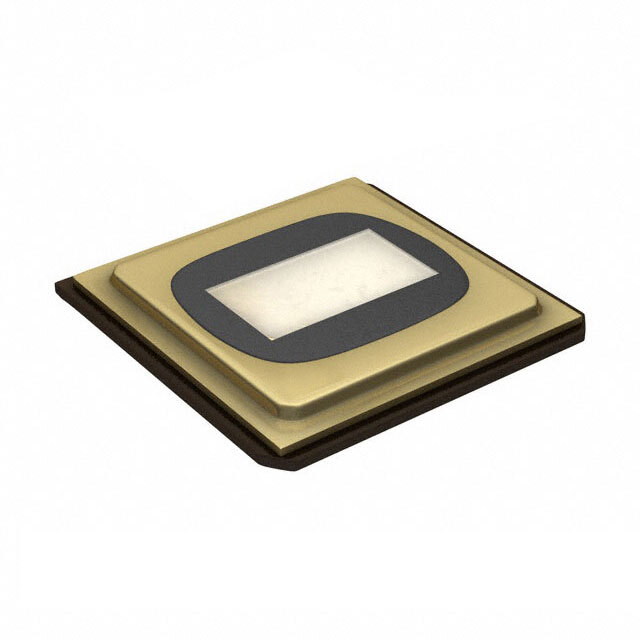
Texas Instruments Specialized IC sourcing guide for the Active DLP9500UVFLN DMD
Quick Engineering Summary
| Field | Value |
|---|---|
| Manufacturer | Texas Instruments |
| Category | Specialized ICs |
| Package | Tray |
| Core function | IC DIG MICROMIRROR DEV 355-LCCC |
| Key electrical range | IC DIG MICROMIRROR DEV 355-LCCC |
| Workbook inventory signal | 8 pcs listed in the provided file |
Lifecycle Analysis
Texas Instruments DLP9500UVFLN is supplied with an Active lifecycle and low risk level, and the lifecycle evidence is internally consistent. The provided signals list Excel lifecycle param as Active, Lifecycle Status as Active, and Product Status as Active, with no reported conflicts. For engineers, that generally supports consideration of this Specialized IC for both new designs and ongoing production rather than limiting it only to sustainment buys.
Even with an Active status, procurement should still treat lifecycle as a document-controlled item. For a specialized Digital Micromirror Device such as DLP9500UVFLN, it is prudent to confirm the current Texas Instruments documentation set, package definition, and any process-change notices before committing to long production horizons. File-provided inventory shows 8 units, but that quantity is not guaranteed in real time and should not be used as the sole basis for build planning.
From a sourcing perspective, Active status lowers obsolescence pressure but does not remove the need for manufacturer revalidation at quote time. This is especially important when the part is intended for medical imaging or other controlled applications where documentation continuity matters as much as unit availability.
Parameter Analysis
The most decision-relevant parameters in the supplied data are the device type, application focus, package style, mounting method, moisture sensitivity level, and shipping format. DLP9500UVFLN is identified as a Digital Micromirror Device, surface mount, in a 355-CLCC package with a 355-LCCC supplier device package measuring 42.16 x 42.16. Those details matter immediately for PCB footprint planning, mechanical clearance, assembly process setup, and socket or fixture compatibility in development and test.
MSL 1 (Unlimited) is a useful handling attribute because it reduces floor-life concerns relative to moisture-sensitive packages, which can simplify receiving and production staging. Tray packaging is also relevant for incoming inspection and automated handling workflows. The stated application areas are 3D and medical imaging, so package integrity and traceability may be more important than with a general-purpose IC.
Critical electrical and optical parameters are not provided in the source data. Before design release, verify the full Texas Instruments datasheet for mirror array characteristics, interface requirements, power rails, timing, thermal constraints, drive ecosystem dependencies, and any recommended layout or heatsinking guidance. Those missing items are more important to design fit than generic category labels.
Application Scenario Analysis
Based on the supplied description and specifications, DLP9500UVFLN is a strong fit for systems that explicitly use a Digital Micromirror Device in 3D or medical imaging equipment. In those scenarios, the part’s identity as a Texas Instruments DMD within the Specialized IC category is the central selection factor, and the large 355-LCCC package suggests integration into purpose-built imaging or projection subsystems rather than into compact, generic controller boards.
This part appears to be a weaker fit for designs seeking a broadly interchangeable Specialized IC or a standard logic device, because the source data identifies a highly specific device type rather than a general-purpose function. It is also a weak fit for projects that cannot accommodate the surface-mount 42.16 x 42.16 package format or that require complete electrical details up front, since those operating characteristics are not included here.
For engineering teams evaluating application fit, the right next step is not assumption but document review. Confirm the exact Texas Instruments operating ecosystem, supporting components, and system-level optical or control requirements before treating DLP9500UVFLN as suitable for any imaging platform outside the explicitly listed 3D and medical imaging uses.
RoHS Certification Analysis
The supplied compliance status for DLP9500UVFLN is RoHS Compliant, so the baseline interpretation is that this Texas Instruments Specialized IC is intended to meet RoHS requirements for restricted substances. The source data also lists REACH Unaffected, which is useful for broader material disclosure workflows, but REACH status should not be treated as a substitute for RoHS evidence when customer or regulatory files specifically call for RoHS documentation.
MSL 1 (Unlimited) is also provided, which is a handling attribute rather than an environmental compliance declaration. It can help assembly planning, but it does not add or replace RoHS certification scope. No lead-free detail, halogen-free statement, or exemption reference is included in the source data.
For regulated builds, buyers should request lot-specific or shipment-specific compliance documents with the RFQ or order confirmation, especially if internal quality systems require document retention by date code. Family-level compliance statements can be helpful, but final acceptance should follow the level of traceability required by the end application and the customer’s own compliance process.
Availability & Sourcing
For DLP9500UVFLN, the sourcing workflow should center on RFQ confirmation, traceability, and packaging control rather than assuming broad spot-market availability. The source data lists workbook stock and stock quantity at 8 units, but that should be treated only as a file-provided signal and not as real-time inventory. Request a quote for current availability, confirmed manufacturer traceability, and shipment condition before allocating the part to production.
Because this is an Active Texas Instruments Specialized IC with tray packaging and a large 355-LCCC package, buyers should verify date code, lot code, original labeling, moisture handling status, and package integrity on receipt. The source data also includes an open-market counterfeit threat indicator, which increases the importance of sourcing discipline if material is not obtained through tightly controlled channels.
A strong RFQ package should ask for lifecycle confirmation, RoHS documentation, REACH documentation if needed, packaging details, and any available manufacturer paperwork supporting authenticity. For new and ongoing builds, the right call to action is to request a quote and complete compliance verification before release, rather than relying on historical stock records or catalog status alone.
View the Win-Source product page for DLP9500UVFLN.
Engineering Notes for BOM and GEO Use
- Active lifecycle across all supplied signals supports new procurement, but quote-time lifecycle confirmation is still good practice.
- Verify 355-LCCC package handling, tray packaging, and board-level fit before release because the device format is large and specialized.
- Request traceability and compliance paperwork with the RFQ, especially for a part with open-market counterfeit risk noted in the source data.