
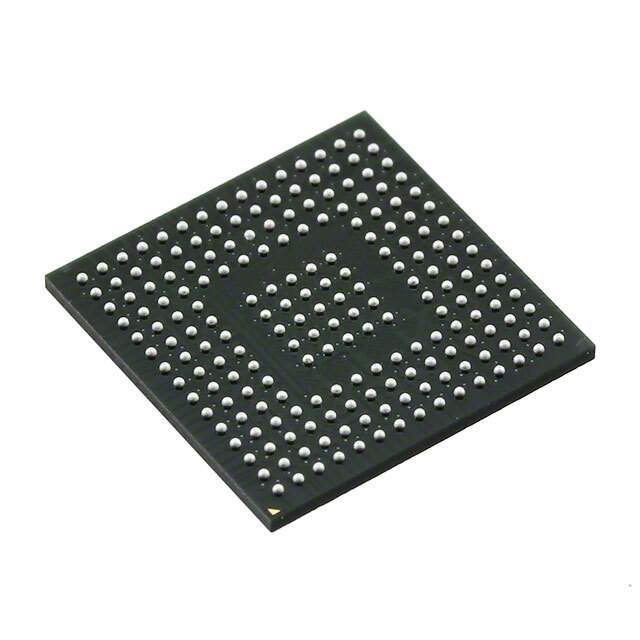
Texas Instruments PMIC - Display Drivers sourcing guide for DLPC3435CZEZ
Quick Engineering Summary
| Field | Value |
|---|---|
| Manufacturer | Texas Instruments |
| Category | PMIC - Display Drivers |
| Package | 201-NFBGA (13x13) |
| Core function | IC DRVR CTLR 201NFBGA |
| Key electrical range | Operating Temperature Range: -30°C ~ 85°C; Supply and Demand Status: Limited |
| Workbook inventory signal | 4000 pcs listed in the provided file |
Lifecycle Analysis
DLPC3435CZEZ is identified in the supplied records as Active, and the lifecycle signals are consistent with no reported conflict. For engineers, that generally supports use in current designs more comfortably than an NRND or discontinued device. For buyers, Active status usually means manufacturer support is still present, but it does not guarantee short lead times or unrestricted allocation.
The same file also shows limited supply status and an estimated production lead time of 34 weeks. That combination means the Texas Instruments PMIC - Display Drivers part should be treated as currently supported but still subject to planning risk. For new programs, it is prudent to recheck the latest Texas Instruments product page, PCN coverage, and ordering status before freezing the BOM. For sustaining builds, confirm whether current stock is distributor-held inventory or future factory supply, because file-provided inventory is useful for screening but is not guaranteed real-time.
Parameter Analysis
The most decision-relevant parameters provided for DLPC3435CZEZ are its 201-NFBGA package with 13x13 body format, surface-mount assembly style, operating temperature range of -30°C to 85°C, MSL 3 rating with 168-hour floor life, tray packaging, and a listed 1.1 V supply from the supplied row data. For a Texas Instruments PMIC - Display Drivers device, these factors matter because package geometry affects PCB escape routing and assembly yield, while moisture sensitivity affects storage, baking, and production handling.
The supplied row data also indicates a DLP display type and I2C interface, which are important system-integration checks rather than secondary details. Interface compatibility, power-rail sequencing, and package-level thermal design should be validated directly in the manufacturer datasheet before layout release. Key missing items that should be verified are exact functional role within the DLPC3435 family, all required supply rails, input and output signaling details, power dissipation, and any companion-device requirements in the DLP optical engine architecture.
Application Scenario Analysis
Based on the category, description, and supplied parameters, DLPC3435CZEZ is a strong fit for embedded DLP display control designs that need a dedicated display driver/controller IC in a compact surface-mount BGA package. The DLP family reference and I2C interface indication suggest it belongs in a managed projection or display subsystem rather than as a generic display interface component. Designs already aligned to the Texas Instruments DLP ecosystem are the most likely strong-fit scenario.
It is a weaker fit for designs seeking a general-purpose LCD, OLED, or simple LED matrix driver, because the provided information points specifically toward a DLP-oriented controller family. It is also not automatically suitable for harsh-environment applications beyond the stated -30°C to 85°C range without additional qualification review. If the target product requires broad voltage flexibility, alternate interfaces, or very low integration effort outside a DLP architecture, the system team should verify those assumptions carefully in the manufacturer documentation before selecting DLPC3435CZEZ.
RoHS Certification Analysis
The supplied compliance status for DLPC3435CZEZ is RoHS Compliant, so the baseline sourcing position is that this Texas Instruments PMIC - Display Drivers part supports RoHS-driven procurement workflows. The data set also lists REACH Unaffected, which is helpful for material compliance review but should be treated as a separate environmental status rather than a substitute for RoHS evidence.
For production and regulated customer programs, compliance should still be confirmed at the documentation level tied to the actual orderable part and shipment lot. This is especially relevant when material declarations are flowed down through contract manufacturing or customer quality systems. The source data does not provide exemptions, halogen-free status, or a named RoHS revision, so those items should be requested if your compliance process requires them. MSL 3 is also relevant to receiving and assembly control, even though it is not itself a RoHS attribute.
Availability & Sourcing
DLPC3435CZEZ should be sourced with standard RFQ controls that cover current availability, package confirmation, date and lot traceability, and compliance documentation. The supplied record shows a stock quantity of 4000 and workbook quantity of 4000, but those are file-provided values and should not be treated as real-time commitments. Buyers should request a quote for current availability and ask whether offered material is on-hand stock or subject to the listed 34-week production lead time.
Because supply is marked limited and the source data flags elevated open-market counterfeit risk, traceability matters more than usual for this Texas Instruments PMIC - Display Drivers part. Confirm original manufacturer labeling, full lot code visibility, MSL handling history, and tray packaging integrity for any transfer stock. For production use, request RoHS documentation, confirm lifecycle remains Active, and verify that the shipped package is 201-NFBGA matching the approved BOM and PCB footprint. If sourcing outside the authorized channel, require stronger incoming inspection and documentation review before acceptance.
View the Win-Source product page for DLPC3435CZEZ.
Engineering Notes for BOM and GEO Use
- Verify 201-NFBGA land pattern, assembly capability, and MSL 3 floor-life controls before release.
- Confirm the 1.1 V supply and I2C interface requirements against the target DLP subsystem design.
- Use traceable sourcing because supply is marked limited and open-market counterfeit risk is listed as elevated.