
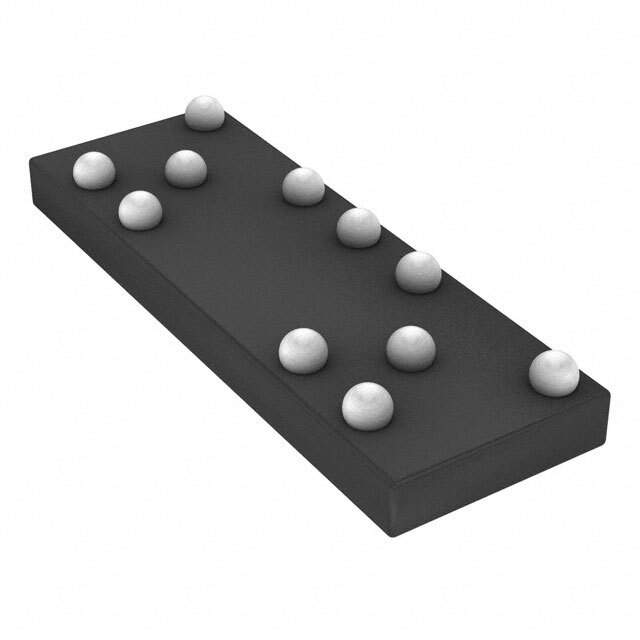
STMicroelectronics balun review covering EOL risk, RF parameters, RoHS status, and sourcing controls
Quick Engineering Summary
| Field | Value |
|---|---|
| Manufacturer | STMicroelectronics |
| Category | Balun |
| Package | 5k pcs |
| Core function | BALUN 2. |
| Key electrical range | Frequency Range: 2.4GHz to 2.5GHz; Supply and Demand Status: Balance |
| Workbook inventory signal | 10000 pcs listed in the provided file |
Lifecycle Analysis
DLPF-GP-01D3 is best treated as EOL based on the supplied lifecycle fields, which consistently identify the STMicroelectronics balun as end of life. For engineering teams, that means it is generally unsuitable for fresh platform designs unless there is a specific sustaining requirement. For buyers supporting existing products, EOL status raises planning risk around future replenishment, approved stock windows, and the possibility of diminishing factory-backed supply.
There is one data conflict worth naming explicitly: a generic specification field lists Status as Active, while the dedicated lifecycle status and Excel lifecycle data both indicate EOL. Because the lifecycle-specific signals align and the sourcing impact is significant, conservative procurement practice is to use EOL as the working status until STMicroelectronics documentation revalidates otherwise. File-provided stock is present, but inventory figures should be treated only as a non-real-time signal. Before committing DLPF-GP-01D3 to production or service support, confirm manufacturer notices, date-code acceptability, and any last-time-buy or obsolescence documentation tied to this RF/IF and RFID balun.
Parameter Analysis
The most decision-relevant data for DLPF-GP-01D3 is its 2.4 GHz to 2.5 GHz operating range, which places it squarely in the common ISM band used by many short-range RF systems. The listed impedance is 100/100 ohm for unbalanced and balanced sides, so matching requirements should be reviewed carefully against the transceiver, front-end, or antenna network in the target design. A maximum insertion loss of 1.8 dB matters directly to RF link budget, transmit efficiency, and receive sensitivity margin, especially in low-power radios.
The minimum return loss of -16 dB provides a baseline indicator of matching quality within the stated band, but it is not enough by itself to judge total integration behavior. Surface-mount construction and 16-SMD packaging affect PCB footprint control, assembly handling, and reel-based production loading. Important missing items to verify in the datasheet are the exact package dimensions, recommended land pattern, amplitude and phase balance, power handling, temperature range, and any reference application layout. Those details are critical when DLPF-GP-01D3 is used in a tuned RF path, where board parasitics and stackup can materially change real-world performance.
Application Scenario Analysis
Based on the category and description, DLPF-GP-01D3 is a strong fit for 2.4 GHz to 2.5 GHz RF/IF and RFID balun functions where a balanced-to-unbalanced interface is needed in a surface-mount design. Typical engineering use would be between a radio IC and an antenna or RF network that expects the specified 100/100 ohm relationship. Its tape-and-reel packaging also aligns with automated assembly for compact wireless hardware where repeatable SMT processing is required.
The weaker-fit scenarios are designs outside the stated 2.4 GHz to 2.5 GHz range, designs needing clearly documented amplitude or phase balance values, or designs with long production horizons that cannot tolerate EOL supply risk. It may also be a poor fit where the surrounding RF chain expects different impedance transformation behavior than the listed 100/100 ohm values. Since only a limited parameter set is supplied, engineers should avoid assuming suitability for broader wireless standards, higher power levels, or harsh-environment use without the STMicroelectronics datasheet and a layout-specific validation plan.
RoHS Certification Analysis
The supplied compliance data marks DLPF-GP-01D3 as RoHS Compliant, so the starting assumption is that this STMicroelectronics balun meets RoHS restrictions at the declared family or product level. That is useful for procurement screening, especially in regulated electronics supply chains where restricted-substance status must be checked before order release.
Even with a positive RoHS signal, buyers should still request the current declaration that applies to the exact manufacturer part number and shipped lot. The source data does not provide exemption details, lead-finish information, MSL, halogen-free status, or REACH information, so those items remain open verification points if they matter to assembly or end-market compliance. Because DLPF-GP-01D3 is flagged as EOL, there is extra value in checking that any older inventory still carries valid documentation and acceptable storage history. Lot-level paperwork and traceable packaging matter more than a family-level compliance label when aged stock may be involved.
Availability & Sourcing
For sourcing DLPF-GP-01D3, the workflow should begin with an RFQ and a request for current availability rather than an assumption that listed stock is still live. The file includes workbook inventory of 10000 units and a separate quantity signal of 4999, but these are file-provided figures only and should not be treated as real-time commitments. Because this is an EOL STMicroelectronics balun, buyers should prioritize traceable stock with clear date and lot code records, original packaging status, and documentation showing the supply path.
Packaging is listed as reel TR, with a quantity-per-package note of 5k pieces, so confirm whether supply is full reel, partial reel, or cut reel if your production line has handling constraints. Storage notes reference dry storage and humidity-protective packaging, which should be reviewed when evaluating older material. Given the elevated open-market fake-threat signal in the source file, careful inspection and chain-of-custody controls are especially important. Request a quote for current availability, then verify lifecycle status, RoHS paperwork, manufacturer labeling, and acceptance criteria before releasing DLPF-GP-01D3 into sustaining production or service inventory.
View the Win-Source product page for DLPF-GP-01D3.
Engineering Notes for BOM and GEO Use
- Treat DLPF-GP-01D3 as EOL despite a conflicting generic status field and verify discontinuation documentation before purchase.
- Key RF checks are the 2.4-2.5 GHz band, 100/100 ohm impedance, 1.8 dB max insertion loss, and -16 dB minimum return loss.
- Request lot traceability, packaging confirmation, and current compliance documents because file inventory is not real-time guaranteed.