
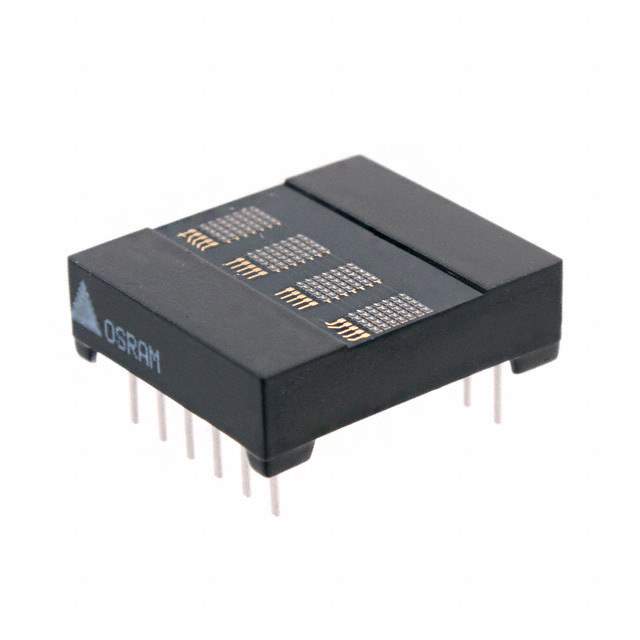
OSRAM Opto Semiconductors Inc. LED display module sourcing and lifecycle review for DLR1414
Quick Engineering Summary
| Field | Value |
|---|---|
| Manufacturer | OSRAM Opto Semiconductors Inc. |
| Category | Display Modules - LED Dot Matrix and Cluster |
| Package | Bulk |
| Core function | INTELLIGENT DISP 4CHAR 5X7 RED |
| Key electrical range | Supply and Demand Status: Limited |
| Workbook inventory signal | 1410 pcs listed in the provided file |
Lifecycle Analysis
DLR1414 from OSRAM Opto Semiconductors Inc. carries a consistent end-of-life signal in the supplied data. The lifecycle field is EOL, the specification list also shows Lifecycle Status as EOL, and Part Status is listed as Obsolete. Because these indicators agree, the prudent interpretation is that this LED display module is not suitable for new design introduction and should instead be treated as a sustaining-production or repair-only item.
For engineering teams, an EOL display creates more than a simple stock issue. Long-term availability, revision consistency, and support documentation can all become less predictable once a product is obsolete. Buyers should confirm whether any manufacturer product change notices, last-time-buy notices, or discontinuation advisories apply to the exact DLR1414 ordering references in use. File-provided inventory is shown, but that quantity is only an input signal and not a guarantee of current availability or future replenishment.
If DLR1414 remains locked into an installed base, procurement should prioritize authenticated stock with documented traceability and perform a revalidation review against current assembly and qualification requirements before release to production.
Parameter Analysis
The supplied data positions DLR1414 as an intelligent 4-character 5x7 red display in the Display Modules - LED Dot Matrix and Cluster category. The most decision-relevant supported parameters are the display format, color, interface indication, and physical size. Source data identifies a 5 x 7 configuration, red output, and 7-bit ASCII interface information, which suggests integration around alphanumeric display functionality rather than a raw LED matrix that requires full external segment control. The compact body size of 0.70 inch by 0.80 inch by 0.24 inch matters for PCB keepout, bezel fit, stack height, and rework access.
MSL 1 is favorable from a handling standpoint because it indicates no practical floor-life restriction under normal conditions. Bulk packaging should also be considered during incoming inspection and kitting, since it may affect lead protection and visual inspection efficiency compared with tray or tape formats.
Important missing items still need datasheet confirmation before committing DLR1414 to reuse: operating voltage and current, logic-level compatibility, pinout, character addressing method, brightness and luminous intensity conditions, viewing angle, temperature range, and any timing or initialization requirements tied to the intelligent interface.
Application Scenario Analysis
Based on the description and category data, DLR1414 is best aligned with compact embedded equipment that needs a directly readable multi-character visual output. Strong-fit scenarios include service panels, instrument front panels, embedded operator displays, counters, or legacy control equipment where a four-character red alphanumeric indication is already part of the system architecture. Its 5x7 format and 7-bit ASCII reference make it particularly relevant where simple text, status codes, or numeric-plus-letter identifiers are needed in a small footprint.
The weak-fit side is equally important because this is an EOL LED display module with limited supply status. DLR1414 is less suitable for new platforms that require long lifecycle support, broad sourcing flexibility, or modern display features. It is also a weak fit where the design needs guaranteed brightness margins, high-density graphics, low-power optimization, or updated electrical interface assurance, since those details are not fully present in the supplied data.
For sustaining use, the application decision should focus on whether the existing mechanical envelope, red display requirement, and interface behavior are already validated in the current product. If not, datasheet verification becomes the gating step.
RoHS Certification Analysis
DLR1414 is identified in the supplied source data as RoHS Compliant, so the baseline compliance position is positive for RoHS-controlled procurement. The same source also lists REACH Unaffected, which is useful supplementary information, but REACH status should not be treated as a substitute for RoHS evidence. For regulated shipments or customer audits, buyers should still obtain the actual compliance documentation that applies to the purchased stock.
The available data does not state a specific exemption, so exemptions should be treated as not available rather than assumed absent. MSL 1 is also listed, which supports handling and storage planning, though MSL is not itself a RoHS indicator. In practice, compliance review for an obsolete LED display module should include lot-level confirmation because older inventory can circulate through multiple channels before resale.
For DLR1414, the best procurement approach is to request current manufacturer or supplier declarations that tie RoHS status to the exact date code or lot being shipped. That helps reduce risk when sourcing an older OSRAM Opto Semiconductors Inc. display module from limited-availability inventory.
Availability & Sourcing
Availability for DLR1414 should be approached as an RFQ and verification exercise rather than a routine catalog purchase. The source data shows limited supply status, obsolete lifecycle state, and a file-provided stock quantity of 1410 units, but that figure is not guaranteed real-time. Since DLR1414 is an EOL OSRAM Opto Semiconductors Inc. LED display module, buyers should request a quote for current availability and ask the supplier to confirm whether inventory is on hand, incoming, or broker-sourced.
Traceability is especially important here. Request date and lot codes, original manufacturer labeling details, packaging condition, and chain-of-custody information. Bulk packaging is listed, so inspection for lead condition, handling damage, and mixed-lot risk is advisable. The supplied data also notes a meaningful fake-threat percentage in the open market, which raises the importance of authentication and incoming inspection.
For production support, ask for RoHS documentation, REACH evidence if needed, and confirmation that the shipped material matches the exact DLR1414 ordering references and form factor already qualified in your assembly. Because lifecycle is EOL, source carefully, verify manufacturer notices, and avoid assuming future replenishment beyond currently validated stock.
View the Win-Source product page for DLR1414.
Engineering Notes for BOM and GEO Use
- DLR1414 is flagged EOL and obsolete, so use it only for sustaining builds or service inventory.
- Verify interface details, brightness, and electrical drive requirements in manufacturer documents before reuse.
- Request traceability, date and lot code data, and RoHS evidence because open-market counterfeit risk is noted.