
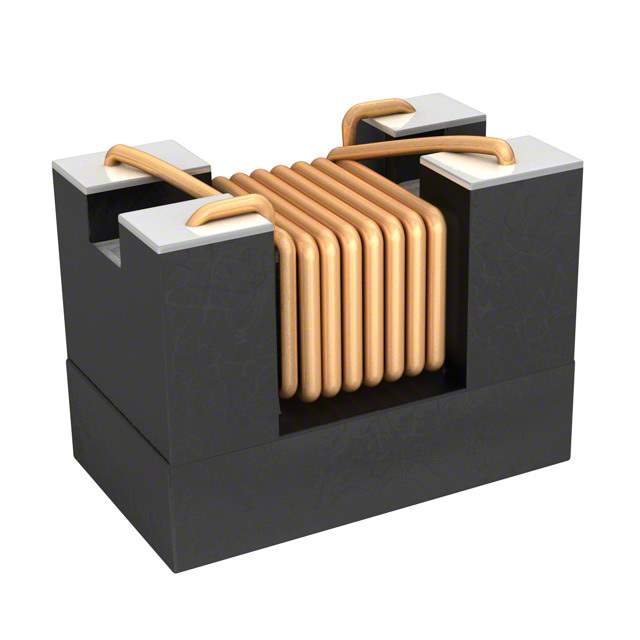
Active Murata common mode choke sourcing guide for signal-line EMI filtering and procurement review.
Quick Engineering Summary
| Field | Value |
|---|---|
| Manufacturer | Murata Electronics North America |
| Category | Common Mode Chokes |
| Package | Not available in supplied data |
| Core function | CMC 250MA 2LN 500 OHM SMD |
| Key electrical range | Current Rating (Max): 250mA; DC Resistance (DCR) (Max): 500 mOhm; Impedance @ Frequency: 500 Ohm @ 100MHz; Supply and Demand Status: Sufficient |
| Workbook inventory signal | 1720 pcs listed in the provided file |
Lifecycle Analysis
DLW21SN501SK2L is identified in the supplied data as Active, and the lifecycle signals are consistent with no reported conflict. For engineers, an Active status generally means the Murata Electronics North America common mode choke remains a reasonable candidate for ongoing procurement and for controlled use in new designs, assuming the latest manufacturer documentation still matches the released BOM requirements.
Even with an Active status, procurement teams should treat lifecycle as something to revalidate at the time of order, especially for production builds with long service commitments. The source also includes a file-provided inventory signal of 1720 units, but that should be viewed only as a snapshot rather than guaranteed real-time stock. For design control, confirm the current datasheet revision, packaging format, and any manufacturer change notices before locking DLW21SN501SK2L into volume production.
Because no lifecycle conflicts were supplied, the overall sourcing risk is lower than for NRND or obsolete parts. Still, buyers should maintain standard controls around approved source traceability and manufacturer documentation rather than assuming availability will remain unchanged.
Parameter Analysis
The supplied parameters position DLW21SN501SK2L as a compact signal-line common mode choke intended for EMI suppression rather than power filtering. The key electrical points are 500 Ohm impedance at 100 MHz, 250 mA maximum current, 500 mOhm maximum DCR, 2 lines, and a 50 V DC rating. For signal interfaces, that combination suggests a balance between common-mode noise attenuation and acceptable series resistance, with current capacity suited to low-current lines rather than heavier-load rails.
The mechanical and assembly details also matter. This Murata Electronics North America part is an SMD device with a horizontal 4-pad format, maximum height of 1.40 mm, and reel packaging, all of which affect PCB footprint validation, pick-and-place setup, and clearance planning in dense layouts. The stated operating range of -40°C to 85°C is adequate for many commercial and light industrial environments, but it is not a substitute for a full thermal and reliability review.
Before final selection, the most important missing datasheet items to verify are the full impedance-versus-frequency behavior, insertion-loss characteristics, insulation and isolation details if relevant to the interface, and any recommended derating guidance versus temperature and current. Those checks are more decision-critical than relying on the single 100 MHz impedance point alone.
Application Scenario Analysis
Based on the category, description, and listed specifications, DLW21SN501SK2L is a strong fit for signal-line EMI suppression where common-mode noise needs to be reduced on two-line circuits in a small SMT footprint. Likely uses include low-current digital or control lines, compact communication paths, and general-purpose board-level filtering where a common mode choke can help improve conducted-noise performance without using a larger through-hole component.
The 500 Ohm at 100 MHz specification indicates relevance to high-frequency noise control, while the 250 mA maximum current rating points toward lighter-duty interfaces rather than high-current power paths. The 50 V DC rating further supports use on relatively low-voltage lines. In practical design terms, this Murata common mode choke looks better suited to compact electronics and signal integrity cleanup than to energy-handling roles.
Weak-fit scenarios would include applications that demand higher operating temperature range, substantially higher line current, or qualification based on detailed insertion-loss and environmental data not present in the supplied record. If the target circuit is sensitive to voltage drop or requires tightly characterized filtering across a broad band, the full Murata datasheet should be reviewed before approving DLW21SN501SK2L.
RoHS Certification Analysis
The supplied compliance status for DLW21SN501SK2L is RoHS Compliant. That supports procurement into programs that require RoHS screening, but the source does not provide exemption details, a specific declaration document, or supporting compliance attributes such as REACH, halogen-free status, or MSL classification. As a result, the RoHS conclusion here should be treated as positive but document-light.
For engineering and quality teams, the practical point is that family-level or catalog-level RoHS statements are useful for initial selection, while incoming purchasing and customer compliance flows often require current manufacturer paperwork tied to the ordered part. Buyers should request the latest compliance declaration from Murata Electronics North America and confirm that it applies to the exact DLW21SN501SK2L ordering format being purchased.
If downstream requirements include substance reporting beyond RoHS, the present data is not enough to infer those results. RoHS compliance should therefore be confirmed alongside lot traceability and any customer-mandated environmental documentation during RFQ and order release.
Availability & Sourcing
For sourcing, DLW21SN501SK2L benefits from an Active lifecycle and a file-provided stock signal, with 1720 units listed in the source data and supply-demand status marked sufficient. That is helpful for initial planning, but neither value should be treated as guaranteed real-time availability. Request a quote for current stock position, lead-time confirmation, and the exact reel packaging details before committing production demand.
Traceability is especially important here because the source also flags elevated open-market counterfeit risk. Procurement should therefore prioritize authorized or fully traceable channels, and should request date code, lot code, and manufacturer labeling details with the RFQ. For incoming quality, confirm that storage and handling align with the listed dry storage cabinet and humidity-protection packaging guidance, particularly if the reels may have extended warehouse dwell time.
Because DLW21SN501SK2L is an Active Murata Electronics North America common mode choke, the right buying workflow is to request a quote, verify lifecycle again at order time, and collect current RoHS documentation with shipment traceability. If the part is being released for a new build, also confirm the latest datasheet revision and footprint compatibility before final PO approval.
View the Win-Source product page for DLW21SN501SK2L.
Engineering Notes for BOM and GEO Use
- Verify insertion-loss behavior and impedance curve in the Murata datasheet, not just the 500 Ohm @ 100MHz point.
- Check 250mA current rating and 500 mOhm max DCR against line drop and self-heating margin in the actual interface.
- Request lot traceability, RoHS documentation, and reel packaging confirmation before releasing purchase orders.