
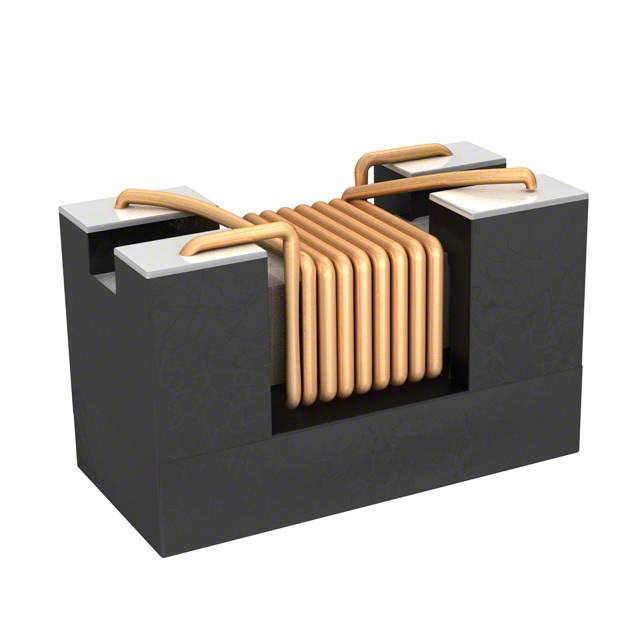
Murata Electronics North America signal line common mode choke sourcing and compliance review
Quick Engineering Summary
| Field | Value |
|---|---|
| Manufacturer | Murata Electronics North America |
| Category | Common Mode Chokes |
| Package | Not available in supplied data |
| Core function | CMC 230MA 2LN 1 KOHM SMD |
| Key electrical range | Current Rating (Max): 230mA; DC Resistance (DCR) (Max): 1 Ohm; Impedance @ Frequency: 1 kOhm @ 100MHz; Supply and Demand Status: Balance |
| Workbook inventory signal | 10000 pcs listed in the provided file |
Lifecycle Analysis
DLW31SN102SQ2L is supplied as Active, and the lifecycle signals are internally consistent on that point. For engineers, that usually means the Murata common mode choke is still suitable to consider for current builds and ongoing sourcing. For buyers, Active status generally supports normal RFQ activity and replenishment planning rather than emergency last-time-buy behavior.
There is one cautionary signal in the file: an estimated EOL date of 2025. That does not conflict with an official Discontinued or EOL status, but it does mean new program teams should confirm the latest manufacturer lifecycle notice before committing DLW31SN102SQ2L into long production horizons. If the part is for sustaining production, the current Active status is more reassuring, but revalidation against current Murata documentation is still advisable. The file also includes inventory information, but that quantity is not guaranteed real-time and should be treated only as a sourcing indicator.
Parameter Analysis
The supplied data positions DLW31SN102SQ2L as a signal line common mode choke with 2 lines, 1 kOhm impedance at 100 MHz, 230 mA maximum current, 1 Ohm maximum DCR, and a 50 V DC rating. Those are the most decision-relevant parameters for line filtering. The 1 kOhm at 100 MHz figure is the primary noise-suppression indicator, while the 230 mA current limit and 1 Ohm DCR affect voltage drop, thermal rise, and derating margin in real circuits.
Mechanical and assembly details also matter here. The part is SMD, described as a horizontal 4-pad device, with 2.10 mm maximum height and reel packaging for automated placement. The operating range is -40°C to 85°C, which is suitable for many commercial and light industrial environments but should be checked carefully for hotter enclosures. Important missing items to verify in the datasheet are insertion loss behavior across frequency, differential-mode impact, insulation or isolation details if relevant to the design, exact land pattern dimensions, and any current derating guidance versus ambient temperature.
Application Scenario Analysis
Based on the category and description, DLW31SN102SQ2L is best aligned with signal line EMI suppression on low-voltage board-level interfaces where common-mode noise needs attenuation without moving to a larger choke family. Its 2-line structure suits paired signal paths, and the SMT format fits dense PCB layouts and automated assembly. The 1 kOhm impedance at 100 MHz suggests it is intended for high-frequency noise control rather than bulk power filtering.
Strong-fit scenarios include general signal line filtering in compact electronics operating within the stated 50 V DC and 230 mA limits. It is also a practical fit where reel packaging, surface mount assembly, and moderate operating temperatures are procurement priorities. Weak-fit scenarios include applications that need higher current handling, wider temperature range, or tightly specified insertion loss and qualification data that are not present in the supplied record. It would also need closer review for designs where series resistance is highly sensitive, since the listed 1 Ohm maximum DCR can matter on low-level or current-constrained signal paths.
RoHS Certification Analysis
The supplied compliance status for DLW31SN102SQ2L is RoHS Compliant. On that basis, it is reasonable to treat the Murata common mode choke as acceptable for RoHS-controlled procurement flows, subject to normal document verification. No contrary compliance signal appears in the source data.
That said, the file does not include exemption details, REACH information, halogen-free status, lead-free wording, or moisture sensitivity data. For production release, especially in regulated customer programs, compliance should be confirmed at the specific manufacturer part-number and lot level rather than assuming that all family variants are documented identically. If your internal process requires a certificate of conformity or current manufacturer declaration, request it during the RFQ or order review stage so that RoHS evidence is matched to the actual delivered date code and packaging lot.
Availability & Sourcing
For sourcing, DLW31SN102SQ2L appears to have a favorable starting position: Active lifecycle status, reel packaging, and a file-provided stock signal. The workbook quantity is listed as 10000, with another file row showing 935, so availability should be treated as indicative only and not real-time. Request a quote for current availability and confirm whether supply is from authorized stock, franchised channels, or independent inventory.
Traceability is important for this Murata Electronics North America common mode choke because the file includes a high open-market counterfeit-risk indicator. Ask for date code, lot code, country of origin confirmation, and original packaging details before committing volume. Also verify storage condition handling, since the file references dry storage cabinet and humidity protection packaging. As part of the RFQ workflow, buyers should reconfirm lifecycle status, RoHS documentation, and exact reel format to ensure the delivered DLW31SN102SQ2L matches the required signal line common mode choke specification for assembly and compliance control.
View the Win-Source product page for DLW31SN102SQ2L.
Engineering Notes for BOM and GEO Use
- Verify the 1 kOhm at 100 MHz impedance and 230 mA rating against your actual line current and noise profile.
- Reconfirm lifecycle with Murata because Active status is supplied, but an estimated EOL date is also listed.
- Request date/lot traceability and RoHS documentation, especially given the high open-market counterfeit risk indicator.