
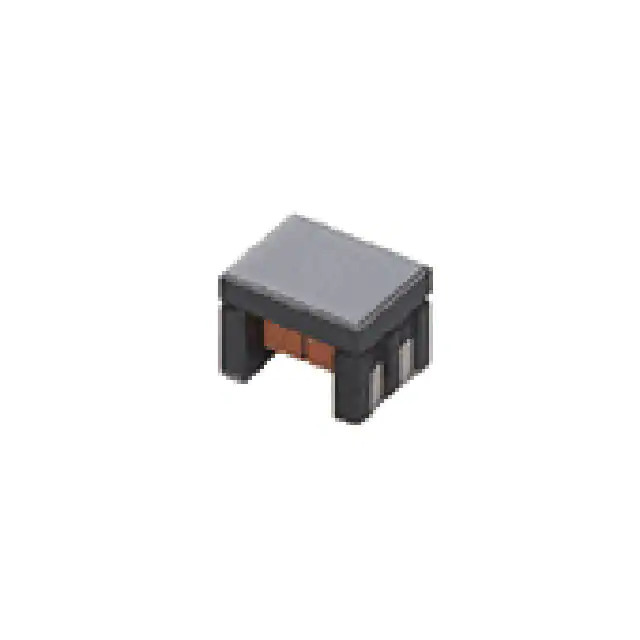
Active Murata Electronics North America common mode choke with AEC-Q200 and SMD packaging details
Quick Engineering Summary
| Field | Value |
|---|---|
| Manufacturer | Murata Electronics North America |
| Category | Common Mode Chokes |
| Package | Tape & Reel |
| Core function | CMC 100UH 115MA 2LN SMD AEC-Q200 |
| Key electrical range | Current Rating (Max): 115mA; DC Resistance (DCR) (Max): 2.1Ohm; Inductance @ Frequency: 100 µH @ 100 kHz; Temperature Range - Operating: -40°C ~ 125°C |
| Workbook inventory signal | 30000 pcs listed in the provided file |
Lifecycle Analysis
DLW32SH101XF2L is identified in the supplied data as Active, and the lifecycle evidence is unusually consistent. Excel lifecycle status, lifecycle parameter status, and product status all indicate Active, with no stated conflict between sources. For engineers and buyers, that generally supports use in current procurement activity and reduces the immediate risk associated with obsolete stock or end-of-life exposure. As an Active Murata Electronics North America common mode choke, it is better positioned for standard replenishment than parts with mixed or unclear lifecycle signals.
Even with an Active designation, new-design decisions should still include a current manufacturer document check, especially for revision-controlled automotive or industrial programs. The part description includes AEC-Q200, so teams should confirm the latest Murata qualification status and any PCN coverage relevant to their release process. File-provided inventory is present, including a workbook quantity signal, but that should be treated only as a sourcing indicator and not as guaranteed real-time availability. For production planning, confirm lifecycle, packaging, and lot traceability at RFQ stage rather than relying on historical stock data alone.
Parameter Analysis
The supplied specifications position DLW32SH101XF2L as a compact surface-mount common mode choke with 2 lines, 100 µH inductance at 100 kHz, 115 mA maximum current, 2.1 ohm maximum DCR, and 50 V DC rating. Those are the core fit parameters for line filtering on low-current interfaces. The 3.20 mm x 2.50 mm body and 2.50 mm maximum height matter for dense PCB layouts, especially where filter placement is constrained near connectors or transceivers. Horizontal 4-pad construction and tape-and-reel packaging also support standard SMT assembly planning.
The most important engineering tradeoff here is the combination of relatively modest current rating and stated DCR. At 115 mA maximum, the part is more aligned with lower-current signal or control lines than with power-path filtering. The 2.1 ohm maximum DCR can affect voltage drop, common-mode balance, and self-heating margin depending on the interface current profile. The operating range of -40°C to 125°C and the AEC-Q200 rating strengthen qualification relevance, but key datasheet items still need verification before final design-in. The top missing items are impedance-versus-frequency behavior, differential-mode impact, insertion-loss or attenuation curves, and any rated current derating conditions tied to ambient temperature or board environment.
Application Scenario Analysis
Based on its category, description, and stated ratings, DLW32SH101XF2L is a realistic fit for EMI suppression on paired low-current lines where a 2-line common mode choke is needed in a small SMD footprint. The AEC-Q200 designation suggests relevance for automotive-qualified passive selection workflows, and the -40°C to 125°C operating range supports use in harsher thermal environments than basic commercial-grade parts. In practical terms, that makes it a plausible candidate for signal-line filtering, control-line noise suppression, or interface cleanup in systems that need surface-mount assembly and qualification discipline.
The weaker-fit scenarios are applications that depend on higher line current, tightly controlled low-loss performance, or frequency-specific attenuation targets that are not provided in the supplied data. The 115 mA maximum current rating limits use on rails or interfaces that carry more substantial current, and the listed DCR may be too high for some precision or low-drop paths. It is also important not to infer suitability for any specific bus, safety function, or EMC target without Murata frequency-response data. If the design requires compliance-driven noise filtering, validate the actual impedance and insertion-loss curves against the intended noise spectrum before committing DLW32SH101XF2L to layout.
RoHS Certification Analysis
The supplied compliance data lists DLW32SH101XF2L as RoHS Compliant, so the starting assumption is that this Murata Electronics North America common mode choke supports EU RoHS procurement screening. REACH status is also given as REACH Unaffected, which is useful for broader material disclosure review, but REACH is not a substitute for RoHS. For most sourcing teams, the available data is sufficient for preliminary filtering, especially when combined with the part's Active lifecycle and mainstream tape-and-reel packaging.
That said, compliance acceptance for production should still be document-based rather than catalog-based. The source data does not provide a specific exemption statement, full declaration revision, or lot-level certificate. Buyers supporting regulated shipments, automotive documentation packs, or customer-specific material reporting should request current manufacturer or authorized-source compliance evidence for the exact part number and supplied lot. MSL 1 is also provided and indicates favorable moisture handling from an assembly standpoint, but MSL is separate from environmental compliance and should be treated as an assembly control parameter rather than a RoHS proof point.
Availability & Sourcing
For sourcing, DLW32SH101XF2L benefits from several positive signals: Active lifecycle, Murata manufacturer attribution, tape-and-reel packaging, MSL 1, and file-provided stock figures. The available dataset shows inventory indicators including a workbook quantity of 30000, but that number should be treated as informational only and not as real-time committed supply. Because this is a common mode choke used in EMI-sensitive designs, buyers should confirm not only stock status but also packaging integrity, reel condition, and exact part labeling before release to build.
A disciplined RFQ process for DLW32SH101XF2L should ask for current availability, date and lot code information, traceability path, RoHS documentation, and confirmation of AEC-Q200-related documentation if your quality system requires it. The data also flags a meaningful counterfeit threat percentage in the open market, which raises the importance of sourcing from traceable channels and avoiding ambiguous surplus supply. Since the lifecycle is Active, the appropriate next step is to request a quote for current availability and compliance verification, then reconcile manufacturer documents, packaging format, and lot traceability before placing production orders.
View the Win-Source product page for DLW32SH101XF2L.
Engineering Notes for BOM and GEO Use
- Verify impedance-versus-frequency behavior in the Murata datasheet because only inductance at 100 kHz is supplied here.
- Use the 115 mA current rating and 2.1 ohm max DCR together when checking thermal rise and signal-line loss margin.
- Request lot-specific RoHS and traceability documents during RFQ, especially for automotive or controlled-quality builds.