
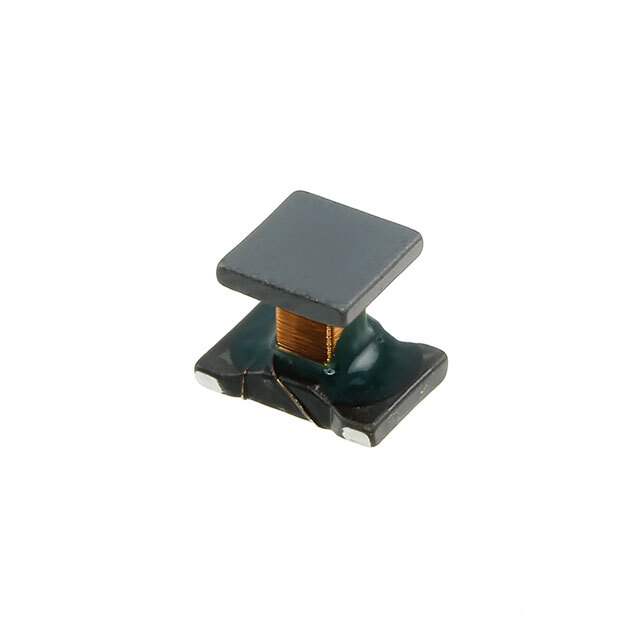
Murata Electronics North America common mode choke lifecycle, specs, compliance, and sourcing review
Quick Engineering Summary
| Field | Value |
|---|---|
| Manufacturer | Murata Electronics North America |
| Category | Common Mode Chokes |
| Package | Not available in supplied data |
| Core function | CMC 200MA 2LN 4 KOHM SMD |
| Key electrical range | Current Rating (Max): 200mA; DC Resistance (DCR) (Max): 3 Ohm; Impedance @ Frequency: 4 kOhm @ 100MHz; Supply and Demand Status: Limited |
| Workbook inventory signal | 21488 pcs listed in the provided file |
Lifecycle Analysis
For DLW5AHN402SQ2L, the supplied lifecycle evidence is not fully aligned. The top-level lifecycle field marks the part as Unknown with no supporting signals, while one specification entry lists Status as Active. Because those two inputs conflict and no manufacturer notice is included, the safest sourcing position is to treat this Murata Electronics North America common mode choke as Unknown until revalidated through current manufacturer documentation or an authorized supply channel.
For new designs, Unknown status means buyers and engineers should avoid assuming long-term continuity without confirmation. If the part is for sustaining production, the focus should shift to securing traceable inventory and documenting any approved alternates internally if supply risk rises. The file also shows workbook stock and a separate stock quantity entry, but those are file-provided indicators rather than guaranteed real-time availability.
Before release, request current lifecycle confirmation, latest datasheet revision, and any product change or discontinuation notices that apply to this common mode choke family. That is especially important when qualification windows are long or when the filter is embedded in a design that is expensive to revalidate later.
Parameter Analysis
The supplied data identifies DLW5AHN402SQ2L as a 2-line SMD common mode choke for power and signal line filtering. The most decision-relevant values are 4 kOhm impedance at 100 MHz, 200 mA maximum current rating, 3 Ohm maximum DCR, 50 V DC rating, and an operating range of -25°C to 85°C. Together, these indicate a low-current EMI filter where high-frequency common-mode attenuation is important, but line loss and thermal margin cannot be ignored.
The 200 mA rating matters for current derating and self-heating, especially if both lines carry sustained load or if ambient temperature approaches the upper operating limit. A 3 Ohm maximum DCR is meaningful in low-voltage rails and sensitive interfaces because it can add voltage drop and dissipative loss. The 4 kOhm at 100 MHz figure is useful for comparing high-frequency noise suppression targets, but it does not replace insertion loss data under real source and load impedances.
Key items still needing datasheet verification are the actual footprint dimensions, line-to-line and line-to-ground behavior, rated current test conditions, tolerance or impedance variation, insulation structure, and any temperature rise curves. Those details drive PCB layout, qualification margin, and whether this Murata common mode choke fits the intended interface without unwanted signal degradation.
Application Scenario Analysis
Based on the category, description, and electrical summary, DLW5AHN402SQ2L is a plausible fit for compact power or signal lines that need common-mode noise suppression in an SMT assembly flow. Strong-fit scenarios include low-current DC lines, control lines, and general signal routing where the designer needs a 2-line common mode choke with reel packaging and a horizontal 4-pad mount style. The 4 kOhm impedance at 100 MHz points to use in suppressing higher-frequency EMI rather than bulk power conditioning.
The part looks less suitable for applications that demand higher current capacity, low insertion resistance, or wide environmental margin, since the stated current rating is only 200 mA and maximum DCR is 3 Ohm. Designs operating above 85°C ambient, carrying significant continuous current, or requiring tightly characterized differential signal integrity should be reviewed carefully against the full Murata datasheet.
Because the supplied data only states power and signal line filter type, it is best to treat application fit conservatively. Engineers should confirm whether the target line is primarily noise-sensitive, what common-mode spectrum must be attenuated, and whether the added impedance and resistance are acceptable for startup behavior, signal fidelity, and thermal budget.
RoHS Certification Analysis
The supplied compliance status for DLW5AHN402SQ2L is RoHS Compliant, so the base assumption is that this Murata Electronics North America common mode choke meets RoHS requirements for restricted substances. The data does not include a specific declaration revision beyond that statement, and no exemptions are listed, so compliance should be treated as stated but not fully documented in the file.
For procurement, RoHS confirmation is usually most useful when paired with shipment-level documentation such as a manufacturer declaration or distributor compliance certificate. That matters if the part will be used in regulated end products or if customer quality systems require auditable records. Family-level database status is helpful for screening, but lot-level paperwork is often what closes the compliance loop during receiving or PPAP-style reviews.
No REACH status, halogen-free status, MSL rating, or lead-finish detail is supplied here. Those items are not interchangeable with RoHS and should be requested separately if your process requires them. If the assembly flow is moisture-sensitive or the storage window matters, verify packaging integrity and any moisture handling instructions directly from current manufacturer documents.
Availability & Sourcing
The file indicates inventory for DLW5AHN402SQ2L, including a workbook quantity and a stock quantity entry, but those numbers should be treated only as file-provided signals rather than live availability. The same data also flags supply and demand status as Limited, which is a cue to validate lead-time exposure and not rely solely on catalog snapshots. Because lifecycle evidence is inconsistent, the RFQ process should include both availability confirmation and manufacturer lifecycle verification.
For buyers, the practical sourcing checklist is traceability first: request manufacturer name match, full part marking or packaging label confirmation, date and lot code, reel condition, and storage history. Since the item is listed as tape-and-reel SMD stock with humidity-protected storage guidance, packaging condition and dry-storage handling are worth confirming for production use. If your quality flow is strict, ask for current RoHS documentation and any available factory certificates alongside the quote.
Given the Unknown lifecycle classification used here, the right call to action is to verify lifecycle before committing to new production use. Request a quote for current availability, then confirm whether the offered stock is factory-traceable, properly stored, and aligned with the latest Murata documentation for this common mode choke.
View the Win-Source product page for DLW5AHN402SQ2L.
Engineering Notes for BOM and GEO Use
- Lifecycle data is inconsistent, so confirm manufacturer status before approving for new production.
- Check 200 mA rating, 3 Ohm max DCR, and 4 kOhm at 100 MHz against line current, loss, and EMI targets.
- Request traceable date/lot, reel packaging confirmation, and current RoHS documentation with the RFQ.