
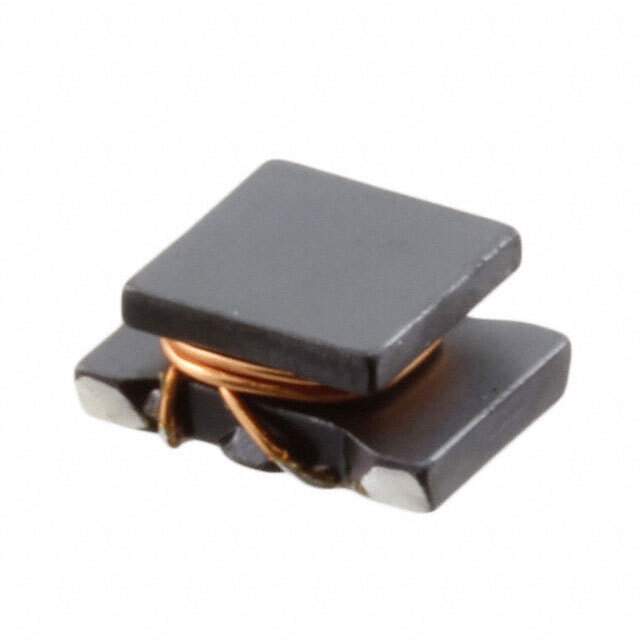
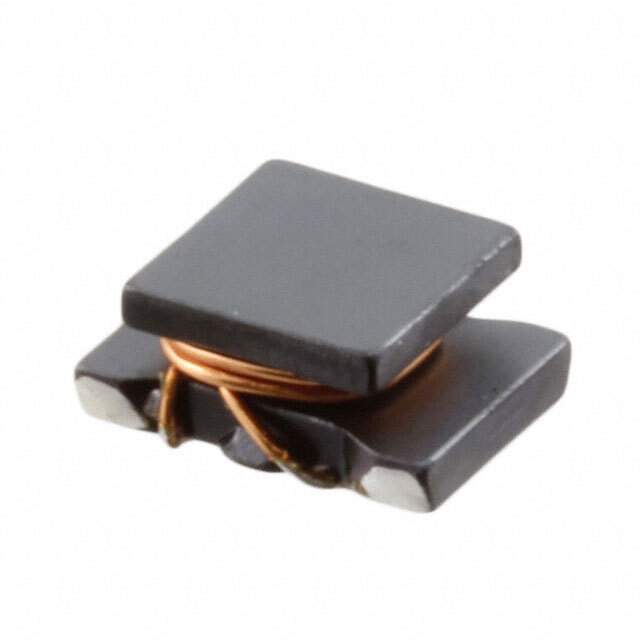
Active Murata common mode choke sourcing guide for automotive-grade EMI filtering review
Quick Engineering Summary
| Field | Value |
|---|---|
| Manufacturer | Murata Electronics North America |
| Category | Common Mode Chokes |
| Package | Tape & Reel |
| Core function | CMC 2A 2LN 500 OHM SMD AEC-Q200 |
| Key electrical range | Current Rating (Max): 2A; DC Resistance (DCR) (Max): 34mOhm; Impedance @ Frequency: 500 Ohms @ 100 MHz; Temperature Range - Operating: -40°C ~ 125°C |
| Workbook inventory signal | 89600 pcs listed in the provided file |
Lifecycle Analysis
DLW5ATH501MQ2L is identified in the supplied file as Active, and the lifecycle evidence is consistent across all listed signals. The data shows Active in the lifecycle field, Lifecycle Status, and Product Status, with no reported conflict. For engineers and buyers, that is the most favorable sourcing position because it supports both ongoing production procurement and consideration for new designs, assuming the latest Murata documentation remains aligned.
Even with an Active status, release to production should still include normal manufacturer revalidation steps. For a Murata Electronics North America common mode choke, that means confirming the latest datasheet revision, recommended land pattern, qualification documentation, and any product change notices that could affect assembly or EMI behavior. The source file also includes inventory quantity, but that should be treated only as a file-provided signal rather than guaranteed real-time stock. If DLW5ATH501MQ2L is being planned into a controlled build, procurement should confirm lifecycle and stock position again during RFQ and prior to scheduling production.
Parameter Analysis
The most decision-relevant parameters for DLW5ATH501MQ2L are its 500 ohms impedance at 100 MHz, 2A maximum current rating, 34 mOhm maximum DCR, 50V DC rating, 2-line construction, and compact 5.00 mm x 3.60 mm surface-mount body with 2.35 mm maximum height. For a common mode choke, the impedance figure helps indicate high-frequency noise suppression, while the current rating and DCR directly affect power loss, heating, and voltage drop in the protected line. The 2-line format and power or signal line filter designation make it suitable where paired conductors need common-mode noise attenuation.
AEC-Q200 is an important qualification marker because it supports consideration in automotive-grade or otherwise vibration and temperature-conscious environments. The listed operating range of -40°C to 125°C is also meaningful for under-hood adjacent electronics, industrial controls, and other harsher environments. Key missing items to verify in the Murata datasheet are inductance behavior if applicable to the series, insertion-loss curves across frequency, insulation or isolation details between lines, rated current test conditions, and recommended PCB layout. Those details determine whether DLW5ATH501MQ2L will meet real EMI targets rather than only nominal catalog specifications.
Application Scenario Analysis
Based on the category, description, and provided specifications, DLW5ATH501MQ2L is a strong fit for EMI suppression on compact power or signal interfaces where two conductors carry current and common-mode noise must be reduced. Likely use cases include DC supply inputs, inter-board harness connections, actuator or sensor lines, and automotive electronic modules that need AEC-Q200 qualified filtering components in a surface-mount format. Its 2A current rating and low maximum DCR suggest it is better suited to moderate-current paths than to very low-current logic-only filtering where package size may be overbuilt.
It is a weaker fit for applications needing explicit high-voltage isolation, very high current capability beyond 2A, or detailed differential-mode filtering behavior that must be proven from insertion-loss data not included here. It may also be a weak choice for extremely height-constrained designs if the 2.35 mm maximum profile is too tall for the enclosure. Engineers should map the 500 ohms at 100 MHz characteristic to the actual interference spectrum in the system, because catalog impedance alone does not guarantee compliance margin in every cable, power-entry, or signal-interface scenario.
RoHS Certification Analysis
The supplied compliance status for DLW5ATH501MQ2L is RoHS Compliant, so the starting position is that this Murata common mode choke supports RoHS-controlled procurement workflows. The file also lists REACH Unaffected, which is useful supporting information for materials compliance review, but REACH status should not be treated as a substitute for RoHS confirmation. In this case, both are present, which is better than relying on one framework alone.
The source data does not provide a specific RoHS directive revision beyond the compliant statement, and it does not list any exemptions, lead-free declaration, or halogen-free status. It does provide MSL 1 with unlimited floor life, which is helpful for assembly handling but separate from environmental compliance. For production approval, buyers should request lot-traceable compliance evidence if their customer or internal quality system requires it, especially where automotive documentation packs are expected. Family-level compliance claims are useful for screening, but lot-level and date-code-specific records are the safer basis for release when DLW5ATH501MQ2L is intended for regulated shipments.
Availability & Sourcing
For sourcing DLW5ATH501MQ2L, the file presents an Active lifecycle position, tape-and-reel packaging, and an inventory signal of 89600 units, with another file row showing 1089 units. Those quantity figures are useful as indicators only and should not be treated as real-time committed availability. The prudent workflow is to submit an RFQ for current stock confirmation, lead-time visibility, and packaging verification tied to the exact Murata part number and required build schedule.
Because this is a common mode choke used in EMI control, traceability matters. Buyers should confirm manufacturer provenance, date and lot code traceability, original tape-and-reel condition, and the exact AEC-Q200 qualified ordering identity. The source data also flags open-market counterfeit exposure risk, so brokered material should be screened carefully and supported by inspection and documentation. Compliance records should be requested alongside the quote, including RoHS evidence and any customer-required declarations. Since DLW5ATH501MQ2L is Active, the sourcing focus should be on quote turnaround, lifecycle verification, and documentation completeness rather than last-time-buy behavior.
View the Win-Source product page for DLW5ATH501MQ2L.
Engineering Notes for BOM and GEO Use
- Verify common-mode attenuation versus actual noise spectrum, not just the 500 ohms at 100 MHz headline value.
- Check thermal rise and derating at full 2A load because low DCR helps loss but does not replace board-level validation.
- Request traceable tape-and-reel packaging, date code, and compliance records during RFQ for production release.