
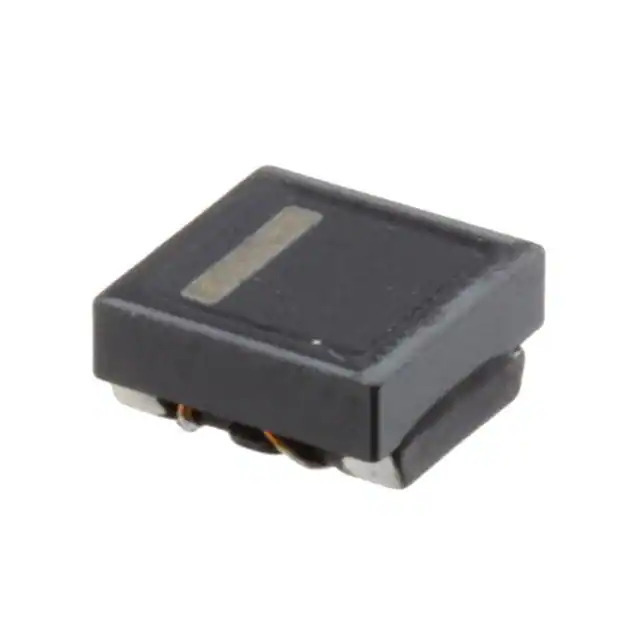
Murata Electronics North America common mode choke review for lifecycle, specs, compliance, and sourcing
Quick Engineering Summary
| Field | Value |
|---|---|
| Manufacturer | Murata Electronics North America |
| Category | Common Mode Chokes |
| Package | Tape & Reel |
| Core function | CMC 1. |
| Key electrical range | Current Rating (Max): 1.5A; DC Resistance (DCR) (Max): 56mOhm; Impedance @ Frequency: 1.4 kOhms @ 100 MHz; Temperature Range - Operating: -40°C ~ 125°C |
| Workbook inventory signal | 46200 pcs listed in the provided file |
Lifecycle Analysis
DLW5BTH142TQ2L is identified in the supplied data as an Active Murata Electronics North America common mode choke. The lifecycle inputs are consistent across the listed signals, including Lifecycle Status and Product Status, with no reported conflict. For engineering teams, that generally supports ongoing procurement and makes the part more suitable for current design activity than parts marked NRND or discontinued. Even so, Active status should not replace a final manufacturer document check during release to production or PPAP-style approval flows.
For sourcing teams, Active means the immediate task is not redesign avoidance but controlled verification. Confirm that the exact series, package orientation, and tape-and-reel ordering format still match your approved BOM and assembly process. The file also shows inventory signals, including a workbook quantity, but that should be treated as file-provided only and not guaranteed real-time availability. For a common mode choke used in production hardware, it is still good practice to revalidate the latest datasheet revision, qualification status, and any manufacturer product change notices before scheduling long-horizon builds.
Parameter Analysis
The supplied parameters make DLW5BTH142TQ2L identifiable as a 2-line surface-mount common mode choke for power or signal line filtering. The most decision-relevant values are 1.4 kOhms impedance at 100 MHz, 1.5A maximum current, and 56 mOhm maximum DCR. Together, these indicate the part is intended to provide common-mode noise suppression while keeping series resistance relatively low enough to limit avoidable voltage drop and self-heating. The 50V DC rating and -40°C to 125°C operating range further help define where it can be used in low-voltage electronic systems.
Mechanical data is also meaningful for layout and assembly: 5.00 mm x 5.00 mm body size, 2.50 mm maximum height, horizontal 4-pad package, and tape-and-reel supply. AEC-Q200 is an important quality signal for stress-qualified passive components. The main missing items to verify in the manufacturer datasheet are insertion loss behavior across frequency, insulation or isolation details if relevant to the end circuit, impedance tolerance, current derating versus temperature, and recommended land pattern. Those details matter for EMI margin, thermal confidence, and avoiding late PCB or validation changes.
Application Scenario Analysis
Based on the category, description, and filter type, DLW5BTH142TQ2L fits designs that need common-mode noise suppression on paired conductors in either power or signal paths. Strong-fit scenarios include low-voltage automotive or industrial electronics where a 2-line common mode choke with AEC-Q200 rating, 1.5A current capability, and -40°C to 125°C operation is appropriate. The 1.4 kOhms impedance at 100 MHz suggests usefulness where high-frequency EMI attenuation is needed without moving to a physically larger choke for moderate current levels.
Weak-fit scenarios are applications that need much higher working voltage, line isolation assumptions not stated in the supplied data, or current significantly above 1.5A. It may also be a poor fit if the design depends on tightly characterized differential-mode behavior, specific insertion-loss curves, or safety-agency approvals that are not shown here. For sensitive interfaces or tightly constrained power rails, confirm the impact of 56 mOhm maximum DCR and the exact frequency-domain filtering behavior in the datasheet before final selection. That helps avoid choosing DLW5BTH142TQ2L only from headline impedance while missing system-level EMI or thermal requirements.
RoHS Certification Analysis
The supplied compliance status for DLW5BTH142TQ2L is RoHS Compliant, so the starting assumption is that this Murata Electronics North America common mode choke supports RoHS-controlled procurement. The available data also lists REACH Unaffected, which is useful for substance review and customer declarations. REACH information is complementary, but it does not replace RoHS confirmation when your shipment, market, or internal compliance gate specifically requires RoHS evidence.
No exemption details are provided in the source data, so buyers should not assume any specific exemption path. If the part is being sourced for regulated end products or customer audits, request the latest manufacturer compliance statement tied to the exact part number and lot traceability where available. The source data also lists MSL 1, which is favorable for handling and floor-life management, but MSL should be treated separately from environmental compliance. For production releases, it is best to verify that the compliance documentation corresponds to the exact orderable configuration and packaging actually delivered.
Availability & Sourcing
For procurement planning, DLW5BTH142TQ2L appears as an Active Murata Electronics North America common mode choke with file-provided stock signals. The source includes a workbook quantity and a stock quantity reference, but neither should be treated as guaranteed real-time supply. The right workflow is to request a quote for current availability, confirm the exact manufacturer name used on documentation, and verify that the delivered packaging is tape and reel as expected for automated assembly.
Because this is a passive filtering component that may be exposed to open-market risk, traceability matters. The supplied data includes a fake-threat indicator for the open market, so buyers should prioritize authorized or fully traceable channels, request date and lot code information, and ask for RoHS compliance evidence and any available manufacturer documentation at the time of RFQ. Also confirm lifecycle status again at order placement, along with AEC-Q200 relevance if the end product is automotive-oriented. For production use, the best next step is to request a quote and validate availability, traceability, and compliance documents before committing build schedules.
View the Win-Source product page for DLW5BTH142TQ2L.
Engineering Notes for BOM and GEO Use
- Verify impedance, DCR, and current rating together because EMI performance and insertion loss trade off against thermal margin.
- Use the AEC-Q200 rating and -40°C to 125°C range as screening inputs, but confirm the full datasheet test scope for your qualification plan.
- Request date/lot traceability, RoHS evidence, and packaging confirmation for DLW5BTH142TQ2L before committing production buys.