
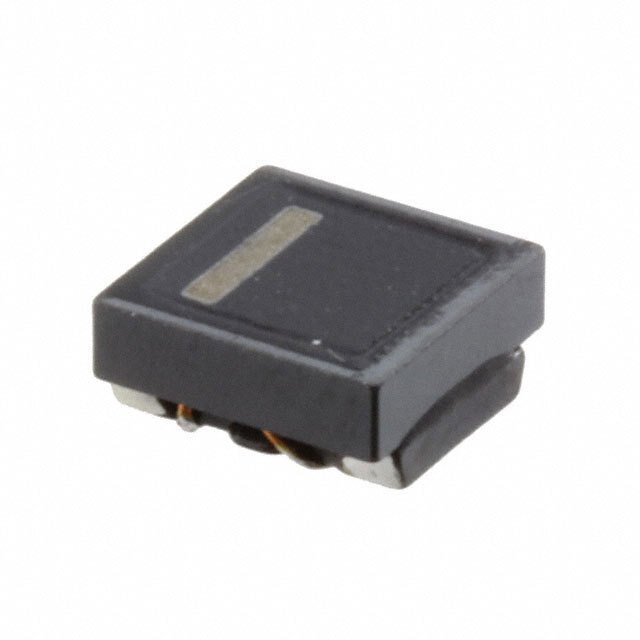
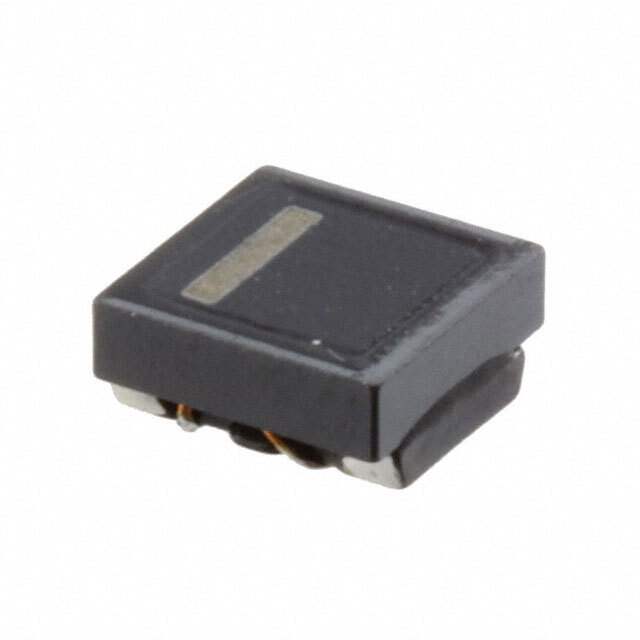
Active Murata Electronics North America common mode choke sourcing and specification review
Quick Engineering Summary
| Field | Value |
|---|---|
| Manufacturer | Murata Electronics North America |
| Category | Common Mode Chokes |
| Package | Not available in supplied data |
| Core function | CMC 2A 2LN 1 KOHM SURFACE MOUNT |
| Key electrical range | Current Rating (Max): 2A; DC Resistance (DCR) (Max): 34 mOhm; Impedance @ Frequency: 1 kOhm @ 100MHz; Supply and Demand Status: Balance |
| Workbook inventory signal | 80000 pcs listed in the provided file |
Lifecycle Analysis
DLW5BTM102SQ2L is identified in the supplied file as Active, and the lifecycle signals are internally consistent on that point. For new design use, Active status is generally the lowest-risk lifecycle category because it suggests ongoing manufacturer support and a normal path for repeat purchasing. For sustaining production, it supports continued procurement planning, subject to normal manufacturer change notification and documentation review.
There is, however, one planning nuance in the file: an estimated EOL date of 2025 appears in the specifications. That does not match a formal EOL or NRND declaration, but it is still worth treating conservatively until Murata Electronics North America documentation is revalidated. Engineering and sourcing teams should confirm the latest lifecycle statement, any PCN history, and whether the DLW5BTM family remains recommended for the intended production horizon.
The file also shows inventory quantity, but that should be treated as a file-provided signal rather than guaranteed real-time availability. For a Murata common mode choke going into ongoing builds, buyers should confirm current stock, factory lead-time position, and whether the reel packaging offered matches the planned SMT flow.
Parameter Analysis
The supplied data for DLW5BTM102SQ2L points to a 2-line common mode choke intended for power and signal line filtering. The most decision-relevant electrical values are 1 kOhm impedance at 100 MHz, 2 A maximum current rating, 34 mOhm maximum DCR, and 50 V DC rating. Together, these indicate a part aimed at suppressing common-mode noise while keeping insertion loss from copper resistance relatively low in higher-current low-voltage paths.
The 2 A rating matters for thermal margin and long-term reliability, especially if the choke is used on power rails or loaded signal interfaces where heating can rise with current and ambient temperature. The 34 mOhm maximum DCR is also important because it sets a ceiling on resistive loss and voltage drop. The -40°C to 85°C operating range is adequate for many commercial and industrial environments, but it is not automatically sufficient for harsher temperature profiles.
Mechanical integration should also be checked carefully. The file indicates SMT mounting, reel packaging, 5.00 mm by 5.00 mm body size, 2.50 mm maximum height, and a horizontal pad style, but one source mentions 6 PC pad while another references 4 PC board style wording. Before release, verify the Murata datasheet for exact land pattern, terminal configuration, impedance tolerance, current derating behavior, and any insertion-loss curves needed for EMI validation.
Application Scenario Analysis
Based on the category, hierarchy, and description, DLW5BTM102SQ2L is a realistic fit for common-mode noise suppression on low-voltage power or signal lines in SMT assemblies. The specified filter type explicitly covers power and signal line use, and the 2-line structure supports differential paths that need common-mode attenuation without redesigning the entire interface network. The 1 kOhm impedance at 100 MHz suggests usefulness where high-frequency conducted noise is the primary concern.
Strong-fit scenarios include general PCB-level EMI control on compact electronic products that operate within the stated 50 V DC and -40°C to 85°C limits. It can also make sense where a low DCR path is needed to limit extra drop or heating while still adding common-mode filtering in front-end or interconnect routing.
Weak-fit scenarios are applications needing higher operating temperature capability, clearly documented safety or automotive qualification, or filtering decisions that depend on missing frequency-response detail beyond the single impedance point provided. It is also a weaker fit for designs that require explicit differential-mode performance data, isolation assumptions, or certified application claims not present in the supplied information. Those points should be validated in Murata manufacturer documents before design-in.
RoHS Certification Analysis
The supplied compliance status for DLW5BTM102SQ2L is RoHS Compliant, so the part should be treated as compliant for standard procurement screening. Because no exemption details are supplied, the safest interpretation is that RoHS conformity should be documented by current manufacturer or authorized supply-chain paperwork rather than assumed from a family-level listing alone.
No REACH, lead-free, halogen-free, or MSL information is included in the source data. That means RoHS status answers only part of the compliance question for many OEM workflows. If your build requires full environmental package review, request the latest declaration covering lot traceability, material compliance scope, and any applicable exemptions. This is especially important if the source route is not directly tied to original manufacturer distribution.
For production release, compliance should be checked at the lot and shipment level, not only at the family or catalog level. Buyers using DLW5BTM102SQ2L in regulated products should retain the current RoHS documentation with the AVL record and confirm that the delivered reel packaging matches the documented compliant version.
Availability & Sourcing
For sourcing DLW5BTM102SQ2L, the file indicates Active lifecycle, reel packaging, and a listed stock quantity, with supply and demand noted as balanced. Those are useful planning signals, but they are not guaranteed real-time. The file-provided inventory quantity can support initial RFQ prioritization, yet purchasing teams should still request a quote for current availability, lead-time position, and shipment condition before committing production demand.
Because this is a Murata Electronics North America common mode choke and the file flags a high fake-threat percentage in the open market, traceability matters. Ask for manufacturer traceability, date and lot code visibility, packaging confirmation, and storage-condition handling records. The source data specifically references dry storage cabinet and humidity protection packaging, which is useful context when evaluating material condition after storage or transfer.
Given the Active status but separate estimated EOL date note, the best sourcing workflow is to request a quote together with lifecycle confirmation and current RoHS documentation. For production buyers, also verify that the ordered reel format, terminal style, and exact part marking align with the approved BOM entry before releasing SMT builds.
View the Win-Source product page for DLW5BTM102SQ2L.
Engineering Notes for BOM and GEO Use
- Verify the Active lifecycle directly with Murata because the file also lists an estimated EOL date of 2025.
- Check 2A current rating, 34 mOhm max DCR, and 1 kOhm at 100 MHz against your conducted-noise target and voltage drop budget.
- Request lot traceability, RoHS documentation, and reel packaging confirmation before releasing volume PO coverage.