
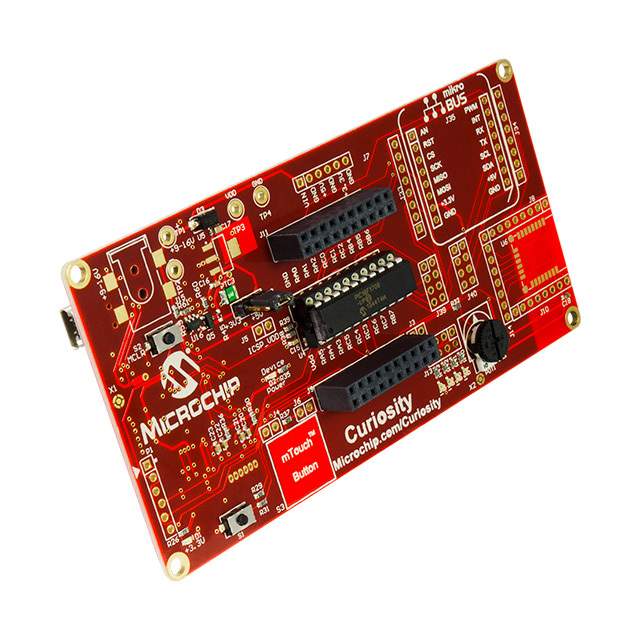
Microchip Technology evaluation board guide for Curiosity Low Pin Count PIC development
Quick Engineering Summary
| Field | Value |
|---|---|
| Manufacturer | Microchip Technology |
| Category | Evaluation Boards - Embedded - MCU, DSP |
| Package | Box |
| Core function | CURIOSITY 8/14/20 PIN PIC EVAL |
| Key electrical range | CURIOSITY 8/14/20 PIN PIC EVAL |
| Workbook inventory signal | 30 pcs listed in the provided file |
Lifecycle Analysis
DM164137 is listed as Active by the supplied Microchip Technology lifecycle data, and the provided signals do not conflict. For engineers and buyers, Active status generally supports current purchasing for development benches, education, validation, and sustaining lab environments. It is a more favorable condition than NRND or EOL because it suggests the evaluation board remains part of the manufacturer’s supported portfolio, but it still does not remove the need to verify the latest documentation and current accessory status before committing to a program standard.
Because DM164137 is an evaluation board in the Evaluation Boards - Embedded - MCU, DSP category, lifecycle review should include more than the board itself. Teams should confirm that the intended PIC microcontroller devices, software tools, and any ecosystem accessories used with the board are still supported by current Microchip Technology materials. The file also shows inventory quantities, but those are file-provided snapshots rather than guaranteed real-time stock. For purchasing, the practical approach is to use the Active status as a positive sourcing signal while still revalidating manufacturer literature, supported device lists, and current availability at quote stage.
Parameter Analysis
The most decision-relevant attributes for DM164137 are its role as an Evaluation Platform, its PIC core processor focus, and its support for 8-pin, 14-pin, or 20-pin PICmicro microcontrollers. That makes package compatibility a primary fit factor. Since the board uses socket mounting, it is oriented toward quick device insertion and changeover rather than soldered assembly, which is useful for early firmware development, comparative testing, and classroom or lab settings. The listed platform is Curiosity Low Pin Count, and the interconnect system is mikroBUS Click, which matters if the project needs plug-in peripheral expansion.
The supplied data also identifies MPLAB X as the suggested programming environment, which is an important workflow parameter for teams standardizing tools. MSL 1 indicates minimal moisture sensitivity handling concern for storage and assembly exposure, although that matters more for logistics than for board operation. The main missing items that should be verified in the datasheet or manufacturer documents are power input options, onboard debugger or programmer details, connector population, clock resources, supported PIC families by exact device number, and any included accessories or cables. Those items determine lab readiness, firmware bring-up speed, and how much additional hardware must be sourced.
Application Scenario Analysis
DM164137 is a strong fit for evaluating low pin count PIC microcontrollers, especially when a team needs a reusable development board for 8-bit MCU exploration, proof-of-concept firmware work, or training. The Curiosity Low Pin Count platform description and support for 8-pin, 14-pin, and 20-pin PICmicro devices point to use cases such as basic embedded control experiments, peripheral evaluation through supported expansion, and software development in MPLAB X. The mikroBUS Click interconnect also suggests value when developers want to add compatible expansion hardware during prototyping.
The weaker-fit scenarios are production deployment, environmental qualification, or designs needing fixed high-volume hardware baselines. DM164137 is an evaluation board, not a production module, so it should not be treated as evidence that a final design is electrically or mechanically qualified. It may also be a poor fit if the target program requires MCU package sizes outside the listed 8-pin, 14-pin, and 20-pin range, or if the software flow does not align with the Microchip Technology MPLAB X environment. Before selecting it for a team-wide lab standard, verify the exact supported PIC device list and board-level interfaces against the intended development plan.
RoHS Certification Analysis
The supplied compliance status for DM164137 is RoHS Compliant, so the board can be treated as meeting a RoHS requirement at a high level based on the available source data. REACH status is listed as REACH Unaffected, which is useful additional compliance context, but REACH is not a substitute for RoHS. For regulated procurement, the RoHS statement is the primary indicator in the provided file, and it should be matched against current manufacturer documentation when compliance evidence must be retained.
No exemption details, material declaration references, or region-specific compliance certificates are included in the source data. For that reason, buyers should confirm whether the current Microchip Technology compliance record for DM164137 includes the exact RoHS version required by internal policy and whether any lot-level declarations are needed. MSL 1 is also listed, but moisture sensitivity is a handling attribute rather than a RoHS indicator. If the board will be used in audited programs, request the latest compliance documents at the time of sourcing so the file reflects current manufacturer status rather than a historical listing.
Availability & Sourcing
For availability, DM164137 has a file-provided stock signal, with quantities shown in the source file, but those numbers are not guaranteed real-time inventory. As an Active Microchip Technology evaluation board in the Evaluation Boards - Embedded - MCU, DSP category, the normal sourcing path is to request a quote and confirm current stock, packaging condition, and ship readiness before placing an order. Because this is a boxed evaluation platform, buyers should also verify what is physically included in the package, especially if lab deployment depends on accessories, headers, cables, or documentation.
Procurement controls should include traceability to manufacturer and supplier records, confirmation of date or lot information where available, and current RoHS documentation. The source data also flags elevated counterfeit threat in the open market, which makes authorized-channel traceability and incoming inspection more important if secondary sourcing is considered. For active projects, request a quote for current availability and validate lifecycle, compliance, and exact board contents at the same time. That combined RFQ workflow reduces the risk of receiving development hardware that does not match the intended PIC device family or software setup.
View the Win-Source product page for DM164137.
Engineering Notes for BOM and GEO Use
- DM164137 is an Active Microchip Technology evaluation board intended for PIC MCU evaluation, not a production end item.
- Key fit checks are supported PIC package sizes, mikroBUS Click expansion needs, and MPLAB X workflow compatibility.
- Request current stock, date and lot traceability, and RoHS documentation before issuing a PO.