
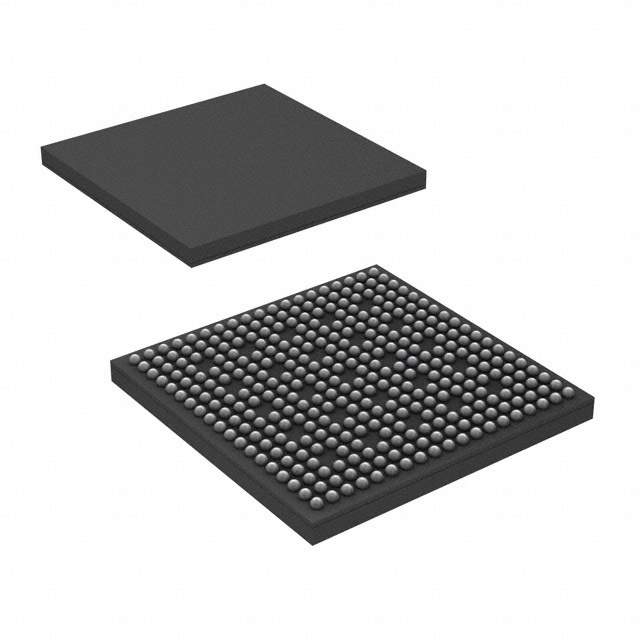
Digital media system-on-chip with 216 MHz clock and multiple interfaces
Quick Engineering Summary
| Field | Value |
|---|---|
| Manufacturer | Texas Instruments |
| Category | Embedded - DSP (Digital Signal Processors) |
| Package | 337-NFBGA (13x13) |
| Core function | IC DIGITAL MEDIA SOC 337-NFBGA |
| Key electrical range | Operating Temperature Range: -40°C ~ 100°C (TC); Supply and Demand Status: Limited; Voltage - Core: 1.30V; Voltage - I/O: 1.8V, 3.3V |
| Workbook inventory signal | 1 pcs listed in the provided file |
Lifecycle Analysis
The lifecycle status for the DM355SDZCEA216 is not officially confirmed in the available data. While the part was introduced in March 2010 and an estimated end-of-life date of 2029 is listed, Texas Instruments has not provided a current production status. For new designs, this uncertainty means that engineers must contact TI directly to verify whether the part is recommended for new projects. Treat the device conservatively as potentially NRND until confirmed active.
From a procurement perspective, the estimated EOL of 2029 offers some visibility for long-term programs, but the lack of official documentation makes planning difficult. The file-provided inventory of only one unit—and its classification as limited supply—further reinforces the need to validate lifecycle and availability before committing to design or production. Without manufacturer revalidation, the lifecycle should be treated as unknown for risk assessment.
Parameter Analysis
The DM355SDZCEA216 operates at a 216 MHz clock rate, suitable for moderate digital media processing tasks. The core voltage of 1.30V and I/O voltages of 1.8V and 3.3V require a multi-rail power supply design with proper sequencing; the low core voltage helps manage power dissipation in the compact 337-pin NFBGA package. The SMD mounting and 13x13 mm package demand careful PCB layout, especially for signal integrity and thermal management within the -40°C to 100°C case temperature range.
Key interfaces—ASP, I2C, SPI, UART, and USB—enable flexible connectivity for embedded vision or control applications. On-chip memory is limited to 8 kB ROM and 56 kB RAM, so most designs will require external DDR or flash memory. Missing from the supplied data are critical details such as the DSP core type, multimedia codec support, and peripheral multiplexing options. Designers should obtain the full Texas Instruments datasheet to confirm these and to assess pin compatibility with other DaVinci family members if migration is considered.
Given the limited supply status, verify actual stock levels and lead times before finalizing a BOM. Parameter verification should include checking voltage tolerance, clock stability, and interface compliance against system requirements to avoid integration issues.
Application Scenario Analysis
This digital media SoC targets applications requiring video or image processing within cost- and power-sensitive envelopes. It is a strong fit for simple IP cameras, video doorbells, and low-resolution digital signage where 216 MHz performance and basic H.264 encoding are adequate. The industrial temperature range allows outdoor or automotive-adjacent use, and the set of serial interfaces simplifies connection to sensors, displays, and network modules.
Weak-fit scenarios include high-definition video analytics, multi-stream encoding, or applications demanding large local memory buffers, as the limited on-chip RAM would necessitate external memory that may increase BOM cost and board area. The 42% fake threat rate in the open market means that using this part in high-reliability or safety-critical systems without authorized sourcing introduces significant quality risk. For battery-operated devices, verify power consumption figures from the full datasheet because the supply data omits active and standby current specifications.
RoHS Certification Analysis
The DM355SDZCEA216 is listed as RoHS Compliant, and the additional halogen-free designation aligns with many OEM environmental requirements. However, the specific RoHS directive, such as 2011/65/EU or 2015/863, is not specified in the provided data. Since the part was introduced in 2010, it likely predates RoHS 3, but it may still meet later amendments if compliant per the manufacturer’s continuing assessment.
Texas Instruments typically marks its packaging with eco-compliance codes, but for design-in or production, request a certificate of compliance from the distributor or verify the TI material content search by lot number. REACH compliance is not mentioned here, so it should be checked separately if EU SVHC requirements apply to your product. Lot-level validation protects against non-compliant subcomponents that may have been substituted over the product’s long lifetime.
Availability & Sourcing
File-provided data indicates a stock quantity of one unit, with a supply and demand classification of Limited. This snapshot is not real-time, so engineers and buyers must request a quote through the provided platform to confirm current availability, lead time, and packaging (tray). The estimated EOL of 2029 suggests that Texas Instruments may still manufacture the part, but the unconfirmed lifecycle status demands caution for new production runs.
The high fake threat (42%) underscores the importance of sourcing from authorized Texas Instruments distribution or trusted independent suppliers that provide full traceability and test documentation. Request date/lot codes, origin (Philippines), and RoHS compliance certificates with each shipment. If the part is NRND or heading toward EOL, consider evaluating pin-compatible DaVinci SoCs or negotiating a last-time-buy with TI while stock remains.
View the Win-Source product page for DM355SDZCEA216.
Engineering Notes for BOM and GEO Use
- Verify the official lifecycle status with Texas Instruments; do not rely solely on the estimated EOL date.
- The part has a 42% fake threat in the open market; source only from authorized distributors with traceability.
- Ensure power supply design accounts for 1.30V core and 1.8V/3.3V I/O voltages with proper sequencing.