
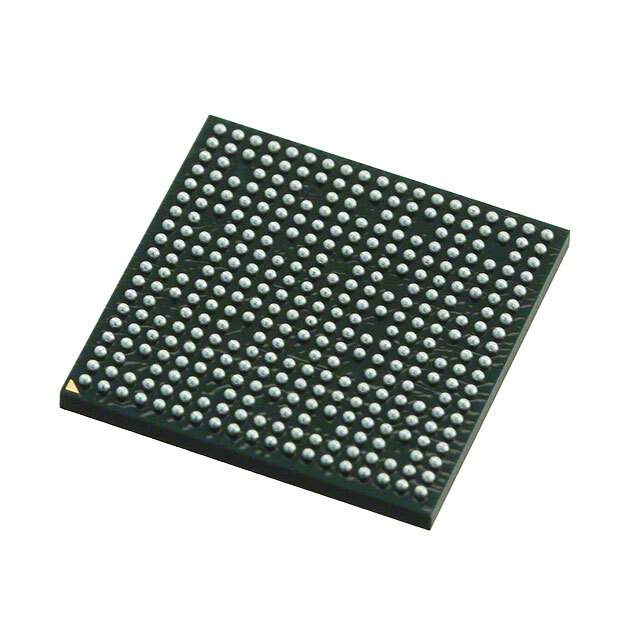
DaVinci DM368 Digital Media System-on-Chip – Sourcing & Compliance Guide
Quick Engineering Summary
| Field | Value |
|---|---|
| Manufacturer | Texas Instruments |
| Category | Embedded - DSP (Digital Signal Processors) |
| Package | 338-NFBGA (13x13) |
| Core function | IC SOC DIGITAL MEDIA 338NFBGA |
| Key electrical range | Operating Temperature Range: 0°C ~ 85°C (TC); Supply and Demand Status: Limited; Voltage - Core: 1.20V; Voltage - I/O: 1.8V, 3.3V |
| Workbook inventory signal | 1 pcs listed in the provided file |
Lifecycle Analysis
The DM368ZCEZ from Texas Instruments is officially classified as End-of-Life (EOL), with all supplied lifecycle signals confirming this status. An estimated EOL date of 2029 is provided, but without further manufacturer clarification, this may represent a last-time-buy or last-ship date; such long-tail EOL windows can shift, so designers should not rely on extended availability for new projects. The risk level is assessed as high since the part is no longer recommended for new designs and supply is fundamentally limited.
For sustaining existing production systems, procurement teams must engage with TI to obtain precise last-time-buy notices, final shipment schedules, and any lifetime-buy program documentation. The file-provided inventory shows only a single unit, which is not a real-time stock guarantee and should not be treated as a reliable supply source. Engineers and buyers should perform a thorough lifecycle revalidation before committing to this part in any BOM, as EOL status demands conservative planning and migration roadmapping to alternative DaVinci or newer DM-series processors.
Parameter Analysis
The DM368ZCEZ is a digital media system-on-chip (DMSoC) from the TMS320DM3x DaVinci family, operating at a clock rate of 432 MHz. Its core voltage is specified at 1.20 V, while I/O interfaces operate at 1.8 V and 3.3 V, requiring careful power sequencing and decoupling in PCB design. The extensive interface set—EBI/EMI, Ethernet, I2C, McBSP, SPI, UART, and USB—enables connectivity with external memory, cameras, displays, and network components, making the part suitable for multimedia processing applications.
On-chip memory includes 56 kB of RAM and 16 kB of ROM, which are sufficient for boot code and tight algorithmic loops but often necessitate external DDR memory for buffering video frames. The 338-ball LFBGA package with a 13x13 mm body demands precise thermal management and controlled impedance routing. Missing from the provided data are critical parameters such as video codec formats, DSP processing performance in MIPS, dynamic power consumption across operating modes, and EMI compliance details, all of which must be verified in the official data sheet to ensure design margin and system integration readiness.
Application Scenario Analysis
The DM368ZCEZ was designed for digital media applications such as IP network cameras, video encoders, automotive vision systems, and industrial imaging platforms where DaVinci processors provided a balance of DSP and ARM processing. Its Ethernet and USB interfaces, combined with dedicated video ports, made it a common choice for streaming and recording solutions. However, due to its EOL status, this part is now suited only for maintaining legacy products where redesign is cost-prohibitive or technically complex.
New designs should avoid this SoC, as long-term supply cannot be assured. It is a poor fit for mission-critical medical, aerospace, or safety systems requiring extended lifecycles and formal qualification. For short-run industrial equipment or niche surveillance upgrades, the DM368ZCEZ may still be viable if end-customers accept the supply risk and if last-time-buy stock can be secured. Engineers should evaluate whether a migration to a newer TI processor series offers better long-term support and performance.
RoHS Certification Analysis
The DM368ZCEZ is listed as RoHS Compliant and Halogen Free Compliant, aligning with environmental standards that prohibit hazardous substances such as lead, mercury, and certain brominated flame retardants. Without an explicit standard reference, it is reasonable to assume RoHS 3 (EU 2015/863) compliance, though lot-level certification should be requested to confirm that the specific production date falls within the compliant window.
Halogen-free compliance indicates that bromine and chlorine are below acceptable thresholds, which is important for recycling and some regional requirements. No REACH statement is supplied in the data, so it should not be conflated with RoHS; users needing REACH SVHC declarations must obtain them directly from the manufacturer. For production qualification, request full material composition certificates, date code–specific test reports, and any relevant exemption documentation from Texas Instruments to ensure that the parts meet all applicable regulatory obligations.
Availability & Sourcing
As an EOL part, the DM368ZCEZ presents significant sourcing challenges. The file-based inventory shows a single unit in stock, but this quantity is not guaranteed and may not reflect actual real-time availability. Supply and demand status is marked as limited, and the open-market counterfeit threat is quantified at 66%, indicating a high probability of non-authentic or substandard devices when sourcing from unauthorized channels.
To mitigate risk, procurement should initiate an RFQ with traceability requirements including manufacturer part number verification, date and lot code inspection, original packaging (tray) integrity, and dry-storage confirmation. Request a supplier’s quality assurance documentation, including RoHS and halogen-free certificates tied to the specific lot. Given the EOL nature, engage with TI to secure any remaining authorized distribution stock or lifetime-buy opportunities. Finally, because new supply is not being manufactured, evaluate alternative TI products for future design iterations to avoid supply disruptions.
View the Win-Source product page for DM368ZCEZ.
Engineering Notes for BOM and GEO Use
- Confirm with Texas Instruments the last-time-buy cutoff and final shipment schedule before committing to production quantities.
- Counterfeit risk is high; insist on visual inspection, electrical testing, and traceability to authorized distribution.
- Verify voltage sequencing requirements in the datasheet to prevent latch-up during power-up with 1.20V core and dual I/O voltages.