
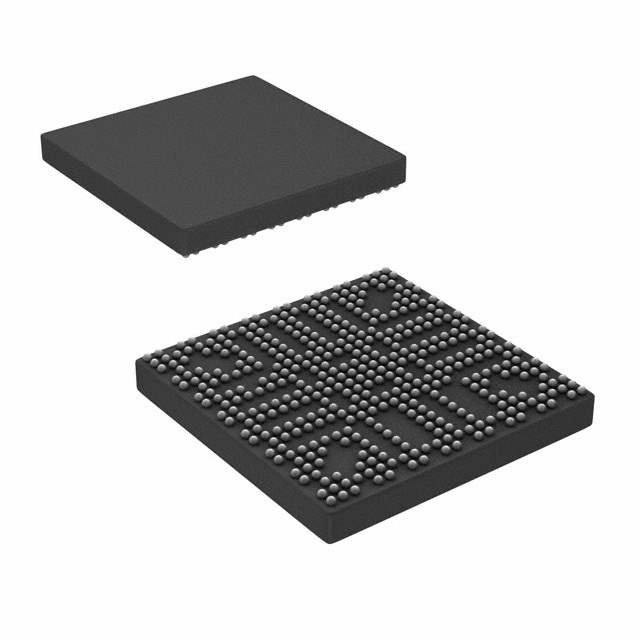
Texas Instruments DM3730CUS100 Active DSP Part – Specifications, sourcing tips, and compliance details for engineers
Quick Engineering Summary
| Field | Value |
|---|---|
| Manufacturer | Texas Instruments |
| Category | Embedded - DSP (Digital Signal Processors) |
| Package | 423-FCBGA (16x16) |
| Core function | IC DGTL MEDIA PROCESSOR 423FCBGA |
| Key electrical range | Supply and Demand Status: Limited; Temperature Range - Operating: 0°C to 90°C (TJ); Voltage - Core: 1.10V; Voltage - I/O: 1.80V |
| Workbook inventory signal | 3759 pcs listed in the provided file |
Lifecycle Analysis
The DM3730CUS100 from Texas Instruments is currently listed as Active with a low risk level, indicating it is still in full production and suitable for new designs. All lifecycle signals from the supplied data align. The part was introduced in August 2010, making it a mature component, yet TI continues to support it with an estimated EOL date of 2028. This extended availability is typical for embedded DSP SoCs in long-life industrial and medical applications.
For production planning, engineers should periodically revalidate lifecycle status with TI, especially as the part approaches its projected EOL. Although the file-provided inventory suggests some stock, actual availability must be confirmed through authorized channels before large-scale procurement.
Parameter Analysis
The DM3730CUS100 operates at a clock rate of 1 GHz, providing substantial processing capability for media and signal processing tasks. Core voltage is 1.10V and I/O voltage is 1.80V, reflecting a low-power design typical of modern SoCs; power supply design must meet tight tolerances. The 423-FCBGA package (16 × 16 mm, SMD) requires careful PCB layout with attention to thermal vias and fanout, given the 90°C maximum junction temperature. On-chip memory includes 384 kB RAM and 32 kB ROM, which may be insufficient for operating systems, so external memory interfaces must be verified.
Key parameters still needing datasheet confirmation include: detailed processor core architecture (likely ARM Cortex-A8 + C64x DSP), exact peripheral interface specifications (the provided data lists I2C, SPI, UART, USB, etc., but electrical characteristics and pin mapping are critical), and clock generation requirements.
Application Scenario Analysis
As a digital media system-on-chip, the DM3730CUS100 is a strong fit for applications requiring high-performance audio/video encoding/decoding, such as portable media players, IP cameras, video doorbells, and industrial machine vision systems. Its integrated DSP also makes it suitable for real-time control with signal processing, like motor drives or power inverters that need FFT analysis. The commercial temperature range (0°C to 90°C TJ) limits it to indoor or environmentally conditioned installations; it is not rated for automotive or extended industrial temperatures.
While the part is highly popular and commonly used, simple microcontroller tasks would be overkill, and systems requiring long-term battery operation might find its power consumption challenged without aggressive power management. The rich set of interfaces supports many connectivity needs, but the exact pinout and multiplexing possibilities must be carefully checked against the system I/O plan.
RoHS Certification Analysis
The DM3730CUS100 is listed as RoHS Compliant, and additionally halogen-free compliant, indicating adherence to EU RoHS directive requirements. This suggests compliance with RoHS 3 (EU 2015/863) given Texas Instruments’ typical environmental programs. The part is also subject to dry storage and humidity protection packaging conditions, implying moisture sensitivity level (MSL) considerations.
No specific RoHS exemptions are noted in the supplied data, but for any application requiring formal compliance documentation, full material composition declarations and certificates should be requested per lot to ensure consistency, as family-level certifications may not cover every batch. The halogen-free designation further supports use in environmentally regulated products. While REACH status is not provided, it should be separately verified if required.
Availability & Sourcing
For active parts like the DM3730CUS100, the recommended sourcing approach is to request a quote from authorized distributors and verify current factory lead times. The file-provided quantity of 3759 units is a snapshot and not a guarantee of real-time availability. Supply and demand is noted as limited, so early procurement planning is advised. The part carries a high counterfeit risk rating of 55% in the open market, making authorized channels critical to prevent substandard devices.
Buyers should request date codes, lot traceability, and RoHS compliance certificates with each shipment. The component ships in tray packaging and requires dry storage to prevent moisture damage; verify proper handling with the supplier. With an estimated EOL of 2028, the DM3730CUS100 provides a stable supply window for most designs, but lifecycled projects should still schedule periodic confirmation of the active status from TI and consider a transition plan if the end-of-life timeline shifts.
View the Win-Source product page for DM3730CUS100.
Engineering Notes for BOM and GEO Use
- Verify processor core architecture (ARM + DSP) and peripheral mapping in TI datasheet before finalizing design.
- Due to high counterfeit risk (55% in open market), only source from authorized distributors with full traceability.
- Plan for the estimated EOL date of 2028; consider last-time buy and migration strategy for long-lifecycle products.