
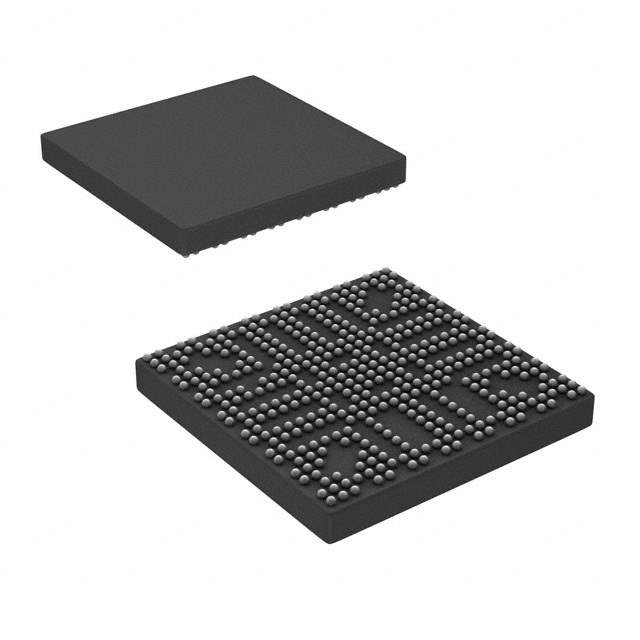
Active digital media system-on-chip (DMSoC) with 800 MHz, 423-FCBGA, wide interfaces, from DaVinci series.
Quick Engineering Summary
| Field | Value |
|---|---|
| Manufacturer | Texas Instruments |
| Category | Embedded - DSP (Digital Signal Processors) |
| Package | 423-FCBGA (16x16) |
| Core function | IC DGTL MEDIA PROCESSOR 423FCBGA |
| Key electrical range | Operating Temperature Range: -40°C ~ 105°C (TJ); Supply and Demand Status: Limited; Voltage - Core: 1.10V; Voltage - I/O: 1.80V |
| Workbook inventory signal | 1907 pcs listed in the provided file |
Lifecycle Analysis
The DM3730CUSA is currently listed as an Active lifecycle status by Texas Instruments, with all available signals aligning. This indicates that the part remains in full production and is suitable for new designs. Engineers can reference the manufacturer’s DM3730 product page and datasheets for the most current lifecycle notifications.
Despite its Active status, the supplied data includes an Estimated EOL Date of 2028. While this does not guarantee an immediate discontinuation, it suggests that long-term availability planning is prudent. Procurement teams should monitor Texas Instruments’ Product Change Notifications (PCNs) and plan for potential migration paths if the design horizon extends beyond 2028.
The inventory signal from the file shows approximately 1907 units, but this is a file-provided snapshot and not a real-time guarantee. Designers should confirm current stock with distributors and consider lead times for new production orders. Overall, the lifecycle risk is low for near-term projects, but medium-term projects should incorporate EOL contingency.
Parameter Analysis
The DM3730CUSA’s 800 MHz clock rate and DMSoC architecture make it suited for multimedia processing tasks. The integrated 384 kB on-chip RAM and 32 kB ROM reduce the need for external memory in many applications, simplifying board design. However, engineers should verify if these sizes meet their buffer and code storage requirements under worst-case workloads.
Operating over a -40°C to 105°C junction temperature range, the device can be deployed in industrial environments with proper thermal management. The core voltage of 1.10V and I/O voltage of 1.80V require precise power regulation, and decoupling capacitors should follow manufacturer guidelines to ensure signal integrity. The 423‑ball FCBGA package (16×16 mm) demands careful PCB layout, especially for high-speed signal routing and power distribution.
Key missing datasheet parameters that designers should verify include detailed power consumption figures (e.g., active and standby current), I/O timings for the McBSP, McSPI, and EBI/EMI interfaces, and any specific clocking requirements. Without these, accurate power budgeting and interface timing closure may be challenging. Refer to the official TI datasheet for complete parametric values before finalizing the design.
Application Scenario Analysis
Given its DMSoC architecture and rich peripheral set, the DM3730CUSA is a strong candidate for applications requiring digital media processing, such as portable multimedia devices, industrial human-machine interfaces, and embedded vision systems. The USB OTG and MMC/SD interfaces support flexible connectivity and storage, while the 1-Wire and I²C buses enable sensor integration.
The device’s 800 MHz clock and 384 kB RAM can handle moderate signal processing and audio/video codecs, but it may be over‑specced for simple control tasks like basic motor sequencing. In applications where a low‑power microcontroller with basic GPIO would suffice, the DM3730CUSA would add unnecessary complexity and power draw. Designers should perform a thorough requirements analysis to avoid over‑engineering.
The -40°C to 105°C temperature range supports industrial deployment, but the high FCBGA pin count and potential power dissipation mean that system‑level thermal design is critical. Applications in space‑constrained, passively cooled enclosures may require additional thermal simulation to ensure reliable operation.
RoHS Certification Analysis
The manufacturer lists the DM3730CUSA as RoHS compliant, and it is also flagged as halogen free per the supplied data. This meets the baseline environmental requirements for most global markets, including the European Union. However, the provided compliance status does not specify whether it refers to RoHS 2 (2011/65/EU) or the more recent RoHS 3 (EU 2015/863), so verification with a valid certificate for the exact production lot is advised.
Halogen‑free compliance is a plus for companies following industry initiatives like the IEC 61249‑2‑21 standard. Because compliance attributes are often family‑level declarations, there may be lot‑to‑lot variations. Procurement teams should request a full material declaration or certificate of compliance from Texas Instruments or authorized distributors to ensure the received units meet the required standards.
No exemptions are indicated in the source data, but typical exemptions for lead in high‑melting‑point solders or as an alloying element in BGA balls may apply. For safety‑critical or medical applications, a more detailed analysis of REACH and other substance regulations beyond RoHS might be necessary. Always confirm current environmental data directly with TI.
Availability & Sourcing
The DM3730CUSA is listed with a file-provided quantity of approximately 1907 units, but this figure is not a real‑time inventory guarantee. Given the “Limited” supply and demand status and a “Medium” popularity rating, buyers should promptly request a quote to confirm current availability and lead times. The part is tray‑packaged, which may influence handling and assembly process setup.
With an active lifecycle and an estimated EOL of 2028, the part remains a good candidate for new production, but engineers should verify lifecycle status directly with Texas Instruments or an authorized distributor before committing to large‑volume orders. The reported 61% counterfeit threat in the open market underscores the importance of sourcing only through traceable channels; insist on full date and lot code documentation.
For procurement, utilize the RFQ workflow to obtain up‑to‑date pricing (not quoted here) and compliance documentation, including RoHS certificates and conflict mineral reporting. The storage condition specified (dry storage cabinet and humidity protection) indicates moisture sensitivity; follow JEDEC MSL guidelines for baking if the factory seal is broken. Verify packaging integrity upon receipt to avoid soldering defects.
View the Win-Source product page for DM3730CUSA.
Engineering Notes for BOM and GEO Use
- The part is active with an estimated EOL in 2028; plan for migration in designs with production beyond that horizon.
- Open-market counterfeit risk is 61%; always source from authorized TI distributors and request lot traceability.
- Ensure core (1.10V) and I/O (1.80V) power rails are stable across the full -40°C to 105°C temperature range, and design the PCB for the 423‑FCBGA’s thermal needs.