
EOL Part: Verify Lifecycle and Secure Inventory for Sustaining Production
Quick Engineering Summary
| Field | Value |
|---|---|
| Manufacturer | Texas Instruments |
| Category | Embedded - DSP (Digital Signal Processors) |
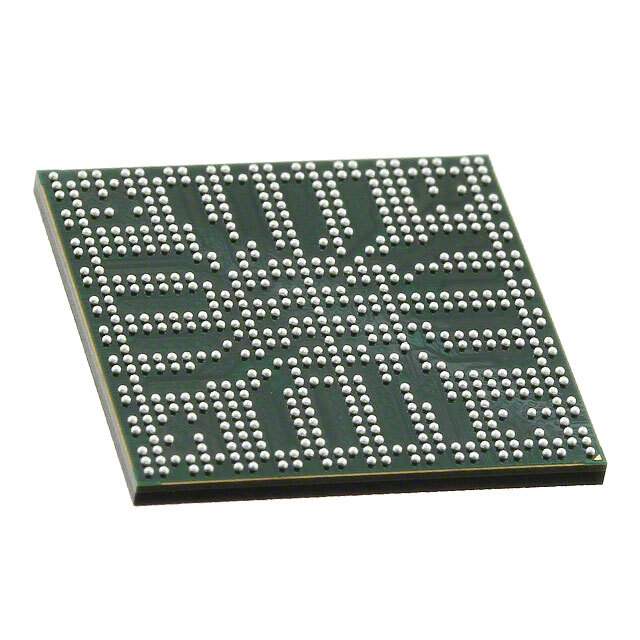
| Package | 609-FCBGA (16x16) |
| Core function | IC DGTL MEDIA PROCESSOR 609FCBGA |
| Key electrical range | Supply and Demand Status: Limited; Temperature Range - Operating: 0°C to 95°C (TJ); Voltage - Core: 1.1V, 1.2V, 1.35V; Voltage - I/O: 1.35V, 1.5V, 1.8V, 3.3V |
| Workbook inventory signal | 1400 pcs listed in the provided file |
Lifecycle Analysis
Texas Instruments lists the DM385AAAR21F as EOL (End-of-Life), with all supplied lifecycle signals indicating this status. This means the part is no longer recommended for new design-ins and should only be used to support existing production lines. Engineers should revalidate the lifecycle directly with TI or authorized distributors before placing orders, as EOL status can sometimes be followed by last-time buy windows or discontinuation notices. The 1400-piece inventory figure shown in sourcing records is file-provided and not guaranteed real-time, so actual stock may vary.
For new projects, migration to a newer Texas Instruments media processor or alternative vendor solution is strongly advised. For sustaining production, assess the remaining demand and secure sufficient inventory during any last-time buy period to avoid future shortages. Keep in mind that EOL parts often see counterfeit activity rise, as indicated by the 52% open-market threat rating.
Parameter Analysis
The DM385AAAR21F operates at a 1 GHz clock rate and integrates 640 kB of on-chip RAM along with 48 kB of boot ROM. Core voltage requirements are 1.1 V, 1.2 V, or 1.35 V, while I/O voltages include 1.35 V, 1.5 V, 1.8 V, and 3.3 V, giving designers flexibility but also requiring careful power sequencing and rail accuracy. The 609-ball FCBGA package measures 16 mm × 16 mm, which influences PCB layout density and thermal management; with an operating junction temperature range of 0°C to 95°C, thermal derating and heatsink options should be evaluated for high-load scenarios.
Critical missing datasheet parameters that must be verified include detailed peripheral interfaces (the device is a DMSoC with likely video, audio, and connectivity I/Os), power consumption figures across operating modes, ESD ratings, and exact memory map details. Effective use of this processor requires knowledge of its multimedia accelerators, DMA engines, and interconnect architecture, none of which are captured in the abbreviated sourcing data. Engineers working on existing board designs should check the board’s power delivery network against the voltage tolerances and transient response requirements, while newcomers must obtain the full TI datasheet and reference design collaterals before attempting integration.
Application Scenario Analysis
As a digital media system-on-chip, the DM385AAAR21F is engineered for applications that require high-throughput media processing, such as video compression/decompression, image signal processing, and audio encoding. It fits well into products like IP cameras, digital video recorders (DVRs), video conferencing endpoints, and automotive surround-view systems, where its dedicated multimedia pipelines can offload computational burden from a main CPU. The 1 GHz clock and generous on-chip memory also make it suitable for low-latency streaming and real-time analytics.
However, this processor is ill-suited for simple microcontroller tasks or low-cost edge nodes that do not need heavy media acceleration, as the BGA package and multi-voltage rails drive up PCB complexity and BOM cost. It is also not ideal for high-reliability avionics or deep-space applications given the commercial temperature range and EOL status, which limits long-term supply assurance. For existing designs in video-centric products, the DM385AAAR21F remains a capable workhorse, but new projects should target active alternatives that maintain the same media processing capabilities without the lifecycle risk.
RoHS Certification Analysis
According to supplied data, the DM385AAAR21F is marked as RoHS Compliant. This indicates that the part is free from the six hazardous substances originally restricted by EU Directive 2011/65/EU (and its amendments), including lead, mercury, cadmium, hexavalent chromium, PBBs, and PBDEs. However, no specific exemption or additional compliance framework such as REACH or halogen-free status is given, so procurement teams should request the manufacturer’s full material declaration for comprehensive environmental compliance.
Since RoHS compliance is listed without a version reference, it is safest to assume EU RoHS (Directive 2011/65/EU) as the baseline. For high-volume manufacturing, lot-level certification should be verified through documentation or test reports to avoid non-compliant batches, especially when sourcing from non-authorized channels. Engineers and buyers should confirm that the part meets any additional regional requirements like China RoHS or California Proposition 65 if required by the end market.
Availability & Sourcing
The DM385AAAR21F is in limited supply with an EOL status, making sourcing challenging. The provided file-based inventory quantity of 1400 units may not reflect real-time availability; interested parties must request a quote to confirm current stock, lead time, and pricing. Packaging is tray with 90 pieces per tray, which suits production runs but may be broken for smaller orders depending on distributor policy.
Supply and demand status is listed as limited, and the open-market counterfeit risk is assessed at 52%, which is significant. To mitigate this risk, always source from Texas Instruments authorized distributors or verified excess-inventory partners with traceable date/lot codes. Insist on compliance documentation including RoHS certification and full chain of custody. For EOL components, secure inventory as soon as possible if sustaining production, and consider last-time buy not already passed. Before completing the RFQ, verify the lifecycle status directly with Texas Instruments to ensure no last-minute discontinuation changes.
View the Win-Source product page for DM385AAAR21F.
Engineering Notes for BOM and GEO Use
- Do not design DM385AAAR21F into new products; use only for sustaining existing systems with a procurement plan covering projected life.
- Evaluate power sequencing and thermal management carefully due to multiple voltage domains and BGA package.
- Mitigate 52% counterfeit risk by sourcing exclusively from authorized distributors with verified traceability.