
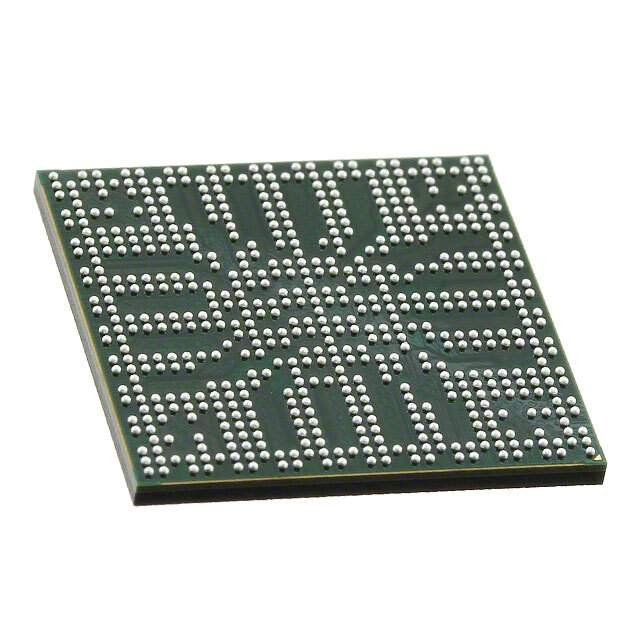
EOL Digital Media Processor – 1GHz, 640kB RAM, 609-FCBGA – Limited Availability
Quick Engineering Summary
| Field | Value |
|---|---|
| Manufacturer | Texas Instruments |
| Category | Embedded - DSP (Digital Signal Processors) |
| Package | 609-FCBGA (16x16) |
| Core function | IC DGTL MEDIA PROCESSOR 609FCBGA |
| Key electrical range | Operating Temperature Range: -40°C ~ 95°C (TJ); Supply and Demand Status: Limited; Voltage - Core: 1.1V, 1.2V, 1.35V; Voltage - I/O: 1.35V, 1.5V, 1.8V, 3.3V |
| Workbook inventory signal | 1 pcs listed in the provided file |
Lifecycle Analysis
The Texas Instruments DM388AAARD21 is currently listed as End-of-Life (EOL) with a high risk level for procurement. This lifecycle status indicates the part is no longer recommended for new designs and should be used only for sustaining existing production. The provided data includes an estimated EOL date of 2029, which may represent a final purchase window or last-time buy date; however, this must be confirmed directly with Texas Instruments. All lifecycle signals align, showing no conflicts.
Given the EOL classification, design teams should immediately evaluate migration paths to alternative processors, while procurement should secure sufficient buffer stock if long-term availability is required. The workbook inventory shows only one unit, underscoring the scarcity of this component.
Parameter Analysis
The DM388AAARD21 is a digital media system-on-chip (DMSoC) from the DaVinci video SOC family, featuring a 1GHz clock rate, 640kB on-chip RAM, and 48kB ROM. These memory resources support real-time video processing tasks, while the wide interface set—including Ethernet, PCI, USB, I2C, SPI, and UART—enables flexible system integration. The device operates from multiple voltage domains: core voltages of 1.1V, 1.2V, or 1.35V and I/O voltages ranging from 1.35V to 3.3V, which demands careful power sequencing and decoupling in PCB design. The 609-FCBGA package with 16x16 mm footprint and surface-mount assembly requires precise reflow profiles and is not suited for hand prototyping.
Key parameters not specified in the available data include power consumption figures, DSP core architecture details, and exact timing characteristics. These values are critical for thermal analysis and signal integrity design and must be obtained from the manufacturer’s datasheet before committing to a design. The industrial temperature range of -40°C to 95°C (junction) indicates suitability for extended environmental conditions, but actual operational thermal margins should be validated with system-level testing.
Application Scenario Analysis
Given its architecture and high-clock-rate DSP cores, the DM388AAARD21 is well-suited for embedded video processing applications such as IP cameras, video analytics engines, and media gateways. The rich peripheral set allows direct connection to image sensors, Ethernet PHYs, and storage interfaces, making it a strong candidate for networked surveillance systems. Its industrial temperature range supports deployment in outdoor or uncontrolled environments.
Less optimal applications include simple microcontroller tasks or low-power consumer gadgets, where the part’s complexity and power consumption would be overkill. The device is not automotive-qualified based on the available data, so it should not be used in automotive applications requiring AEC-Q100 compliance without additional vetting. Designers should verify software availability and daVinci codec support, as legacy video SOCs may require specific SDK versions that could be impacted by the EOL status.
RoHS Certification Analysis
The DM388AAARD21 is certified RoHS Compliant according to the data provided, meeting EU directive requirements for the restriction of hazardous substances. The component is also listed as halogen free compliant, which addresses additional environmental standards often requested by OEMs. Since no exemptions are noted, it is assumed the part does not rely on any special-use exemptions under the directive.
However, RoHS compliance is often declared at the family or product level; lot-specific documentation should be requested for high-reliability or regulated industry applications. Buyers should also verify the latest REACH compliance status directly with Texas Instruments if required, as no REACH information is included in the current data. The part’s EOL status does not affect its RoHS compliance, but any remaining stock should be handled according to the date of manufacture to ensure it meets the directive in effect at that time.
Availability & Sourcing
Availability for the DM388AAARD21 is extremely limited, with only one unit recorded in the provided inventory file. This aligns with the part’s EOL lifecycle status and a ‘Limited’ supply-and-demand classification. Procurement teams should issue RFQs to multiple franchised distributors and brokers, explicitly requesting date and lot code information to verify the authenticity and age of stock. The high counterfeit threat rating (30%) in the open market makes traceability and source verification critical.
Since this is an EOL component, securing inventory for long-term maintenance may require a last-time buy negotiation directly with Texas Instruments if the 2029 EOL date is confirmed. Buyers should also request compliance certificates (RoHS, halogen-free) and packing information (tray, dry pack) to ensure proper storage. For new designs, actively evaluate alternative parts from TI or other vendors to avoid reliance on a discontinued device. Request a quote through the win-source platform for current pricing and availability, but note that stock levels are dynamic and not guaranteed in real time.
View the Win-Source product page for DM388AAARD21.
Engineering Notes for BOM and GEO Use
- Verify EOL timeline and last-time buy availability directly with Texas Instruments to secure production needs.
- High counterfeit risk (30% fake threat) in open market; source only from authorized distributors or request full traceability documentation.
- Ensure 609-FCBGA package compatibility and review multi-voltage I/O requirements (1.35V–3.3V) during board design.