
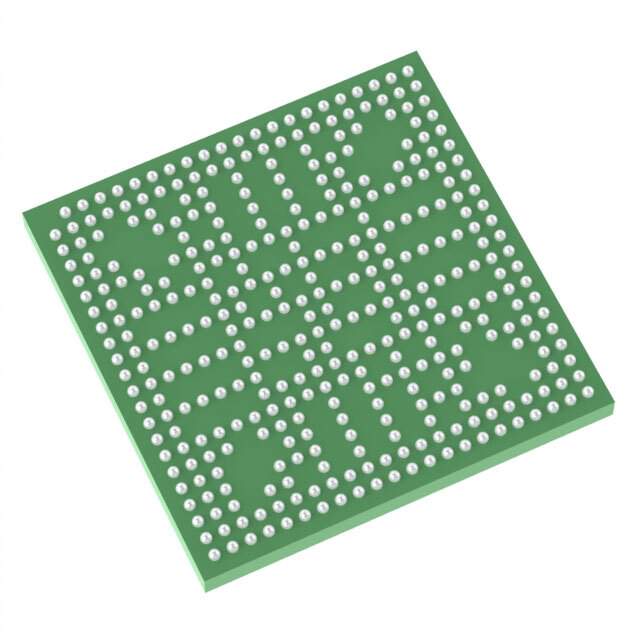
Automotive AEC-Q100 floating-point digital signal processor with 745MHz clock, CAN/I2C/SPI/UART interfaces, and wide temperature range.
Quick Engineering Summary
| Field | Value |
|---|---|
| Manufacturer | Texas Instruments |
| Category | Embedded - DSP (Digital Signal Processors) |
| Package | Tape & Reel |
| Core function | DM505LRBABFR |
| Key electrical range | Temperature Range - Operating: -40°C ~ 125°C (TJ); Voltage - Core: 1.50V; Voltage - I/O: 1.8V, 3.3V |
| Workbook inventory signal | 1 pcs listed in the provided file |
Lifecycle Analysis
The Texas Instruments DM505LRBABFR is in Active lifecycle status, as confirmed by multiple signals including the manufacturer’s lifecycle parameter and standard product status. This status indicates the part is fully supported, in volume production, and recommended for new designs without any near-term end-of-life risk. Engineers can proceed with design-in and qualification with confidence that long-term availability is expected.
No conflicting lifecycle signals were identified in the supplied data, making the procurement outlook stable. The file-provided inventory quantity of one unit is a snapshot and not a real-time guarantee; actual stock levels and lead times should be verified at the point of purchase. For applications requiring extended product longevity, it is prudent to periodically recheck Texas Instruments’ product lifecycle portal and set up automated notifications for any changes.
Parameter Analysis
Key decision parameters for the DM505LRBABFR include its 745 MHz clock rate and floating-point DSP architecture, which determine computational throughput for signal processing tasks. The interface set—CAN, I2C, SPI, and UART—enables connectivity in automotive and industrial control systems. On-chip RAM of 256 kB and ROM of 32 kB define memory headroom for code and data without external memory, though many designs will expand via EMIF or other buses not listed here.
The device operates over a wide temperature range of -40°C to 125°C (junction), supporting under-hood automotive and harsh industrial environments. Core voltage is specified at 1.50V, with dual I/O voltages of 1.8V and 3.3V; careful power sequencing and decoupling are essential for reliable operation. Thermal management must account for the 367-FCBGA package’s dissipation in a 15x15 mm footprint. Missing datasheet items that need verification include specific DSP performance metrics (e.g., MIPS, FLOPS), peripheral details (timers, ADC channels, memory interfaces), and full pinout documentation.
Application Scenario Analysis
The DM505LRBABFR is well suited for automotive applications requiring high DSP performance and reliability, such as advanced driver-assistance systems (ADAS) sensor processing, infotainment audio/video processing, and in-vehicle networking. Its CAN interface, wide temperature range, and AEC-Q100 qualification make it a natural fit for automotive modules that must pass rigorous environmental and safety testing. Industrial motor control, power conversion, and real-time data acquisition are also strong application fits given the floating-point capability and robust peripheral set.
In contrast, this part may be over-engineered for simple, cost-sensitive consumer products where ARM Cortex-M microcontrollers without automotive qualification would suffice. The large BGA package and need for external voltage regulation may add board complexity and cost. For high-volume battery-operated devices, the power consumption profile (not specified) should be checked against design requirements to avoid excessive thermal or energy budget impact.
RoHS Certification Analysis
The DM505LRBABFR is listed as RoHS Compliant, indicating conformity with the European Union’s Restriction of Hazardous Substances directive. The component is also REACH Unaffected, which addresses chemical substance registration but does not substitute for RoHS compliance. An MSL rating of level 3 with a 168-hour floor life indicates moderate moisture sensitivity, requiring proper dry-pack storage and handling during SMT assembly.
While family-level RoHS declarations are common, compliance for a specific lot can vary due to process changes or exemptions. Buyers should request a certificate of compliance or full material declaration from the distributor or manufacturer for each shipment. For designs sold in the EU, verify that the compliance covers the latest directive version (2015/863) and any applicable exemptions for lead in high-temperature solder or larger components.
Availability & Sourcing
At the time of this guide, the DM505LRBABFR is an Active product with an open‑market fake threat rate of 54%, underscoring the importance of traceability and authorized sourcing. The file-provided quantity of one unit is not a live stock indication; for current availability and lead times, submit a request for quotation through your preferred Texas Instruments distributor or the Win Source platform.
The component ships in Tape & Reel packaging with a standard package quantity of 750 units, suitable for medium‑volume production. When ordering, specify date or lot code requirements and request documentation for RoHS compliance, REACH, and MSL handling. For new designs, lifecycle verification through Texas Instruments’ official channels is recommended before committing to high‑volume procurement. Given the Active status, the procurement path is straightforward, but early engagement with the supply chain will help secure allocation and mitigate lead‑time risks.
View the Win-Source product page for DM505LRBABFR.
Engineering Notes for BOM and GEO Use
- Verify core voltage tolerance and I/O level compatibility before PCB layout, especially for mixed-voltage designs.
- Plan for MSL 3 / 168-hour floor life during SMT assembly; bake before reflow if the dry-pack has been opened.
- Given the 54% open-market fake threat rate, source only through authorized Texas Instruments distributors or qualified suppliers.