
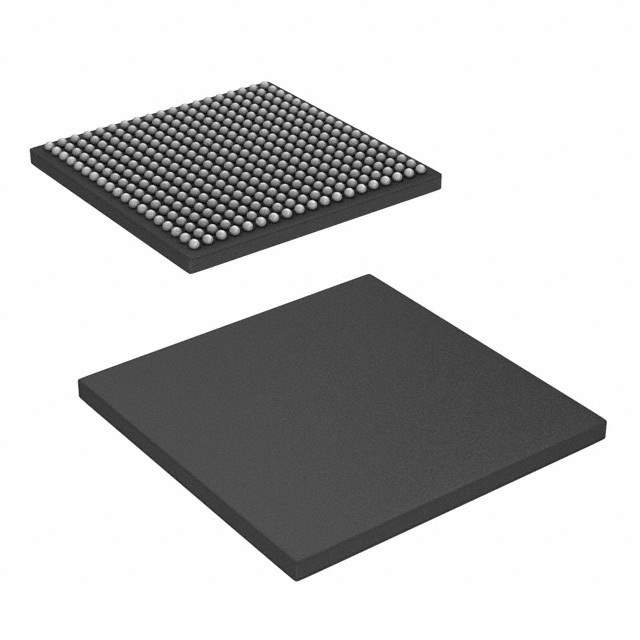
EOL Digital Media System-on-Chip (DMSoC) from the TMS320DM644x DaVinci series – verify lifecycle and secure inventory.
Quick Engineering Summary
| Field | Value |
|---|---|
| Manufacturer | Texas Instruments |
| Category | Embedded - DSP (Digital Signal Processors) |
| Package | 361-NFBGA (13x13) |
| Core function | IC SOC DIGITAL MEDIA 361NFBGA |
| Key electrical range | Operating Temperature Range: 0°C ~ 85°C (TC); Supply and Demand Status: Limited; Voltage - Core: 1.20V; Voltage - I/O: 1.8V, 3.3V |
| Workbook inventory signal | 1 pcs listed in the provided file |
Lifecycle Analysis
The DM6446AZWTKEDACOM by Texas Instruments is classified as End-of-Life (EOL), with all available lifecycle signals aligning on this status. For procurement and engineering teams, EOL designates a high-risk component that is not recommended for new designs. This status only becomes relevant when supporting existing production lines or long-term service agreements where a redesign is not feasible.
The supplied data includes an estimated EOL date of 2029, which suggests that limited inventory may remain available through authorized channels until that time. However, this date should not be relied upon without direct confirmation from Texas Instruments. Engineers should obtain official last-time-buy and end-of-life notifications before committing to quantity purchases.
With a high fake threat probability of 30% in the open market, any sourcing must be accompanied by rigorous supplier qualification, lot traceability, and physical inspection. Given the current lifecycle phase, it is strongly advised to secure buffer stock if continued use is unavoidable and to explore migration to an active part within the DaVinci or newer processor families.
Parameter Analysis
The DM6446AZWTKEDACOM integrates a 594 MHz DSP core and a 297 MHz ARM core, placing it in the mid-range of the TMS320DM644x DaVinci series. This asymmetric multi-core architecture is designed for digital media processing where the DSP handles compute-intensive video and audio tasks while the ARM core manages control functions. The device includes 160 kB of on-chip RAM and 8 kB of ROM, which is typical for boot and light data handling but may require external memory for larger applications.
Key electrical parameters include a 1.20 V core supply and dual I/O voltages of 1.8 V and 3.3 V. Engineers should pay close attention to the core voltage regulation and sequencing requirements, as the DSP and ARM domains may have distinct power-on characteristics. The commercial temperature range of 0°C to 85°C (case) suits general industrial and indoor equipment but excludes extended temperature applications.
The package is a 361-ball NFBGA with a 13x13 mm body size according to the manufacturer data, though a separate field suggests 16x16 mm. This discrepancy must be resolved against the official datasheet before finalizing PCB layout to avoid costly respins. The rich set of peripherals—including USB, SPI, I2C, UART, and external memory interfaces—makes this SoC versatile, but designers must verify that all required interfaces are available and functional in their target use case.
Application Scenario Analysis
The DM6446AZWTKEDACOM is purpose-built for digital media applications, as indicated by its DMSoC classification. Strong-fit scenarios include legacy video surveillance systems, IP network cameras, video conferencing endpoints, and media gateways that were originally designed around the DaVinci platform. In these applications, the DSP core’s capability for video codec processing (such as H.264 encoding/decoding) and the ARM core’s control plane remain adequate for sustaining existing product lifecycles.
Weak-fit scenarios include new product designs that demand higher resolutions (e.g., 4K), advanced codecs (H.265), or AI-based analytics. Modern SoCs offer better performance per watt and integrated neural processing, making the DM6446AZWTKEDACOM unsuitable for next-generation products. Additionally, applications requiring automotive or medical certifications would need further qualification, as the available data does not confirm such certifications.
For embedded systems needing a general-purpose DSP with a rich peripheral set, this SoC could theoretically be reused, but the EOL status makes that approach risky. Engineers should first verify that all required interfaces (particularly the ASP and EBI/EMI) are fully characterized for their specific memory and communication needs, as datasheet nuances can affect bring-up time.
RoHS Certification Analysis
The DM6446AZWTKEDACOM is listed as RoHS Compliant, indicating that it meets the substance restrictions of the EU RoHS directive. The standard referenced is not explicitly stated in the provided data, so it is assumed to comply with EU RoHS, possibly the recast RoHS 3 (2015/863) given the current regulatory landscape. Additionally, the part is noted as halogen-free compliant, which aligns with industry trends toward low-halogen materials.
Although the family-level designation suggests compliance, procurement teams should still request the full material declaration and certificate of compliance for the specific lot being purchased. This is especially important for EOL parts where older inventory could have been manufactured under earlier versions of the directive. REACH status is not provided, so if SVHC compliance is required, a separate declaration must be obtained from the supplier or distributor.
No exemptions are documented in the sourced data, which typically implies that no RoHS exemptions (such as lead in solder balls) apply. However, for BGA packages, lead-free solder ball composition should be confirmed to ensure compatibility with lead-free reflow processes. Overall, the part can be considered suitable for RoHS-compliant assembly, subject to lot-level verification.
Availability & Sourcing
As an EOL component, the DM6446AZWTKEDACOM faces constrained availability and a limited supply and demand status. The file-provided quantity of one unit serves as an inventory snapshot and is not a real-time guarantee; actual stock levels must be confirmed through a formal quote request. Packaging is tray-based, and the recommended storage condition includes dry storage cabinet and humidity protection, typical for moisture-sensitive BGA devices.
With a fake threat rating of 30% in the open market, sourcing from unauthorized or grey-market channels presents a significant risk of counterfeit parts. Engineers and buyers should insist on full traceability, including date/lot codes and documentation of origin, and consider X-ray or decapsulation inspection if any doubt exists. The popularity level of medium suggests that some residual demand exists among legacy system maintainers, which can help in group buys but also attracts counterfeiters.
Action steps for procurement: request a quote from authorized distributors or verified independent sources, explicitly ask for the latest PCN (Product Change Notification) and EOL notice from Texas Instruments, and evaluate whether a life-time buy is feasible. If the required quantity exceeds what is available, consult Texas Instruments' migration guidance for the DaVinci family to identify an alternative. Do not assume availability without direct verification.
View the Win-Source product page for DM6446AZWTKEDACOM.
Engineering Notes for BOM and GEO Use
- Confirm the package dimensions (13x13 mm vs. 16x16 mm) from the official datasheet before PCB layout to avoid footprint mismatch.
- Verify core voltage tolerance and power sequencing specifications for the 1.20V supply to ensure stability in your design.
- Given EOL status, review Texas Instruments’ product discontinuance notice and evaluate the DaVinci series migration path for replacement options.