
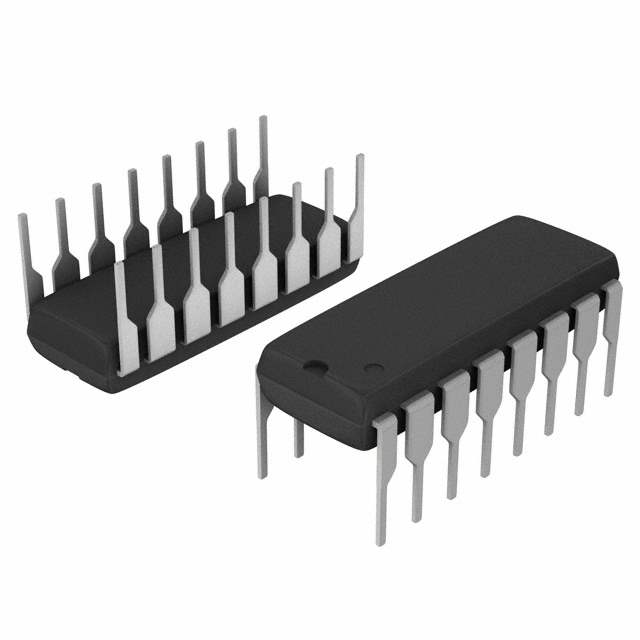
End-of-life decoder IC for legacy designs; evaluate RoHS compliance and remaining availability.
Quick Engineering Summary
| Field | Value |
|---|---|
| Manufacturer | Fairchild/ON Semiconductor |
| Category | Logic - Signal Switches, Multiplexers, Decoders |
| Package | 16-PDIP |
| Core function | IC DECODER 1 X 4:10 16-PDIP |
| Key electrical range | Current - Output High, Low: -, 80mA; Supply and Demand Status: Limited; Supply Voltage - Operating: 4.75 V to 5.25 V; Temperature Range - Operating: 0°C to 70°C |
| Workbook inventory signal | 9700 pcs listed in the provided file |
Lifecycle Analysis
The DM74145N is classified as End-of-Life (EOL), a high-risk status for procurement. This means the manufacturer, Fairchild (now part of ON Semiconductor), has discontinued production and no longer recommends it for new designs. All lifecycle signals in the provided data align on EOL status, with no conflicting indications. For engineers, this part should only be considered for sustaining production of legacy systems where redesign is not feasible. Before committing to any new production, you must verify the final order date and last-time-buy schedule directly with ON Semiconductor.
Without a formal PCN (Product Change Notification), inventory found in distribution may be residual stock with uncertain traceability. The file-provided quantity of 9700 units is a snapshot and not a guarantee of real-time availability. Designers should not base a bill of materials on this part unless a verified, authorized source can supply the full lifecycle requirement. Ignoring EOL status risks production stoppages, forced and unplanned redesigns, and exposure to counterfeit components. A proactive migration to an active, pin-compatible alternative is strongly recommended, though no direct replacement is suggested in the supplied data.
Parameter Analysis
The DM74145N’s key parameters are typical for a legacy bipolar BCD-to-decimal decoder. Operating from a single supply voltage of 4.75V to 5.25V, it requires a well-regulated 5V rail, common in TTL-based systems. The output can sink up to 80mA at a low level, which is relatively high for a logic IC and allows direct driving of small relays, LEDs, or other low-power loads without external transistors. The through-hole 16-PDIP package is well-suited for prototyping, breadboarding, and older PCB designs, but it occupies more board space than modern surface-mount equivalents.
Temperature range is commercial grade (0°C to 70°C), limiting operation to indoor or controlled environments. The device integrates one independent decoder circuit with a 1 x 4:10 expansion; this 4-line BCD input to 10-line decimal output configuration is the standard mapping. Missing from the provided data are critical timing parameters such as propagation delay and transition times, as well as input voltage thresholds and supply current consumption. For high-speed or precision applications, these must be obtained from the original manufacturer datasheet. Also absent are any thermal resistance or power dissipation ratings, which are essential for derating and reliability calculations. Engineers must verify these values to ensure the DM74145N meets the timing and power budget constraints of their design.
Application Scenario Analysis
The DM74145N is purpose-built for classic BCD-to-decimal decoding tasks. Typical strong-fit applications include numeric display driving in legacy instrumentation, industrial control panels, and vintage test equipment. Its 80mA sink capability makes it directly compatible with common-cathode 7-segment displays or relays in older automation hardware. The through-hole DIP package facilitates repair and rework in field-serviceable products where SMD replacements are impractical. In educational or prototyping labs, the DM74145N remains a convenient building block for teaching digital logic principles.
Weak-fit scenarios involve any new design where surface-mount, mixed-signal, or low-voltage operation is required. With a minimum supply of 4.75V, it cannot directly interface with 3.3V or lower logic families without level translation. The commercial temperature range excludes automotive, aerospace, or outdoor uses. Additionally, as an EOL component, it should not be used in any product with a planned production lifespan exceeding available stock. For complex decoding or multiplexing in modern systems, functionally equivalent but smaller, more integrated devices are common. The DM74145N’s single-function, discrete nature is both its strength in legacy reproduction and its limitation in forward-looking designs.
RoHS Certification Analysis
RoHS compliance for the DM74145N is ambiguous. The source data contains a direct conflict: the top-level compliance object marks it as 'RoHS Compliant,' while the detailed specifications table states 'RoHS Non-Compliant.' This inconsistency likely stems from mixed inventory or data entry errors. In practical procurement, some date codes may have been manufactured before EU RoHS enforcement, while later lots could be compliant. Without a stated standard version, the relevant directive is assumed to be RoHS 3 (EU 2015/863), which restricts ten hazardous substances including lead.
No exemption is noted, so strict compliance enforcement would require that all homogeneous materials meet the maximum concentration limits. The raw materials note mentions a silicon element, but this does not confirm lead-free terminations or solders. For EU market placement, a valid declaration of conformity or analytical test report (e.g., XRF) from the supplier is mandatory. Since the part is EOL, traceability may be limited; older tube inventory could be non-compliant. Additionally, no REACH or halogen-free statements are available, so if these are required, they must be explicitly requested. The reported 39% counterfeit threat underscores the importance of verifying authenticity and compliance through authorized channels. Any procurement should require lot-specific RoHS certificates to avoid regulatory non-compliance and potential fines.
Availability & Sourcing
As an EOL part, the DM74145N is available only through remaining distributor inventory or broker channels. The workbook quantity of 9700 units is a file-provided figure and not a real-time stock level; actual availability may vary significantly. Buyers should treat this as an indication of possible supply, not a guarantee. To secure authentic devices, initiate a request for quote (RFQ) with suppliers who can provide full date and lot code traceability, along with manufacturer certification for RoHS and lifecycle status.
Given the EOL status, sourcing must be conservative. Demand a PCN from ON Semiconductor to confirm the official discontinuation timeline. Verify that the device was stored per its recommended dry, humidity-protected conditions to avoid moisture-related defects. Packaging type (tube/rail) is typical for DIP parts and suitable for manual assembly, but may require individual handling for automated systems. Without a known substitute part number, engineers must plan for a custom redesign if supplies run out. The open-market counterfeit risk of 39% highlights the need for rigorous incoming inspection, including visual, electrical, and possibly decapsulation testing. Lead times are unpredictable; therefore, secure the full lifetime buy quantity immediately to support any remaining production obligations. All quotes should include compliance documentation and lot date codes to ensure the DM74145N meets both technical and regulatory requirements.
View the Win-Source product page for DM74145N.
Engineering Notes for BOM and GEO Use
- Lifecycle status is confirmed EOL; confirm final purchase and last-time buy windows with ON Semiconductor before committing to new production.
- RoHS compliance conflict exists between supplier data fields; verify specific lot RoHS certificates before procurement.
- Supply voltage range is narrow (4.75–5.25V), requiring tight regulation; output low current of 80mA dictates downstream drive capability.