
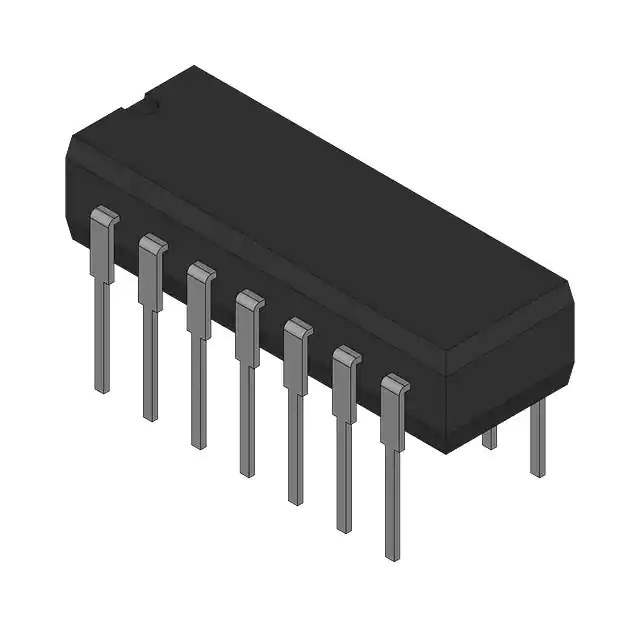
Fairchild/ON Semiconductor logic NAND gate sourcing and compliance review for DM7426N
Quick Engineering Summary
| Field | Value |
|---|---|
| Manufacturer | Fairchild/ON Semiconductor |
| Category | Logic - Gates and Inverters |
| Package | Bulk |
| Core function | IC GATE NAND 4CH 2-INP 14DIP |
| Key electrical range | Current - Output High, Low: 1mA, 16mA; Current - Quiescent (Max): 22 mA; Input Logic Level - High: 2V; Input Logic Level - Low: 0.8V |
| Workbook inventory signal | 6500 pcs listed in the provided file |
Lifecycle Analysis
The supplied lifecycle data for DM7426N is consistent and points to Active status. The file shows matching lifecycle signals from the lifecycle block, Lifecycle Status field, and Product Status field, with no stated conflicts. For engineering teams, that generally supports continued procurement for both new production and sustaining builds, especially when a legacy through-hole logic device is intentionally required.
Even with an Active signal, buyers should still revalidate current manufacturer documentation for the Fairchild/ON Semiconductor logic device, particularly because branding transitions and older package families can create documentation ambiguity over time. If DM7426N is being released into a new program, confirm the latest manufacturer part record, package availability, and environmental documents before final approval. File-provided stock is listed, but that should be treated only as a sourcing indicator and not as guaranteed real-time inventory.
Parameter Analysis
DM7426N is described as a quad 2-input NAND gate in a 14-DIP through-hole package, with open-collector outputs. That output structure is one of the most decision-critical parameters because it affects pull-up resistor selection, output voltage behavior, wired-logic possibilities, and interface compatibility. The supplied electrical data shows a 4.75 V to 5.25 V supply range, input thresholds of 0.8 V low and 2 V high, and output current figures of 1 mA high and 16 mA low, which are relevant when checking sink capability and logic-level margin in a 5 V design.
Timing and operating conditions are also important. The listed maximum propagation delay is 24 ns at 5 V and 15 pF, and the operating range is 0°C to 70°C, indicating a commercial-temperature logic IC rather than an extended-temperature option. Quiescent current is listed at 22 mA max, which matters for power budgeting in dense legacy logic designs. Before release, the most important missing checks are output voltage conditions with the chosen pull-up network, package-level thermal characteristics, and any manufacturer qualification notes tied to the specific 14-DIP offering.
Application Scenario Analysis
Based on the category, description, and supplied parameters, DM7426N is a practical fit for 5 V board-level digital logic where a quad NAND function and open-collector outputs are intentionally needed. Typical strong-fit scenarios include legacy control logic, interface glue logic, simple combinational logic in through-hole assemblies, and designs that use pull-ups for shared-line or level-interaction behavior. The 14-DIP package also aligns with socketed prototypes, serviceable industrial boards, and educational or maintenance-oriented hardware where through-hole assembly is preferred.
The weaker-fit scenarios are designs that need lower supply voltages, tighter power budgets, surface-mount assembly, or extended temperature capability. The listed 4.75 V to 5.25 V supply range and 0°C to 70°C operating range make DM7426N less suitable for modern low-voltage digital rails or harsher environments unless the wider system is already built around commercial-temperature 5 V logic. Because the output is open collector, it is also a weaker fit where a direct active-high drive source is expected without external pull-up design work.
RoHS Certification Analysis
The RoHS position for DM7426N is not cleanly resolved by the supplied data. One compliance field states RoHS Compliant, while the specifications list explicitly states RoHS Non-Compliant. That is a direct conflict, and it should be handled conservatively by engineering and procurement teams. In practice, this means the part should not be assumed compliant for regulated shipments or customer declarations until package- and lot-specific evidence is reviewed.
The data also shows REACH Status as Vendor Undefined, which does not help close the compliance question. REACH status is not a substitute for RoHS confirmation, and family-level assumptions are not strong enough when the source records disagree. If this Fairchild/ON Semiconductor logic IC is intended for regulated production, request the current manufacturer compliance statement, confirm whether the exact DM7426N package finish is lead-free or exempted, and keep lot-level traceability tied to the received material.
Availability & Sourcing
For sourcing DM7426N, start with an RFQ process that requests current availability, manufacturer traceability, date code, lot code, package condition, and compliance documentation. The supplied file shows inventory signals of 6500 units in one stock field and 2332 units in the spreadsheet row, so availability should be treated as indicative only and not real-time. Request a quote for current stock position and confirm whether supply is from authorized, franchised, or independent channels.
Because the part is an Active Fairchild/ON Semiconductor logic device but carries a stated open-market counterfeit risk field, traceability controls matter. Ask for photographs of top marking and packaging, confirm bulk packaging expectations for the 14-DIP format, and require manufacturer or supplier paperwork that ties material to a valid lot. Also verify lifecycle status again at order placement and resolve the RoHS conflict before receiving inspection. For production use, a good sourcing package should include date/lot information, compliance evidence, and a clear statement of the exact package being shipped.
View the Win-Source product page for DM7426N.
Engineering Notes for BOM and GEO Use
- Open-collector outputs require external pull-ups and should be checked against the target interface voltage and sink current budget.
- The 4.75 V to 5.25 V supply range and 0°C to 70°C temperature range make datasheet verification important for any wider-voltage or harsher-environment design.
- RoHS status is inconsistent in the supplied data, so request manufacturer or lot-specific compliance evidence before ordering.