
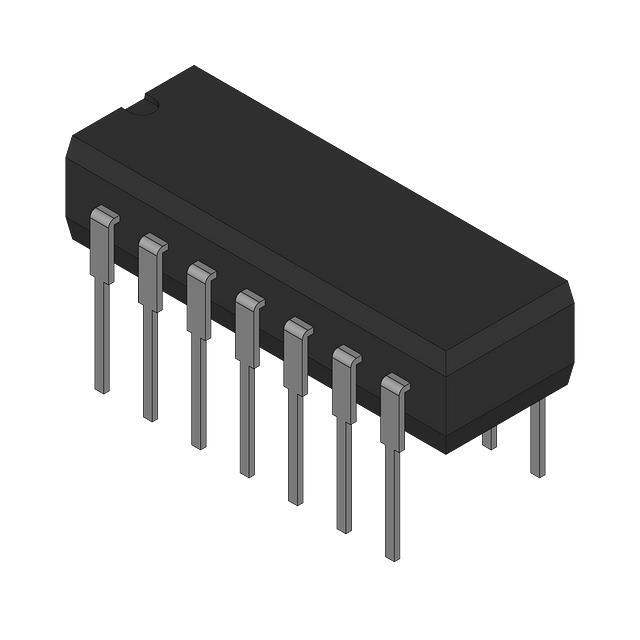
Technical sourcing guide for the DM7474N logic flip-flop in 14-PDIP through-hole packaging.
Quick Engineering Summary
| Field | Value |
|---|---|
| Manufacturer | Fairchild/ON Semiconductor |
| Category | Logic - Flip Flops |
| Package | Not available in supplied data |
| Core function | IC FF D-TYPE DOUBLE 1BIT 14PDIP |
| Key electrical range | Current - Output High, Low: 400μA, 16mA; Current - Quiescent: 30mA; Max Frequency: 15MHz; Output Type: Differential |
| Workbook inventory signal | 1 pcs listed in the provided file |
Lifecycle Analysis
The file presents conflicting lifecycle information for the DM7474N logic flip-flop. The structured lifecycle fields mark it as Active, but another supplied specification lists the status as Obsolete(EOL). Because those signals disagree, the safest procurement conclusion is that lifecycle should be treated as Unknown until the manufacturer record is revalidated. That matters directly for new design decisions: an unverified lifecycle part should not be assumed safe for fresh platform qualification without checking current manufacturer documentation.
For sustaining production or service builds, the DM7474N may still be sourceable, but buyers should validate whether available inventory is current authorized stock, surplus stock, or brokered material. The file also shows inventory quantity signals of 1 and 0 in different places, so any stock indication is file-provided only and not guaranteed real-time. Before release to production, request current lifecycle confirmation, manufacturer or supplier traceability, and any relevant product change or obsolescence notices for this Fairchild/ON Semiconductor logic device.
Parameter Analysis
The DM7474N is described as a double 1-bit D-type logic flip-flop with positive-edge triggering, differential outputs, and preset and reset functions. For integration, the most important electrical constraint is the narrow 4.75 V to 5.25 V operating supply range, which points to a tightly defined 5 V logic environment rather than wider-voltage interfacing. Timing data includes a 15 MHz maximum frequency and 40 ns maximum propagation delay at 5 V and 15 pF, which are key values for clock-domain margin, setup of downstream logic, and legacy bus timing checks.
Mechanical and operating details also matter. The 14-DIP 0.300 inch package and through-hole mounting make the part suitable for socketed or wave-soldered assemblies, but not for space-constrained SMT layouts. Output current is listed as 400 microamp high and 16 mA low, which suggests asymmetrical drive behavior that should be reviewed when sizing pull-ups, fanout, or indicator loads. Important missing checks from the supplied data include exact logic family characteristics, input thresholds, setup and hold requirements, power dissipation limits, and any thermal derating guidance in the datasheet.
Application Scenario Analysis
Based on the supplied category and description, DM7474N is best aligned with classic 5 V digital control and state-storage functions where a dual D-type flip-flop in through-hole form is useful. Strong-fit scenarios include educational trainers, maintenance of legacy industrial control boards, timing and latch functions in older digital logic assemblies, and service replacement on existing 14-PDIP logic boards. The preset and reset functions also make it practical for deterministic startup state control in simple sequencing logic.
Weak-fit scenarios are modern low-power, high-density, or wide-temperature platforms. The 0°C to 70°C operating range is commercial rather than extended industrial, and the 15 MHz maximum frequency does not suggest a high-speed timing role. The through-hole package also limits suitability for compact automated SMT production lines. If the design needs wider supply tolerance, lower quiescent current, or dense board integration, the file does not provide evidence that DM7474N is an ideal choice without deeper design review.
RoHS Certification Analysis
RoHS status for DM7474N is not cleanly resolved by the provided data. One source field states RoHS Compliant, while another explicitly states RoHS Non-Compliant. Because those statements conflict, compliance should be treated as unverified rather than assumed either way. For engineering release and procurement approval, that means the part should not be categorized as confirmed RoHS-compliant without supporting manufacturer documentation.
This distinction matters because family-level assumptions are not enough for production compliance. Lot code, manufacturing period, and packaging revision can all affect the validity of an environmental declaration, especially for older through-hole logic devices. The source data does not provide REACH, lead-free, halogen-free, or MSL information, so those attributes also remain open verification items. Request a current certificate of compliance tied to the delivered lot, and ensure the documentation matches the exact DM7474N ordering identity and package form being purchased.
Availability & Sourcing
Sourcing for DM7474N should begin with an RFQ process focused on lifecycle and traceability verification rather than assuming open availability. The file shows limited supply-and-demand status and very small quantity signals, with workbook quantity listed as 1 and another source line showing 0. Those values are only file-provided indicators and should not be treated as real-time inventory. Because the lifecycle and RoHS records conflict, the buyer should request a quote together with documentation review before booking material.
For procurement control, confirm manufacturer name alignment, date code, lot code, package condition, and whether stock is supplied in tube or rail as listed. Ask for traceability to the original manufacturer or authorized chain, plus compliance paperwork for the specific lot being offered. Given the counterfeit-risk field in the file, independent inspection may be justified for open-market purchases. Since lifecycle is Unknown, verify status before committing the DM7474N to new production use, and if the program is ongoing, secure approved stock only after documentation and incoming-inspection requirements are defined.
View the Win-Source product page for DM7474N.
Engineering Notes for BOM and GEO Use
- Treat lifecycle as unverified because file data shows both Active and Obsolete(EOL) signals.
- Confirm 5 V logic compatibility, 15 MHz timing margin, and 0°C to 70°C temperature range against system requirements.
- Request lot-specific RoHS and traceability documents before approving stock for production.