
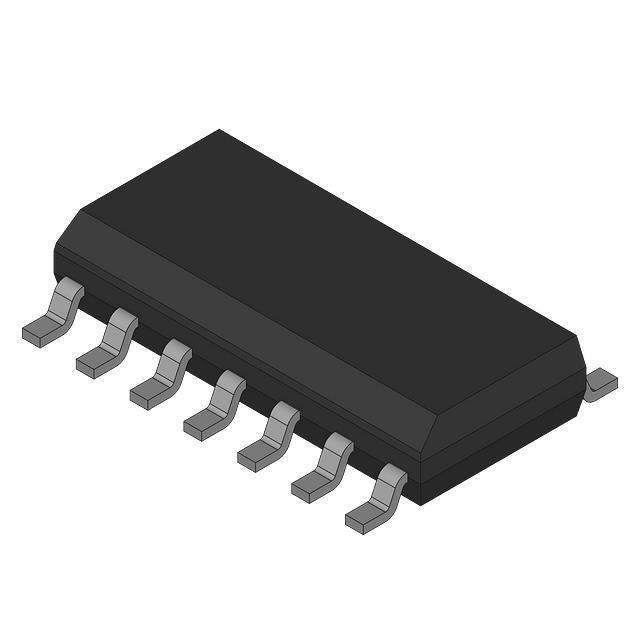
Open collector hex inverter in 14-SOIC, EOL status, from Fairchild/ON Semiconductor.
Quick Engineering Summary
| Field | Value |
|---|---|
| Manufacturer | Fairchild/ON Semiconductor |
| Category | Logic - Gates and Inverters |
| Package | 14-SOIC |
| Core function | IC INVERTER 6CH 1-INP 14SOIC |
| Key electrical range | Current - Output High, Low: -, 8mA; Number of Inputs: 6; Supply and Demand Status: Balance; Supply Voltage - Operating: 4.5 V to 5.5 V |
| Workbook inventory signal | 14189 pcs listed in the provided file |
Lifecycle Analysis
The DM74ALS05AMX is officially classified as End‑of‑Life (EOL). This status means the manufacturer has ceased or is about to cease production, and no new design‑ins should be considered. For sustaining production, teams face a high risk of supply discontinuity and must act quickly to secure remaining inventory or qualify a replacement.
All lifecycle signals in the supplied data — the explicit EOL tag, the Obsolete(EOL) remark, and the Excel lifecycle parameter — are consistent. There is no ambiguity. Procurement planners should treat this part as unavailable for future manufacturing volumes. Even though the workbook indicates a stock quantity of 14189 pieces, this figure is file‑provided and may not reflect current real‑time availability. Given a 43% counterfeit threat rating in the open market, buyers must verify lot traceability, date codes, and manufacturer authenticity through their supplier.
An EOL status demands immediate attention: review last‑time‑buy notifications from Fairchild/ON Semiconductor, assess the remaining production lifespan of your system, and initiate a migration to a drop‑in or functional equivalent if the part is critical. Relying on surplus or broker stock without deep screening introduces significant quality and continuity risks.
Parameter Analysis
The DM74ALS05AMX is a hex inverter with open‑collector outputs, packaged in a 14‑SOIC surface‑mount outline. Its key parameters include a supply voltage range of 4.5 V to 5.5 V, a maximum propagation delay of 54 ns at 5 V and 50 pF load, and an output low‑level sink current of 8 mA per channel. Logic input thresholds are specified as 2 V for logic‑high and 0.8 V for logic‑low, which align with standard TTL levels and offer good noise immunity in 5 V systems.
The open‑collector configuration means the outputs can only pull low; an external pull‑up resistor is required to define the logic‑high level. This allows wired‑AND logic and level shifting to voltages higher than the supply, provided the external pull‑up voltage does not exceed the device’s maximum rating. The 8 mA sink capability is sufficient for driving LEDs, small relays, or standard TTL loads, but designers must calculate total power dissipation when multiple outputs are switched simultaneously. The specified operating temperature range of 0 °C to 70 °C is strictly commercial; industrial or automotive applications will require a wider‑range alternative.
Missing from the provided data are critical specifications such as supply current, input current, and power dissipation. Also absent is any mention of ESD rating or moisture sensitivity level (MSL). Engineers should consult the original Fairchild datasheet for absolute maximum ratings, thermal resistance, and detailed switching characteristics before finalizing any design. For a 5 V logic inverter, verifying the maximum frequency and the effect of capacitive loading beyond 50 pF is essential.
Application Scenario Analysis
The DM74ALS05AMX hex inverter with open‑collector outputs is well suited to wired‑AND logic configurations and level‑translation tasks. By choosing an external pull‑up voltage up to the allowed maximum, the part can interface a 5 V TTL system with higher‑voltage logic families, making it useful in legacy industrial controls or mixed‑voltage communication buses. Its six independent channels in a compact 14‑SOIC package allow multiple signal inversions in a small board footprint, ideal for bus inversion, clock distribution, or signal conditioning in mid‑sized digital systems.
Other strong‑fit scenarios include driving indicator LEDs (with appropriate current‑limiting resistors) and sinking current for small relays or optocouplers. The 54 ns propagation delay is adequate for speeds up to roughly 10 MHz, so the part can handle moderate‑speed interfaces like UART, SPI bit‑banging, or I²C clock stretching when used as an open‑drain driver. However, the device is not suitable for high‑speed memories or high‑frequency clocks, where modern CMOS inverters with sub‑10 ns delays are preferred.
Weak‑fit applications include battery‑powered or low‑power designs. Although the ALS family is lower power than original TTL, it still draws static current, and the open‑collector structure consumes additional power in the pull‑up resistors when outputs are low. Additionally, the commercial temperature range limits its use in outdoor, automotive, or industrial environments. Designers should avoid using the DM74ALS05AMX in new safety‑critical systems where long‑term availability cannot be guaranteed, given its EOL status.
RoHS Certification Analysis
The DM74ALS05AMX is listed as RoHS Compliant in the provided data. This suggests that the part meets the substance restrictions defined by the EU RoHS directive. Typically, for a component of this vintage (ALS logic family), compliance implies that lead, mercury, cadmium, and other restricted materials are below the maximum concentration values, often with exemptions such as lead in flip‑chip solder bumps or glass cermets.
No specific exemption list is provided in the source, nor is there any REACH or halogen‑free declaration. While “RoHS Compliant” is a strong starting point, it is a manufacturer‑level claim that should be substantiated with a certificate of compliance for the purchased lot. In practice, the DM74ALS05AMX may be compliant with RoHS 3 (EU 2015/863), but buyers should confirm the actual directive revision and request the full material declaration from their distributor. For legacy EOL parts, it is also wise to check whether lead‑finish termination may still be present in very old inventory — although the SOIC package typically uses matte tin leads for RoHS compliance.
Availability & Sourcing
As an EOL component, the DM74ALS05AMX carries high sourcing risk. The file indicates a workbook quantity of 14189 pieces, but this is not a real‑time inventory guarantee. Buyers should request a quote to verify current stock, lead time, and lot date codes. Given the 43% open‑market counterfeit threat, all shipments must be subjected to traceability checks, x‑ray or decapsulation inspection, and electrical testing if acquired from non‑authorized channels.
The standard packaging format is a reel (TR), suitable for automated SMT assembly. It is important to confirm that the reel contains the correct moisture barrier bag and humidity indicator card, as the storage condition specifies dry storage and humidity protection. For last‑time buys, negotiating a fixed quantity and delivery schedule is critical to cover remaining production needs. Additionally, secure a copy of the manufacturer’s EOL notice and any final‑shipment documentation.
To source the DM74ALS05AMX, initiate an RFQ with a supplier that specializes in obsolete or hard‑to‑find components. Clearly state the required quantity, packaging, and acceptable date‑code range. Request full compliance paperwork, including the RoHS certificate and a manufacturer certificate of conformance. Because this is an EOL part, avoid committing it to new designs; instead, use the acquired stock to bridge to a qualified replacement while you evaluate pin‑compatible alternatives from the same logic family or modern CMOS versions.
View the Win-Source product page for DM74ALS05AMX.
Engineering Notes for BOM and GEO Use
- Part is EOL; plan immediate last‑time buys and validate supplier stock authenticity before committing.
- Open‑collector outputs require external pull‑up resistors; sink current limited to 8mA per channel.
- Dry storage and humidity protection are specified; follow MSL guidelines to avoid moisture‑related damage.