
Technical procurement analysis for engineers and component buyers
Quick Engineering Summary
| Field | Value |
|---|---|
| Manufacturer | Fairchild/ON Semiconductor |
| Category | Logic - Gates and Inverters |
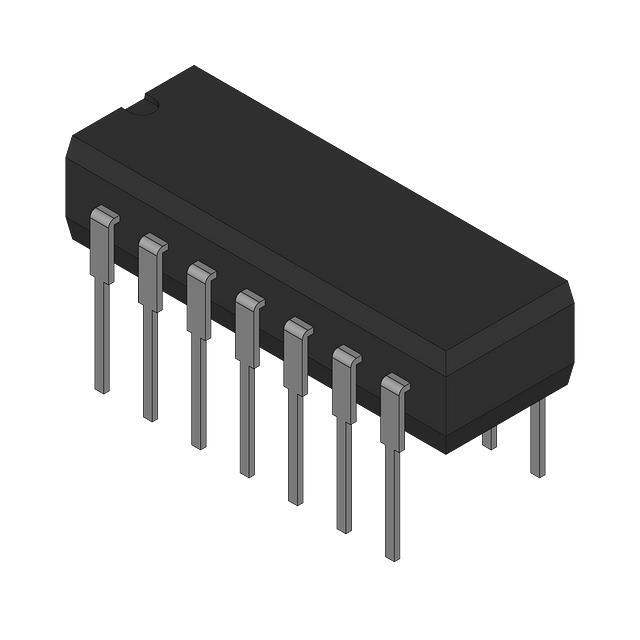
| Package | 14-PDIP |
| Core function | IC GATE NAND 4CH 2-INP 14MDIP |
| Key electrical range | Current - Output High, Low: 2.6mA, 24mA; Number of Inputs: 2; Supply and Demand Status: Balance; Supply Voltage - Operating: 4.5 V to 5.5 V |
| Workbook inventory signal | 1 pcs listed in the provided file |
Lifecycle Analysis
The DM74ALS1000AN lifecycle is in a conflicting state. The structured lifecycle status field returns Unknown, yet the product specification explicitly lists Obsolete (EOL). For procurement, the safer interpretation is to treat the part as end‑of‑life. This means the manufacturer likely no longer produces it, and remaining stock is limited to distributor or surplus channels.
Engineers should not design this device into new products. Any sustaining production line must secure a second source or last‑time‑buy inventory immediately. Without a formal PCN (Product Change Notification) or EOL notice from onsemi, verification directly with the factory is mandatory. The risk level is high due to obsolescence and the elevated counterfeit threat (68% reported).
If a datasheet review reveals any active status indicators, cross‑check with an authorized distributor. Until then, treat the DM74ALS1000AN as a discontinued component requiring careful lifecycle management.
Parameter Analysis
Key parameters for the DM74ALS1000AN include its logic type as a quad 2‑input NAND gate, supply voltage range of 4.5 V to 5.5 V, and output drive currents of 2.6 mA (high) and 24 mA (low). The propagation delay is specified at 8 ns maximum with a 5 V supply and 50 pF load, which is typical for the ALS TTL family. Operating temperature is 0°C to 70°C, limiting it to commercial environments.
The 14‑PDIP through‑hole package dictates board layout considerations; it is not suited for surface‑mount assembly and may require manual soldering or sockets. The logic‑level thresholds (2 V high, 0.8 V low) are compatible with legacy 5‑V TTL systems.
Notable missing specifications: input leakage current, maximum ratings for supply voltage and I/O pins, power dissipation, and noise margin are absent from the provided data. These should be verified in the original onsemi datasheet to ensure proper interface and derating. The 24 mA low‑level output current may be sufficient for driving LEDs or small relays, but confirm against actual load requirements.
Application Scenario Analysis
The DM74ALS1000AN fits best in legacy 5‑V digital logic systems, particularly those using through‑hole construction. Typical strong‑fit applications include repair of vintage industrial control boards, educational/prototyping projects employing wire‑wrap or breadboards, and small‑scale logic glue in older equipment. Its 8 ns propagation delay allows use in moderate‑speed combinational logic.
Weak‑fit scenarios are any new design targeting SMT manufacturing, low‑voltage operation (below 4.5 V), extended temperature ranges, or high‑density PCB layouts. Modern 3.3‑V or 1.8‑V logic families offer better performance and smaller footprints. Additionally, the commercial temperature grade excludes automotive or harsh industrial environments.
Engineers considering this part for a bridge design should evaluate whether the through‑hole package and 5‑V requirement align with system constraints. The obsolete status further discourages adoption except for maintenance or exact‑form replacement where no alternative is feasible.
RoHS Certification Analysis
The DM74ALS1000AN is listed as RoHS Compliant. This suggests that the part meets the restrictions on hazardous substances typically required by the EU RoHS directive (2011/65/EU and its amendments). No specific exemption is declared, and the data does not include a compliance certificate reference.
Because compliance can vary by production lot, buyers should request a formal RoHS Certificate of Conformance (CoC) for each shipment, particularly when sourcing from secondary markets. The part is not documented as lead‑free in the provided attributes, but RoHS compliance implies lead‑finish is within permissible limits.
No REACH, halogen‑free, or MSL information is supplied. While RoHS covers environmental compliance at the component level, full system‑level compliance may require additional documentation. Verifying the latest manufacturer datasheet is recommended to confirm ongoing compliance, especially for an obsolete device where older inventory may have different finishes.
Availability & Sourcing
The workbook data shows an inventory quantity of 1 unit for the DM74ALS1000AN; this snapshot is not a real‑time stock and should not be relied upon for order placement. Given the EOL status, availability will be constrained to remaining distributor stock or surplus channels. Buyers should request a quote to confirm current inventory and lead time.
Sourcing requires extra diligence: ask for date/lot codes, certificates of conformance, and source origin to mitigate the 68% counterfeit risk flagged in the data. The packaging is tube/rail, compatible with standard through‑hole handling. For critical applications, consider authenticated second‑source devices or plan a redesign to an active alternative.
Direct engagement with onsemi or an authorized distributor is the first step. If direct sources are depleted, independent distributors should be vetted for traceability and testing reports. Do not commit to production builds without a verified supply chain. Obtain a formal EOL notice and last‑time‑buy options if the part was recently discontinued.
View the Win-Source product page for DM74ALS1000AN.
Engineering Notes for BOM and GEO Use
- Verify lifecycle status directly with onsemi before committing to production; conflicting data signals require manufacturer revalidation.
- Obsolete part carries high counterfeit risk — the provided data indicates a 68% fake threat in the open market; use authorized sources and request traceability documentation.
- Through‑hole 14‑PDIP package limits use to legacy or prototyping boards; for new designs prefer surface‑mount alternatives with active lifecycle status.