
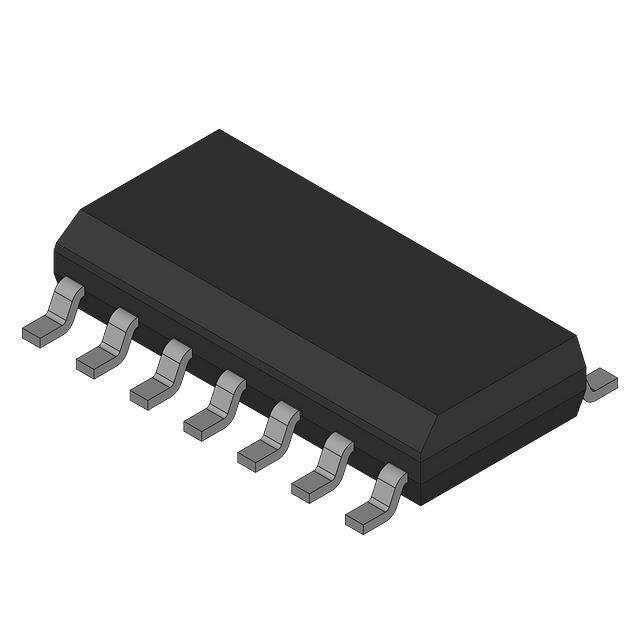
Fairchild/ON Semiconductor DM74ALS10ASJ: legacy 5V logic gate with high counterfeit risk – verify lifecycle before sourcing.
Quick Engineering Summary
| Field | Value |
|---|---|
| Manufacturer | Fairchild/ON Semiconductor |
| Category | Logic - Gates and Inverters |
| Package | 14-SOP |
| Core function | IC GATE NAND 3CH 3-INP 14SOP |
| Key electrical range | Current - Output High, Low: 400μA, 8mA; Number of Inputs: 3; Supply and Demand Status: Limited; Supply Voltage - Operating: 4.5 V to 5.5 V |
| Workbook inventory signal | 1 pcs listed in the provided file |
Lifecycle Analysis
The DM74ALS10ASJ is confirmed End‑of‑Life (EOL) by Fairchild/ON Semiconductor, with all supplier signals aligning on this status. This means the part is no longer in active production and is not recommended for new designs. For sustaining production or repair of legacy systems, any remaining stock must be procured with extreme caution. The file‑provided inventory count of a single unit suggests availability is virtually depleted, and real‑time stock may differ. Engineers should immediately evaluate migration to a modern 3‑input NAND gate in a pin‑compatible package. Using an EOL part without a clear migration plan exposes the design to supply disruption and unscheduled requalification costs. Before committing any design to this part, obtain the official discontinuation notice and product change notification (PCN) from ON Semiconductor to confirm last‑time‑buy dates and final shipment schedules.
Parameter Analysis
This is a member of the Advanced Low Power Schottky (ALS) logic family, operating from a single 5 V supply (4.5 V–5.5 V). It provides three independent 3‑input NAND gates. Key specifications include a typical propagation delay of 11 ns into a 50 pF load, TTL‑compatible input levels (VIH ≥ 2 V, VIL ≤ 0.8 V), output drive of 400 µA high / 8 mA low, and a commercial temperature range of 0°C to 70°C. The package is a 14‑pin small‑outline (SOP/SOIC) with a 5.30 mm body width.
The 11 ns propagation delay is acceptable for many moderate‑speed glue‑logic applications, but modern 5 V CMOS families achieve faster switching with lower static power. The output current specifications are adequate for driving standard TTL loads, though fan‑out should be recalculated in high‑capacitance buses. The supply voltage range is narrow; the part cannot be used in 3.3 V or mixed‑voltage systems without level shifters.
Important but missing parameters from the source data include maximum power dissipation, input leakage current, thermal resistance, and ESD rating. Before using any remaining stock, verify these values against the original Fairchild datasheet to ensure safe operating area margins and correct PCB layout for bypass capacitors and trace impedance.
Application Scenario Analysis
The DM74ALS10ASJ is suited for legacy digital logic applications that already employ 5 V TTL or CMOS signaling and require simple three‑input NAND logic. Typical use cases include signal gating, glue logic in older microprocessor boards, industrial controllers, and test equipment where a purely 5 V rail is available and timing margins are established.
Its strongest fit is in repair, maintenance, and aftermarket support of existing boards where a form‑fit‑function replacement is mandatory. In these scenarios, the exact part number avoids requalification. However, for any new design, even in the industrial space, the part is a weak choice due to its EOL status, limited supply, and older technology. Modern alternatives such as the 74AHC10 or 74LVC10 provide equivalent logic function with wider supply ranges (1.65 V to 5.5 V), lower static power, and faster switching, while remaining cost‑effective and widely available.
The DM74ALS10ASJ’s commercial temperature range restricts it to indoor environments. It is not suitable for automotive, military, or outdoor applications that require ‑40°C to 125°C operation. Additionally, its 5 V‑only supply makes it incompatible with low‑voltage or battery‑powered designs that demand sub‑5 V operation without additional level translation.
RoHS Certification Analysis
The DM74ALS10ASJ is listed as RoHS Compliant, which implies conformance to the EU directive restricting hazardous substances. However, the source data does not specify the exact standard (e.g., RoHS‑3, 2015/863) nor whether it covers REACH or halogen‑free requirements. In practice, many older semiconductor parts were certified to earlier RoHS versions and may contain exemptions, such as lead in glass of lead‑frame finishes.
Given the part’s EOL status and the likelihood of inventory from different production lots, RoHS compliance should be verified at the lot level. A supplier’s generic “RoHS Compliant” tag may only reflect the original design rating, not the actual stock’s composition. For critical compliance, request a full material declaration or certificate of analysis for the specific date/lot code you intend to purchase.
If the project also requires REACH SVHC declarations or halogen‑free documents, these must be separately requested, as none are indicated in the available data. Relying solely on the stated RoHS status without documentation poses a risk for manufacturing regions with strict import requirements.
Availability & Sourcing
DM74ALS10ASJ is an End‑of‑Life part with extremely limited availability. The file‑provided workbook indicates a stock quantity of only one unit, and this is not a guarantee of real‑time inventory. The open‑market counterfeit risk is flagged at 70%, underscoring the need for extreme caution when sourcing through independent distributors.
For sustaining production or emergency repairs, work directly with authorized ON Semiconductor distributors or reputable surplus resellers that offer full traceability. Request a formal quote that confirms current stock levels, packaging (tube), and date/lot codes. Insist on lot‑specific RoHS compliance certificates and a manufacturer’s certificate of conformance. Since the part is discontinued, identify the last‑time‑buy window and any remaining factory stock before final commitment.
For new designs, migration is the only viable long‑term strategy. Common alternatives include the 74LVC10 (SN74LVC10AD) in SOIC‑14 or the 74AHC10, both of which offer better electrical performance and secure supply chains. By migrating now, you avoid production bottlenecks and ensure a stable, compliant supply for future builds.
View the Win-Source product page for DM74ALS10ASJ.
Engineering Notes for BOM and GEO Use
- Validate timing and voltage parameters against the original datasheet; this device is obsolete and manufacturer support is limited.
- For new designs, migrate to a modern CMOS 3‑input NAND gate (e.g., 74LVC10) with lower power and wider supply range.
- Request lot‑specific RoHS compliance certificates and date code traceability to mitigate the 70% counterfeit risk reported in the open market.